*/
We face unprecedented threats from climate change. We all have a part to play. In June the Bar Council organised its first Sustainability Network Summit, chaired by Zoe Leventhal KC.
The event was an opportunity for members of the Bar Sustainability Network to meet in person, share experiences and collaborate. The network provides a range of services and support for chambers, Inns and others to help the transition to a more sustainable way of working, saving not just carbon emissions but costs.
Four new chambers joined the network, and we hope more will follow. Going forward the work programme aims to reduce the Bar’s carbon emissions, support Net Zero initiatives and mainstream climate conscious practice.
We have been engaging for years – literally – with government officials about the recently published Statutory Instrument dealing with Fixed Recoverable Costs and it was extremely irritating to be told that the Ministry of Justice had ‘not had sufficient bandwidth’ to deal with what we had said to them before the regulations were drafted.
There are three serious flaws in the regulations as published. Firstly, the government proposes to uprate fees using the Services Producer Price Index (SPPI) which is reasonable enough in itself. But unfathomably it has uprated the fees from the wrong date – uplifting them from 2016, rather than from 2013 when they were last fixed.
Secondly, it is daft and unfair that no part of the advocacy fee is payable if the case settles before the hearing day. We have asked that 75% of the advocacy fee should be payable if the case settles within two working days of the hearing.
Lastly, we would also like to see a mechanism for annual uprating. This is a particularly irksome omission when inflation is so high.
We are promised urgent reconsideration of these points. Absent that reconsideration, we will have to seek a review of the irrational details of these regulations.
The Bar Council, Law Society and the Bar Council of India (BCI) have all signed a Memorandum of Understanding (MoU) to strengthen cooperation and legal exchange in parallel with what is being presented as a partial opening up of India’s legal services sector to foreign lawyers.
In 2009 the Bar Council’s International Committee first launched an India Interest Group as an informal body of barristers with a practice in relation to India, so the Bar Council have been working on this issue for many years.
This year we have been able to reach agreement and formalise the details with the signing of the MoU. There is much still to be done and we urgently need clarification on some aspects of the BCI’s draft rules, but the MoU was a modest step in the right direction.
Our Indian friends enjoy ‘Fly In, Fly Out’ rights to represent any client in any arbitration seated here. It is important the BCI ensures that their rules make it clear that reciprocal rights are available to barristers who are instructed to appear in Indian seated arbitrations.
I recently attended a roundtable about the menopause at work, attended by members of the Bar and members of the House of Commons. There have been positive strides in breaking down taboos and raising awareness about the impact of the menopause on the careers of barristers who are affected. The Bar’s work has been boldly led by Brie Stevens-Hoare KC and Lyndsey de Mestre KC.
The Bar Council submitted evidence to the House of Commons’ Women and Equalities Committee’s Menopause and the Workplace Inquiry and featured in their report. We have also engaged with the All-Party Parliamentary Group on Menopause.
We are looking at practical steps the Bar Council can take across the profession. Some of the themes identified include retention at the Bar as well as career development and progression. Has your chambers thought about the impact of the menopause? If the topic were raised, would you suddenly look at your shoelaces? If so, the Bar Council’s guidance is a good place to start.
The Young Barristers’ Committee organised a successful exchange programme in June with 21 Dutch lawyers visiting from Amsterdam, Rotterdam and The Hague. The baton passes back to our colleagues in the Netherlands to organise the event next year.
I went on that exchange 30 years ago. The bits I can remember were sober, serious and studious. I think there may have been other bits. I am told there was some serious clubbing this time. An especial thank you to those who hosted. We need more than ever to keep in close touch with our European lawyer colleagues.
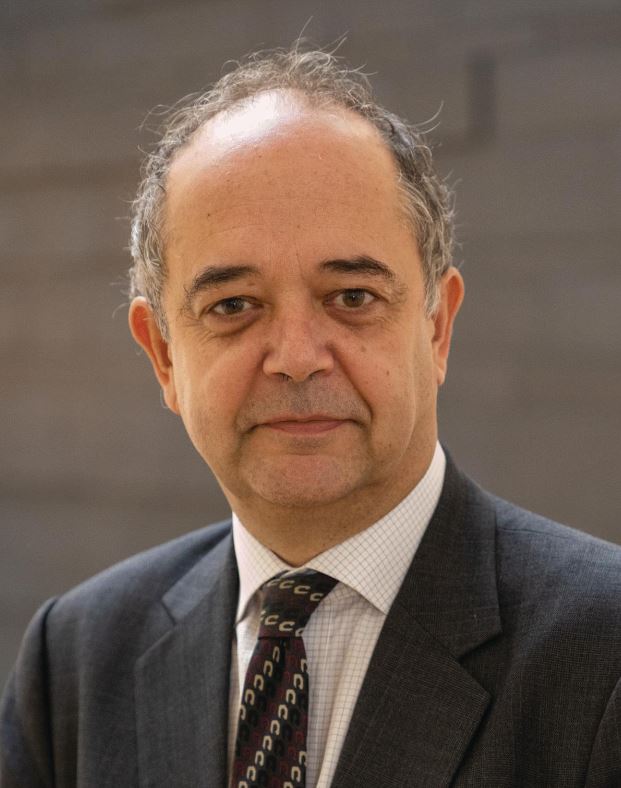
Nick Vineall KC returned to practice at 4 Pump Court after his term as Chair of the Bar 2023. Prior to that, he was Joint Head of Chambers at 4 Pump Court and sat as a Deputy High Court Judge. Nick practises in commercial, construction and financial services law. He was awarded ‘Social Mobility Bar Champion of the Year’ at the Legal 500 ESG UK Awards 2024.
We face unprecedented threats from climate change. We all have a part to play. In June the Bar Council organised its first Sustainability Network Summit, chaired by Zoe Leventhal KC.
The event was an opportunity for members of the Bar Sustainability Network to meet in person, share experiences and collaborate. The network provides a range of services and support for chambers, Inns and others to help the transition to a more sustainable way of working, saving not just carbon emissions but costs.
Four new chambers joined the network, and we hope more will follow. Going forward the work programme aims to reduce the Bar’s carbon emissions, support Net Zero initiatives and mainstream climate conscious practice.
We have been engaging for years – literally – with government officials about the recently published Statutory Instrument dealing with Fixed Recoverable Costs and it was extremely irritating to be told that the Ministry of Justice had ‘not had sufficient bandwidth’ to deal with what we had said to them before the regulations were drafted.
There are three serious flaws in the regulations as published. Firstly, the government proposes to uprate fees using the Services Producer Price Index (SPPI) which is reasonable enough in itself. But unfathomably it has uprated the fees from the wrong date – uplifting them from 2016, rather than from 2013 when they were last fixed.
Secondly, it is daft and unfair that no part of the advocacy fee is payable if the case settles before the hearing day. We have asked that 75% of the advocacy fee should be payable if the case settles within two working days of the hearing.
Lastly, we would also like to see a mechanism for annual uprating. This is a particularly irksome omission when inflation is so high.
We are promised urgent reconsideration of these points. Absent that reconsideration, we will have to seek a review of the irrational details of these regulations.
The Bar Council, Law Society and the Bar Council of India (BCI) have all signed a Memorandum of Understanding (MoU) to strengthen cooperation and legal exchange in parallel with what is being presented as a partial opening up of India’s legal services sector to foreign lawyers.
In 2009 the Bar Council’s International Committee first launched an India Interest Group as an informal body of barristers with a practice in relation to India, so the Bar Council have been working on this issue for many years.
This year we have been able to reach agreement and formalise the details with the signing of the MoU. There is much still to be done and we urgently need clarification on some aspects of the BCI’s draft rules, but the MoU was a modest step in the right direction.
Our Indian friends enjoy ‘Fly In, Fly Out’ rights to represent any client in any arbitration seated here. It is important the BCI ensures that their rules make it clear that reciprocal rights are available to barristers who are instructed to appear in Indian seated arbitrations.
I recently attended a roundtable about the menopause at work, attended by members of the Bar and members of the House of Commons. There have been positive strides in breaking down taboos and raising awareness about the impact of the menopause on the careers of barristers who are affected. The Bar’s work has been boldly led by Brie Stevens-Hoare KC and Lyndsey de Mestre KC.
The Bar Council submitted evidence to the House of Commons’ Women and Equalities Committee’s Menopause and the Workplace Inquiry and featured in their report. We have also engaged with the All-Party Parliamentary Group on Menopause.
We are looking at practical steps the Bar Council can take across the profession. Some of the themes identified include retention at the Bar as well as career development and progression. Has your chambers thought about the impact of the menopause? If the topic were raised, would you suddenly look at your shoelaces? If so, the Bar Council’s guidance is a good place to start.
The Young Barristers’ Committee organised a successful exchange programme in June with 21 Dutch lawyers visiting from Amsterdam, Rotterdam and The Hague. The baton passes back to our colleagues in the Netherlands to organise the event next year.
I went on that exchange 30 years ago. The bits I can remember were sober, serious and studious. I think there may have been other bits. I am told there was some serious clubbing this time. An especial thank you to those who hosted. We need more than ever to keep in close touch with our European lawyer colleagues.


Chair of the Bar finds common ground on legal services between our two jurisdictions, plus an update on jury trials
A £500 donation from AlphaBiolabs has been made to the leading UK charity tackling international parental child abduction and the movement of children across international borders
Marie Law, Director of Toxicology at AlphaBiolabs, outlines the drug and alcohol testing options available for family law professionals, and how a new, free guide can help identify the most appropriate testing method for each specific case
By Louise Crush of Westgate Wealth Management
Marie Law, Director of Toxicology at AlphaBiolabs, examines the latest ONS data on drug misuse and its implications for toxicology testing in family law cases
An interview with Rob Wagg, CEO of New Park Court Chambers
With at least 31 reports of AI hallucinations in UK legal cases – over 800 worldwide – and judges using AI to assist in judicial decision-making, the risks and benefits are impossible to ignore. Matthew Lee examines how different jurisdictions are responding
What has changed, and why? Paul Secher unpacks the new standards aligning the recruiting, training and appraising of judges – the first major change to the system for ten years
The deprivation of liberty is the most significant power the state can exercise. Drawing on frontline experience, Chris Henley KC explains why replacing trial by jury with judge-only trials risks undermining justice
Ever wondered what a pupillage is like at the CPS? This Q and A provides an insight into the training, experience and next steps
The appointments of 96 new King’s Counsel (also known as silk) are announced today