*/
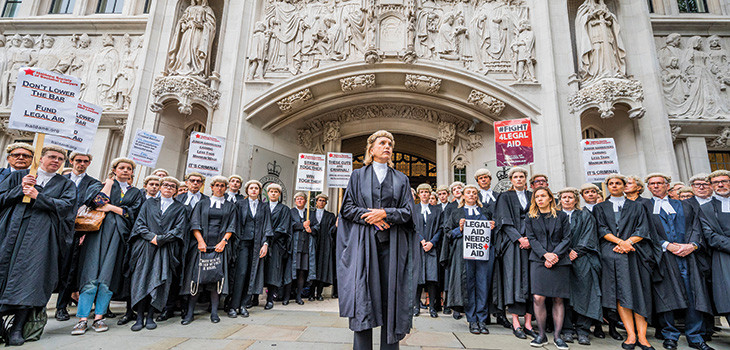
Kirsty Brimelow KC introduces the Criminal Bar Association’s new podcast series shining a light on criminal justice and the barristers at its beating heart
Criminal justice pulses all around us. It flows through society and binds us as we look to it for remedies in times of crisis.
Some cases grab public attention, whether through repulsion, empathy, horror, or fascination. There can be a compulsion not to look away as we try and understand the inexplicable. A recent example was Lucy Letby. She is the young woman with the nursery rhyme name, who started as a nurse to babies who were hanging onto life by a fragile touch. She ended her nursing story as Britain’s most prolific serial killer of children. She then refused to attend court to hear her sentence pronounced, inevitably a whole life tariff, and listen to the victim impact statements of the families of the murdered babies. The government quickly pronounced that it would give judges powers to force prisoners into court. I then was engaged in media interviews, alongside my colleagues, explaining the high risk of using force on prisoners. High risk physically to those around that person, as well as disruption to proceedings. Dangers were acutely and terribly highlighted in 2015 when a prisoner escort officer died after being attacked by a defendant at Blackfriars Crown Court in London. The court may long have been shuttered behind blank boarding, itself a victim to myopic court estate management, but its lessons should not sink into the dark emptiness.
When I became Chair of the Criminal Bar Association (CBA) on 1 September 2022, I wanted to put barristers’ voices back at the centre of policy decision-making. We are the experts in criminal justice and process and, increasingly, we had been side-lined. We were being ignored in favour of lobbying groups. The CBA also was acutely aware of the drop in barristers practising criminal law, demoralised by the crumbling courts, long and invasive working hours and cuts to legal aid. We needed to retain our junior Bar for the future of the criminal justice system. How to do it? Fees was just part of the answer. Positive communication remains key.
Criminal Justice Matters became the name of our new podcast series. I interviewed all our guests, except in the first episode when I was interviewed by Laurie-Anne Power KC. In ‘Strike action’ I discuss the negotiations with the Ministry of Justice that ended criminal barristers’ indefinite action, opened with former Lord Chancellor Brandon Lewis MP within three days of his coming into office and in my first week as Chair. It is a shake-down of happenings in those early months. I also speak a little about my own uneven path to the Criminal Bar and why I stayed.
The second episode, ‘Young barristers at the Criminal Bar’, showcases the stories of the Chair of the CBA Young Bar Committee, Zayd Ahmed and junior barrister Jennifer Devans-Tamakloe. Both barristers are from ethnic minorities and Zayd practises from chambers in London, while Jennifer is a barrister in Manchester.
In the third episode, I interview Mary Prior KC, Vice-Chair of the CBA, who practises in the Midlands, about prosecuting sexual offences. We seek to bust a few myths along the way.
The final three episodes focus on the stars and trailblazers of the Criminal Bar: Jeremy Dein KC, Nina Grahame KC, Jaime Hamilton KC, Laurie-Anne Power KC and Courtenay Griffiths KC. We pick over some of the challenges as they pivoted to advise their younger selves. These later recordings are signposts to a rewarding professional life that continues to burn bright as the years gather.
All the stories are the story of the Criminal Bar. After all, criminal justice matters.
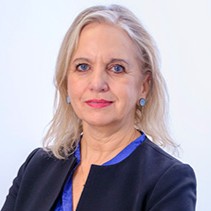
Kirsty Brimelow KC is Chair of the Bar for 2026. She has been a criminal, public law and international human rights barrister for some 30 years, practising from Doughty Street Chambers for over half that time. Kirsty was Chair of the Criminal Bar Association (2022-23) and Chair of the Bar Human Rights Committee (2012-18). She was appointed as a silk in 2011, Deputy High Court Judge in 2021, Recorder in 2022 and is a Bencher of Gray’s Inn.
Criminal justice pulses all around us. It flows through society and binds us as we look to it for remedies in times of crisis.
Some cases grab public attention, whether through repulsion, empathy, horror, or fascination. There can be a compulsion not to look away as we try and understand the inexplicable. A recent example was Lucy Letby. She is the young woman with the nursery rhyme name, who started as a nurse to babies who were hanging onto life by a fragile touch. She ended her nursing story as Britain’s most prolific serial killer of children. She then refused to attend court to hear her sentence pronounced, inevitably a whole life tariff, and listen to the victim impact statements of the families of the murdered babies. The government quickly pronounced that it would give judges powers to force prisoners into court. I then was engaged in media interviews, alongside my colleagues, explaining the high risk of using force on prisoners. High risk physically to those around that person, as well as disruption to proceedings. Dangers were acutely and terribly highlighted in 2015 when a prisoner escort officer died after being attacked by a defendant at Blackfriars Crown Court in London. The court may long have been shuttered behind blank boarding, itself a victim to myopic court estate management, but its lessons should not sink into the dark emptiness.
When I became Chair of the Criminal Bar Association (CBA) on 1 September 2022, I wanted to put barristers’ voices back at the centre of policy decision-making. We are the experts in criminal justice and process and, increasingly, we had been side-lined. We were being ignored in favour of lobbying groups. The CBA also was acutely aware of the drop in barristers practising criminal law, demoralised by the crumbling courts, long and invasive working hours and cuts to legal aid. We needed to retain our junior Bar for the future of the criminal justice system. How to do it? Fees was just part of the answer. Positive communication remains key.
Criminal Justice Matters became the name of our new podcast series. I interviewed all our guests, except in the first episode when I was interviewed by Laurie-Anne Power KC. In ‘Strike action’ I discuss the negotiations with the Ministry of Justice that ended criminal barristers’ indefinite action, opened with former Lord Chancellor Brandon Lewis MP within three days of his coming into office and in my first week as Chair. It is a shake-down of happenings in those early months. I also speak a little about my own uneven path to the Criminal Bar and why I stayed.
The second episode, ‘Young barristers at the Criminal Bar’, showcases the stories of the Chair of the CBA Young Bar Committee, Zayd Ahmed and junior barrister Jennifer Devans-Tamakloe. Both barristers are from ethnic minorities and Zayd practises from chambers in London, while Jennifer is a barrister in Manchester.
In the third episode, I interview Mary Prior KC, Vice-Chair of the CBA, who practises in the Midlands, about prosecuting sexual offences. We seek to bust a few myths along the way.
The final three episodes focus on the stars and trailblazers of the Criminal Bar: Jeremy Dein KC, Nina Grahame KC, Jaime Hamilton KC, Laurie-Anne Power KC and Courtenay Griffiths KC. We pick over some of the challenges as they pivoted to advise their younger selves. These later recordings are signposts to a rewarding professional life that continues to burn bright as the years gather.
All the stories are the story of the Criminal Bar. After all, criminal justice matters.
Kirsty Brimelow KC introduces the Criminal Bar Association’s new podcast series shining a light on criminal justice and the barristers at its beating heart


Chair of the Bar finds common ground on legal services between our two jurisdictions, plus an update on jury trials
A £500 donation from AlphaBiolabs has been made to the leading UK charity tackling international parental child abduction and the movement of children across international borders
Marie Law, Director of Toxicology at AlphaBiolabs, outlines the drug and alcohol testing options available for family law professionals, and how a new, free guide can help identify the most appropriate testing method for each specific case
By Louise Crush of Westgate Wealth Management
Marie Law, Director of Toxicology at AlphaBiolabs, examines the latest ONS data on drug misuse and its implications for toxicology testing in family law cases
An interview with Rob Wagg, CEO of New Park Court Chambers
With at least 31 reports of AI hallucinations in UK legal cases – over 800 worldwide – and judges using AI to assist in judicial decision-making, the risks and benefits are impossible to ignore. Matthew Lee examines how different jurisdictions are responding
What has changed, and why? Paul Secher unpacks the new standards aligning the recruiting, training and appraising of judges – the first major change to the system for ten years
The deprivation of liberty is the most significant power the state can exercise. Drawing on frontline experience, Chris Henley KC explains why replacing trial by jury with judge-only trials risks undermining justice
Ever wondered what a pupillage is like at the CPS? This Q and A provides an insight into the training, experience and next steps
The appointments of 96 new King’s Counsel (also known as silk) are announced today