*/
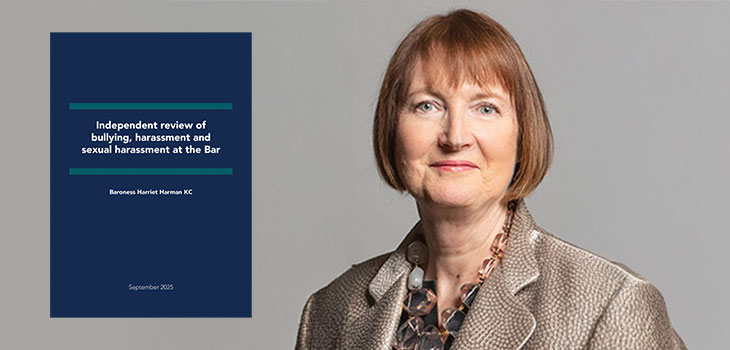
When you’re called to the Bar, you’re called to the highest of ethical standards: honesty, integrity and impartiality. Yet when it comes to bullying, harassment and sexual harassment, these standards are not always upheld.
In 2023, Bar Council research found increasing numbers of barristers were experiencing or witnessing inappropriate and unacceptable behaviour at work. I was then asked to chair an independent review to identify the reasons behind it and potential solutions.
Hundreds of those working in and around the Bar contributed to the review including pupils, junior and senior barristers and chambers management and staff. I received more than 170 written submissions, considered research from across the profession and visited every Circuit to make sure I heard from a wide range of people.
It’s clear that those who engage in such behaviour, whether they be barristers, judges or clerks, make the lives of those subjected to it a misery. Careers are stunted; people are driven out of the profession; and it leaves a stain on our justice system’s reputation.
While conducting the review, I discovered a paradox: the very characteristics that are the Bar’s great strengths are also the reasons why these behaviours persist.
Our justice system is adversarial. The evidence and the law need to be robustly tested in cases. But this macho, aggressive culture spills over into chambers, robing rooms and courtroom interactions. Bullying cannot be excused by commonly proffered arguments such as ‘it’s your duty to your client to attack the other side’, ‘it’s not bullying, it’s just robust case management’ or ‘judges have to kick off to keep standards up’.
The Bar is highly competitive which ensures work of the highest quality. But it also means those seeking career progression in this environment dare not complain or risk ‘career suicide’, leaving them deemed a troublemaker and even out of work.
The Bar is small and the Circuits are close-knit networks. This can be highly supportive but also makes it even more difficult to come forward. Junior barristers told me that if they complained about a barrister more senior on their Circuit, everyone would immediately know and it would jeopardise their career. Instead, they seek to support and protect each other through WhatsApp group chats where intelligence about notorious barristers or judges is shared in confidence.
The senior Bar takes seriously its role in bringing people into the profession, nurturing junior members and the next generation of barristers. Indeed, entry to and progression at the Bar depends upon it. However, those close and important one-to-one relationships can allow for predatory abuse. The Bar is a hierarchy – it needs to be to enable it to deal both with minor matters and with matters of the utmost seriousness. But this again results in a power imbalance. One barrister told me they were groped by their supervisor; another was offered references from a judge in exchange for sexual favours – these instances are borne out of this great power imbalance.
The Bar deals with evidence rather than rumour or supposition, steeped in the doctrine of innocent until proven guilty – essential principles of our law. But that can lead to a reluctance to report concerns about a colleague where there’s no first-hand evidence. Avoidance of the risk of passing on an unwarranted report of misconduct reinforces the bystander culture where suspicions are widespread but no-one has reported. This aversion leads to an even greater risk of allowing misconduct to persist. The culture of collusive bystanding needs to be recognised, called out and ended.
The current situation is unsustainable. Despite the codes of conduct, guidance and multiple processes, the misconduct continues. That’s why I’ve put forward radical proposals to effect a reset of the system and change the culture. Tackling misconduct cannot rest only on the slight shoulders of the victims.
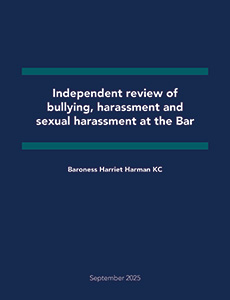
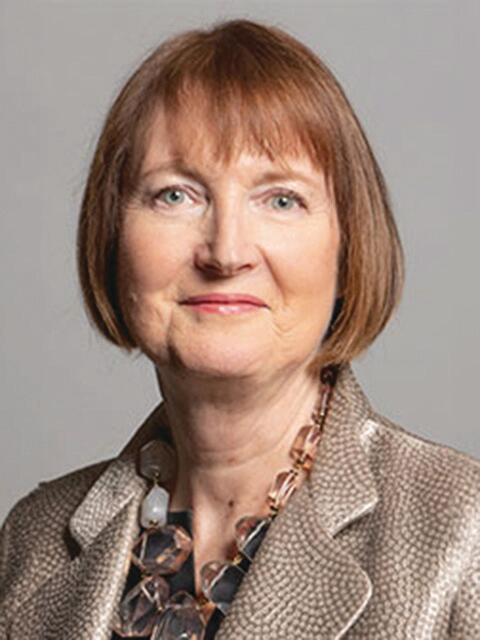
Baroness Harriet Harman KC is a former MP, Solicitor General, Chair of the Joint Committee on Human Rights and Chair of Committees on Standards and Privileges in Parliament. In 2024, Baroness Harman was commissioned by the Bar Council to Chair the independent review of bullying, harassment and sexual harassment at the Bar. She was supported by the review team as well as a reference group.
When you’re called to the Bar, you’re called to the highest of ethical standards: honesty, integrity and impartiality. Yet when it comes to bullying, harassment and sexual harassment, these standards are not always upheld.
In 2023, Bar Council research found increasing numbers of barristers were experiencing or witnessing inappropriate and unacceptable behaviour at work. I was then asked to chair an independent review to identify the reasons behind it and potential solutions.
Hundreds of those working in and around the Bar contributed to the review including pupils, junior and senior barristers and chambers management and staff. I received more than 170 written submissions, considered research from across the profession and visited every Circuit to make sure I heard from a wide range of people.
It’s clear that those who engage in such behaviour, whether they be barristers, judges or clerks, make the lives of those subjected to it a misery. Careers are stunted; people are driven out of the profession; and it leaves a stain on our justice system’s reputation.
While conducting the review, I discovered a paradox: the very characteristics that are the Bar’s great strengths are also the reasons why these behaviours persist.
Our justice system is adversarial. The evidence and the law need to be robustly tested in cases. But this macho, aggressive culture spills over into chambers, robing rooms and courtroom interactions. Bullying cannot be excused by commonly proffered arguments such as ‘it’s your duty to your client to attack the other side’, ‘it’s not bullying, it’s just robust case management’ or ‘judges have to kick off to keep standards up’.
The Bar is highly competitive which ensures work of the highest quality. But it also means those seeking career progression in this environment dare not complain or risk ‘career suicide’, leaving them deemed a troublemaker and even out of work.
The Bar is small and the Circuits are close-knit networks. This can be highly supportive but also makes it even more difficult to come forward. Junior barristers told me that if they complained about a barrister more senior on their Circuit, everyone would immediately know and it would jeopardise their career. Instead, they seek to support and protect each other through WhatsApp group chats where intelligence about notorious barristers or judges is shared in confidence.
The senior Bar takes seriously its role in bringing people into the profession, nurturing junior members and the next generation of barristers. Indeed, entry to and progression at the Bar depends upon it. However, those close and important one-to-one relationships can allow for predatory abuse. The Bar is a hierarchy – it needs to be to enable it to deal both with minor matters and with matters of the utmost seriousness. But this again results in a power imbalance. One barrister told me they were groped by their supervisor; another was offered references from a judge in exchange for sexual favours – these instances are borne out of this great power imbalance.
The Bar deals with evidence rather than rumour or supposition, steeped in the doctrine of innocent until proven guilty – essential principles of our law. But that can lead to a reluctance to report concerns about a colleague where there’s no first-hand evidence. Avoidance of the risk of passing on an unwarranted report of misconduct reinforces the bystander culture where suspicions are widespread but no-one has reported. This aversion leads to an even greater risk of allowing misconduct to persist. The culture of collusive bystanding needs to be recognised, called out and ended.
The current situation is unsustainable. Despite the codes of conduct, guidance and multiple processes, the misconduct continues. That’s why I’ve put forward radical proposals to effect a reset of the system and change the culture. Tackling misconduct cannot rest only on the slight shoulders of the victims.

Chair of the Bar finds common ground on legal services between our two jurisdictions, plus an update on jury trials
A £500 donation from AlphaBiolabs has been made to the leading UK charity tackling international parental child abduction and the movement of children across international borders
Marie Law, Director of Toxicology at AlphaBiolabs, outlines the drug and alcohol testing options available for family law professionals, and how a new, free guide can help identify the most appropriate testing method for each specific case
By Louise Crush of Westgate Wealth Management
Marie Law, Director of Toxicology at AlphaBiolabs, examines the latest ONS data on drug misuse and its implications for toxicology testing in family law cases
An interview with Rob Wagg, CEO of New Park Court Chambers
With at least 31 reports of AI hallucinations in UK legal cases – over 800 worldwide – and judges using AI to assist in judicial decision-making, the risks and benefits are impossible to ignore. Matthew Lee examines how different jurisdictions are responding
What has changed, and why? Paul Secher unpacks the new standards aligning the recruiting, training and appraising of judges – the first major change to the system for ten years
The deprivation of liberty is the most significant power the state can exercise. Drawing on frontline experience, Chris Henley KC explains why replacing trial by jury with judge-only trials risks undermining justice
Ever wondered what a pupillage is like at the CPS? This Q and A provides an insight into the training, experience and next steps
The appointments of 96 new King’s Counsel (also known as silk) are announced today