*/
I have no animus towards Kenneth Baker, Baron Baker of Dorking, although I blame him for that national curriculum in the mid 1980s. It was a classic example of political mending when the object in question wasn’t broken. This was particularly tragic for the study of history – Baker’s own degree subject at Oxford. The joys of the many choices and options of the previous examination boards was seemingly replaced with Henry VIII (or some manifestation of the Tudors) and Hitler. That and many other changes seem to have created generations of people who have not, as the Bourbons, remembered everything and learnt nothing but instead have never known any of it in the first place.
This has been a bugbear of mine ever since I saw the bespectacled Secretary of State staring at me through my television screen with that look of the fanatic throughout the ages. Perhaps, like me, he had become tired of trying to remember who won which battles in the Wars of the Roses or the answer to the Schleswig-Holstein Question.
Nearer to home, I have become worried about how hundreds of major criminal cases are no longer transcribed at all. The topic cropped up while I was waiting for a verdict. In long trials, this is a bizarre ritual which surely in the 21st century could be better managed. We send the jury out in the morning each day, drink unhealthy amounts of coffee, break for a sandwich and come back at 2pm for a couple of hours of tea drinking. To start with we tell each other our best court stories. Then we play with our phones. Next, we sit looking around aimlessly and eventually become catatonic. Brief interludes include an occasional note from the jury, a chat with the client (usually in the cells) and an occasional walk around the Bar Mess. Smokers find the postage stamp space in which to puff away. The chats with the lay client tend to be short. I asked one young lad if he found talking with me helpful while the jury was out. ‘It’s like a dentist keep coming in the waiting room,’ he said. I left gracefully. In December, there are Christmas cards to write. In the summer, there are the tennis and cricket commentaries.
Anyway, I had my feet up on a chair when Jason Pike came and sat next to me. He was my pupil many moons ago. He had read history too. We had the ‘Baker’ conversation. Then he asked me why I joined the Bar. I don’t like this question, because I am aware I often give different answers – doubtless because there is no one answer, but a whole thread of circumstances and stimuli that led to the decision. I also dillied and dallied and had second and third thoughts. This was not because I had actual doubts about becoming a barrister but more because I saw it as my inexorable fate and I was putting off the moment when that life started. I knew it was a life I would never leave voluntarily.
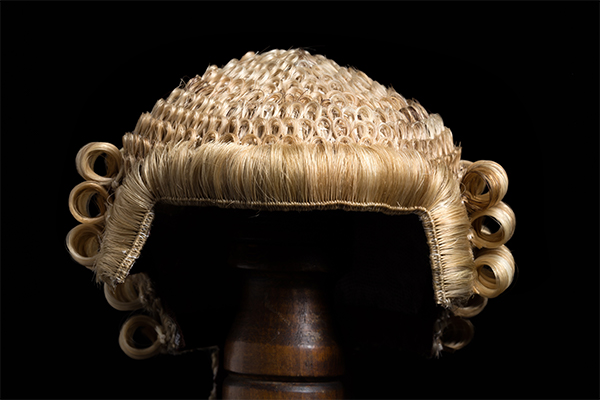
One reason I went to the Bar was because of a court case I watched as a teenager, but another was my reading of famous trials in wonderful books containing the transcripts of the hearings. I knew this had also influenced Jason. He told me so in pupillage. More recently, I have been reading cases at Old Bailey Online which is the result of huge effort and research of nearly 200,000 cases from 1674-1913. I saw that an Isaac Josephs was acquitted of burgling a William Byfield in 1721. Disgraceful! Two periwigs were stolen. All barristers feel for the victim of wig theft.
Jason was waiting on a verdict in his case, one that had captured the public imagination. ‘Couldn’t write a famous trials book about it now, could you?’ he said. ‘Where would you get the record from?’ ‘It’s all kept in that wretched permanent recording machine,’ I said. Jason shuddered. ‘Can you imagine what that machine is recording? Anything and everything we say in court, including to each other.’ I thought for a few seconds and went cold. ‘And,’ said Jason, ‘modern trials are so long you would need about ten volumes.’ That was also a very good point, but I wasn’t really listening. I was turning to ice. What exactly was it that had I whispered that very morning to my junior in court about the shortcomings of our client’s brain...?
William Byfield is the pseudonym of a senior member of the Bar. Gutteridge Chambers, and the events that happen there, are entirely fictitious.
I have no animus towards Kenneth Baker, Baron Baker of Dorking, although I blame him for that national curriculum in the mid 1980s. It was a classic example of political mending when the object in question wasn’t broken. This was particularly tragic for the study of history – Baker’s own degree subject at Oxford. The joys of the many choices and options of the previous examination boards was seemingly replaced with Henry VIII (or some manifestation of the Tudors) and Hitler. That and many other changes seem to have created generations of people who have not, as the Bourbons, remembered everything and learnt nothing but instead have never known any of it in the first place.
This has been a bugbear of mine ever since I saw the bespectacled Secretary of State staring at me through my television screen with that look of the fanatic throughout the ages. Perhaps, like me, he had become tired of trying to remember who won which battles in the Wars of the Roses or the answer to the Schleswig-Holstein Question.
Nearer to home, I have become worried about how hundreds of major criminal cases are no longer transcribed at all. The topic cropped up while I was waiting for a verdict. In long trials, this is a bizarre ritual which surely in the 21st century could be better managed. We send the jury out in the morning each day, drink unhealthy amounts of coffee, break for a sandwich and come back at 2pm for a couple of hours of tea drinking. To start with we tell each other our best court stories. Then we play with our phones. Next, we sit looking around aimlessly and eventually become catatonic. Brief interludes include an occasional note from the jury, a chat with the client (usually in the cells) and an occasional walk around the Bar Mess. Smokers find the postage stamp space in which to puff away. The chats with the lay client tend to be short. I asked one young lad if he found talking with me helpful while the jury was out. ‘It’s like a dentist keep coming in the waiting room,’ he said. I left gracefully. In December, there are Christmas cards to write. In the summer, there are the tennis and cricket commentaries.
Anyway, I had my feet up on a chair when Jason Pike came and sat next to me. He was my pupil many moons ago. He had read history too. We had the ‘Baker’ conversation. Then he asked me why I joined the Bar. I don’t like this question, because I am aware I often give different answers – doubtless because there is no one answer, but a whole thread of circumstances and stimuli that led to the decision. I also dillied and dallied and had second and third thoughts. This was not because I had actual doubts about becoming a barrister but more because I saw it as my inexorable fate and I was putting off the moment when that life started. I knew it was a life I would never leave voluntarily.
One reason I went to the Bar was because of a court case I watched as a teenager, but another was my reading of famous trials in wonderful books containing the transcripts of the hearings. I knew this had also influenced Jason. He told me so in pupillage. More recently, I have been reading cases at Old Bailey Online which is the result of huge effort and research of nearly 200,000 cases from 1674-1913. I saw that an Isaac Josephs was acquitted of burgling a William Byfield in 1721. Disgraceful! Two periwigs were stolen. All barristers feel for the victim of wig theft.
Jason was waiting on a verdict in his case, one that had captured the public imagination. ‘Couldn’t write a famous trials book about it now, could you?’ he said. ‘Where would you get the record from?’ ‘It’s all kept in that wretched permanent recording machine,’ I said. Jason shuddered. ‘Can you imagine what that machine is recording? Anything and everything we say in court, including to each other.’ I thought for a few seconds and went cold. ‘And,’ said Jason, ‘modern trials are so long you would need about ten volumes.’ That was also a very good point, but I wasn’t really listening. I was turning to ice. What exactly was it that had I whispered that very morning to my junior in court about the shortcomings of our client’s brain...?

Chair of the Bar finds common ground on legal services between our two jurisdictions, plus an update on jury trials
A £500 donation from AlphaBiolabs has been made to the leading UK charity tackling international parental child abduction and the movement of children across international borders
Marie Law, Director of Toxicology at AlphaBiolabs, outlines the drug and alcohol testing options available for family law professionals, and how a new, free guide can help identify the most appropriate testing method for each specific case
By Louise Crush of Westgate Wealth Management
Marie Law, Director of Toxicology at AlphaBiolabs, examines the latest ONS data on drug misuse and its implications for toxicology testing in family law cases
An interview with Rob Wagg, CEO of New Park Court Chambers
With at least 31 reports of AI hallucinations in UK legal cases – over 800 worldwide – and judges using AI to assist in judicial decision-making, the risks and benefits are impossible to ignore. Matthew Lee examines how different jurisdictions are responding
What has changed, and why? Paul Secher unpacks the new standards aligning the recruiting, training and appraising of judges – the first major change to the system for ten years
The deprivation of liberty is the most significant power the state can exercise. Drawing on frontline experience, Chris Henley KC explains why replacing trial by jury with judge-only trials risks undermining justice
Ever wondered what a pupillage is like at the CPS? This Q and A provides an insight into the training, experience and next steps
The appointments of 96 new King’s Counsel (also known as silk) are announced today