*/
The renowned composer John Rutter reviews the third Bar Choral Society concert, performed in Temple Church on 10 June
If the Bar Choral Society didn’t exist, you would have to invent it.
Fortunately it does exist, though when it didn’t, as little as two years ago, Timothy Dutton QC invented it, and, as with all great inventions, you wonder how we ever managed before. The Bar is a fascinating body (to your legally unqualified reviewer, at least): tightly-knit in some ways, nebulous in others, an assemblage of quite individualistic and often strongly-driven people of high gifts, who follow their calling alone or at best in small teams – rather like musicians, come to think of it – and who, you might imagine, would be glad to chill out of an evening with a glass of port watching re-runs of Rumpole or Law and Order UK. How wrong you would be. The Bar Choral Society, on the showing of their third concert, are hell-bent on the same killer excellence that has propelled them to the top in their day jobs.
Haydn’s Lord Nelson Mass was the main work, and a good choice: dramatic – the Napoleonic threat to Haydn’s homeland was a dark shadow hanging over the composer in 1798 when he wrote it; challenging – his choral writing is not for the faint-hearted, sopranos having to soar to high B flats, a bit like opening up a rarely used loft extension – and it needs an excellent conductor with a grasp of the music’s changing moods and symphonic grandeur, plus four wonderful soloists, including a soprano who can deliver agile coloratura runs with the virtuosity of a Marshall Hall address to the jury (Elin Manahan Thomas indeed delivered). Ruth Massey, Matthew Sandy and DeAndre Simmons made up the rest of an exceptionally well-matched quartet. The orchestra needs to be pretty nifty too, and the Southbank Sinfonia was up to the mark. It was established fairly recently to offer top-level orchestral experience to selected young professionals in the years immediately after graduation, a kind of pupillage, and it is set to become a regular and well-matched partner to the Choral Society.
In setting up a choral society in the Temple, there are inbuilt advantages. The church itself is an acoustically and architecturally resplendent space, though I foresee a time when a bigger venue will be needed to accommodate audience numbers. There is a tradition of choral excellence already in place thanks to the continued inspiration offered by the Temple Church Choir; and you don’t have to go far to find a top-class conductor and choral trainer from the home team, Greg Morris, who is fast gaining rock star status among his singers. And, above all, there is a body of very able individuals on hand who are willing to experience the unique thrill of choral singing (the late Kingsley Amis famously described it as “the most fun you can have with your clothes on”) and who are determined not just to do it, but to do it right.
The American Bar Association has been in town, and in their honour the concert was topped off with two scrumptuous pieces of Americana: Deep River, one of the best-loved of spirituals, with DeAndre Simmons the impressive solo bass, and Summertime, reborn in a gorgeous specially-written arrangement by Iain Farrington with Elin Manahan Thomas revealing a whole other side to her vocal talents.
The prosecuting counsel is going to say “I put it to you, Mr Rutter, that as president of the Bar Choral Society, your impartiality as a reviewer is already fatally compromised, and furthermore, you have accepted no less than three excellent dinners from the Chairman”. All true. Guilty. In mitigation, I plead that in my long experience, I have listened to innumerable choirs the world over. Some I have enjoyed, and I have been happy to speak of them, others have given me pain, and in these cases I maintain a discreet silence. I did not need to exercise my right to silence in the case of the Bar Choral Society: I thoroughly enjoyed what was, by any standards, an accomplished, crisp, well-planned and thoroughly musical concert, which would have lifted the spirits of even the most jaded listener.
CHARITY CONCERT 16 November
The Bar Choral Society’s next concert is being held in aid of the National Brain Appeal on 16 November at 7.00pm in Temple Church. The concert will feature the Vivaldi Gloria, Handel Let the Bright Seraphim, and Monteverdi Ave Maris Stella (from Vespers) with soloists Grace Davidson and Will Towers, and the Temple Players orchestra. Tickets will be available via the website www.barchoralsociety.co.uk or from Temple Music Foundation www.templemusic.org.
Contributor John Rutter CBE
Composer, conductor and Bar Choral Society President
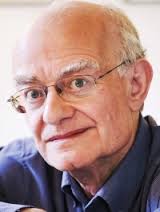
John was Director of Music at Clare College and now divides his time between composition and conducting. He was awarded a CBE in 2007 for services to music.
Fortunately it does exist, though when it didn’t, as little as two years ago, Timothy Dutton QC invented it, and, as with all great inventions, you wonder how we ever managed before. The Bar is a fascinating body (to your legally unqualified reviewer, at least): tightly-knit in some ways, nebulous in others, an assemblage of quite individualistic and often strongly-driven people of high gifts, who follow their calling alone or at best in small teams – rather like musicians, come to think of it – and who, you might imagine, would be glad to chill out of an evening with a glass of port watching re-runs of Rumpole or Law and Order UK. How wrong you would be. The Bar Choral Society, on the showing of their third concert, are hell-bent on the same killer excellence that has propelled them to the top in their day jobs.
Haydn’s Lord Nelson Mass was the main work, and a good choice: dramatic – the Napoleonic threat to Haydn’s homeland was a dark shadow hanging over the composer in 1798 when he wrote it; challenging – his choral writing is not for the faint-hearted, sopranos having to soar to high B flats, a bit like opening up a rarely used loft extension – and it needs an excellent conductor with a grasp of the music’s changing moods and symphonic grandeur, plus four wonderful soloists, including a soprano who can deliver agile coloratura runs with the virtuosity of a Marshall Hall address to the jury (Elin Manahan Thomas indeed delivered). Ruth Massey, Matthew Sandy and DeAndre Simmons made up the rest of an exceptionally well-matched quartet. The orchestra needs to be pretty nifty too, and the Southbank Sinfonia was up to the mark. It was established fairly recently to offer top-level orchestral experience to selected young professionals in the years immediately after graduation, a kind of pupillage, and it is set to become a regular and well-matched partner to the Choral Society.
In setting up a choral society in the Temple, there are inbuilt advantages. The church itself is an acoustically and architecturally resplendent space, though I foresee a time when a bigger venue will be needed to accommodate audience numbers. There is a tradition of choral excellence already in place thanks to the continued inspiration offered by the Temple Church Choir; and you don’t have to go far to find a top-class conductor and choral trainer from the home team, Greg Morris, who is fast gaining rock star status among his singers. And, above all, there is a body of very able individuals on hand who are willing to experience the unique thrill of choral singing (the late Kingsley Amis famously described it as “the most fun you can have with your clothes on”) and who are determined not just to do it, but to do it right.
The American Bar Association has been in town, and in their honour the concert was topped off with two scrumptuous pieces of Americana: Deep River, one of the best-loved of spirituals, with DeAndre Simmons the impressive solo bass, and Summertime, reborn in a gorgeous specially-written arrangement by Iain Farrington with Elin Manahan Thomas revealing a whole other side to her vocal talents.
The prosecuting counsel is going to say “I put it to you, Mr Rutter, that as president of the Bar Choral Society, your impartiality as a reviewer is already fatally compromised, and furthermore, you have accepted no less than three excellent dinners from the Chairman”. All true. Guilty. In mitigation, I plead that in my long experience, I have listened to innumerable choirs the world over. Some I have enjoyed, and I have been happy to speak of them, others have given me pain, and in these cases I maintain a discreet silence. I did not need to exercise my right to silence in the case of the Bar Choral Society: I thoroughly enjoyed what was, by any standards, an accomplished, crisp, well-planned and thoroughly musical concert, which would have lifted the spirits of even the most jaded listener.
CHARITY CONCERT 16 November
The Bar Choral Society’s next concert is being held in aid of the National Brain Appeal on 16 November at 7.00pm in Temple Church. The concert will feature the Vivaldi Gloria, Handel Let the Bright Seraphim, and Monteverdi Ave Maris Stella (from Vespers) with soloists Grace Davidson and Will Towers, and the Temple Players orchestra. Tickets will be available via the website www.barchoralsociety.co.uk or from Temple Music Foundation www.templemusic.org.
Contributor John Rutter CBE
Composer, conductor and Bar Choral Society President
The renowned composer John Rutter reviews the third Bar Choral Society concert, performed in Temple Church on 10 June
If the Bar Choral Society didn’t exist, you would have to invent it.

Chair of the Bar finds common ground on legal services between our two jurisdictions, plus an update on jury trials
A £500 donation from AlphaBiolabs has been made to the leading UK charity tackling international parental child abduction and the movement of children across international borders
Marie Law, Director of Toxicology at AlphaBiolabs, outlines the drug and alcohol testing options available for family law professionals, and how a new, free guide can help identify the most appropriate testing method for each specific case
By Louise Crush of Westgate Wealth Management
Marie Law, Director of Toxicology at AlphaBiolabs, examines the latest ONS data on drug misuse and its implications for toxicology testing in family law cases
An interview with Rob Wagg, CEO of New Park Court Chambers
With at least 31 reports of AI hallucinations in UK legal cases – over 800 worldwide – and judges using AI to assist in judicial decision-making, the risks and benefits are impossible to ignore. Matthew Lee examines how different jurisdictions are responding
What has changed, and why? Paul Secher unpacks the new standards aligning the recruiting, training and appraising of judges – the first major change to the system for ten years
The deprivation of liberty is the most significant power the state can exercise. Drawing on frontline experience, Chris Henley KC explains why replacing trial by jury with judge-only trials risks undermining justice
Ever wondered what a pupillage is like at the CPS? This Q and A provides an insight into the training, experience and next steps
The appointments of 96 new King’s Counsel (also known as silk) are announced today