*/
At the time of writing, the BBC has reported that Chancellor of the Exchequer Rachel Reeves has now agreed budgets with all of the government departments, and by the time you read this you will know if justice secures the additional resources needed to start to tackle the ongoing crisis affecting all of the system.
The Lady Chief Justice used her first speech at the Lord Mayor’s annual dinner for judges in October to tell ministers that ‘sustainable and long-term funding’ is needed to help the courts and judiciary secure the rule of law effectively. We agree. We know from other media reports that the Justice Secretary Shabana Mahmood has been lobbying hard with her colleagues in government for more funds.
We continue to work with colleagues from across the justice sector to put forward a compelling case for further investment, and we have offered evidence to show where it is possible for the government to spend on justice in order to save money for the Treasury elsewhere. October’s Budget is just the start of the conversation – the Spring Spending Review then sets the funding for the rest of this Parliament. We will continue to prioritise this work on behalf of the Bar – your support via the voluntary Bar Representation Fee allows us to do this.
We have welcomed the announcement of the sentencing review and the appointment of former Lord Chancellor David Gauke as its chair. One of the real drags on seeking to get the Crown Court backlogs down and to ensure swift and efficient justice has been the mismatch of ever heavier prison sentences and inadequate prison places to meet the imposed demand. Measures to speed up the Crown Courts have previously been thwarted due to the lack of prison spaces. Addressing sentences and the capacity of prisons is a necessary prerequisite to turning around the criminal justice system and in particular the delays in the Crown Courts.
The terms of reference for the sentencing review includes the establishment of an independent panel. We have been assured that the Bar will be given the opportunity to make submissions to the chair and panel and would expect to play a positive role in its deliberations.
The Opening of the Legal Year is always a wonderful occasion marked by a service in Westminster Abbey and judges and others processing to Westminster Hall. Lawyers representing over 50 jurisdictions convened in London to honour the pivotal role that the judiciary and lawyers play in safeguarding the rule of law.
The Bar Council and Law Society hosted a leaders’ event focused on the function of the legal profession in elections. The theme was chosen as there are more than 80 countries undergoing general elections this year and more than half of the world’s population will be going to the polls or have already been. I was fortunate to address the Bar leaders on developments in international rule of law.
Our International Committee will be collaborating with the Council of Bars and Law Societies of Europe (CCBE) to offer support for the draft European Convention on the protection of the profession of lawyer. The aim of the convention is to strengthen the rule of law and help protect lawyers when doing their jobs.
We have seen attacks on lawyers increase in recent years and this has included harassment and threats (both online and offline), surveillance, imprisonment, enforced disappearances and murder in countries that are part of the Council of Europe. A new instrument is needed to ensure there are effective protections in place.
As the Attorney General Lord Hermer KC stressed in his Bingham Lecture on the rule of law, it is important to combat disinformation and misinformation about the law and lawyers. He said: ‘The disgraceful scenes of violent disorder over the summer, including threats against immigration law firms and advice centres, showed only too vividly that what is said online can have dangerous consequences in the real world.’
Lord Hermer’s comment that it is now time for us to ‘reaffirm the rule of law’ will no doubt resonate with the Bar. In the speech, he emphasised three key themes: rebuilding the UK’s reputation as a leader in the field of international law and the international rules-based order; strengthening Parliament’s role in upholding the rule of law; and promoting a rule of law culture. The Bar Council will play its part towards achieving these laudable goals.
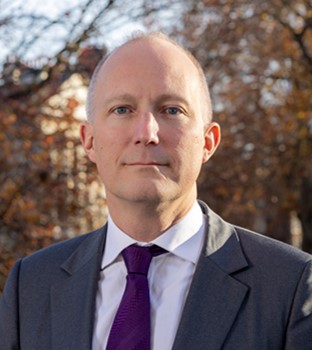
Sam Townend KC is Chair of the Bar 2024. Sam is a silk at Keating Chambers and practises in domestic and international construction, energy and professional negligence work. He is a mediator and adjudicator, and a Bencher at Lincoln's Inn.
At the time of writing, the BBC has reported that Chancellor of the Exchequer Rachel Reeves has now agreed budgets with all of the government departments, and by the time you read this you will know if justice secures the additional resources needed to start to tackle the ongoing crisis affecting all of the system.
The Lady Chief Justice used her first speech at the Lord Mayor’s annual dinner for judges in October to tell ministers that ‘sustainable and long-term funding’ is needed to help the courts and judiciary secure the rule of law effectively. We agree. We know from other media reports that the Justice Secretary Shabana Mahmood has been lobbying hard with her colleagues in government for more funds.
We continue to work with colleagues from across the justice sector to put forward a compelling case for further investment, and we have offered evidence to show where it is possible for the government to spend on justice in order to save money for the Treasury elsewhere. October’s Budget is just the start of the conversation – the Spring Spending Review then sets the funding for the rest of this Parliament. We will continue to prioritise this work on behalf of the Bar – your support via the voluntary Bar Representation Fee allows us to do this.
We have welcomed the announcement of the sentencing review and the appointment of former Lord Chancellor David Gauke as its chair. One of the real drags on seeking to get the Crown Court backlogs down and to ensure swift and efficient justice has been the mismatch of ever heavier prison sentences and inadequate prison places to meet the imposed demand. Measures to speed up the Crown Courts have previously been thwarted due to the lack of prison spaces. Addressing sentences and the capacity of prisons is a necessary prerequisite to turning around the criminal justice system and in particular the delays in the Crown Courts.
The terms of reference for the sentencing review includes the establishment of an independent panel. We have been assured that the Bar will be given the opportunity to make submissions to the chair and panel and would expect to play a positive role in its deliberations.
The Opening of the Legal Year is always a wonderful occasion marked by a service in Westminster Abbey and judges and others processing to Westminster Hall. Lawyers representing over 50 jurisdictions convened in London to honour the pivotal role that the judiciary and lawyers play in safeguarding the rule of law.
The Bar Council and Law Society hosted a leaders’ event focused on the function of the legal profession in elections. The theme was chosen as there are more than 80 countries undergoing general elections this year and more than half of the world’s population will be going to the polls or have already been. I was fortunate to address the Bar leaders on developments in international rule of law.
Our International Committee will be collaborating with the Council of Bars and Law Societies of Europe (CCBE) to offer support for the draft European Convention on the protection of the profession of lawyer. The aim of the convention is to strengthen the rule of law and help protect lawyers when doing their jobs.
We have seen attacks on lawyers increase in recent years and this has included harassment and threats (both online and offline), surveillance, imprisonment, enforced disappearances and murder in countries that are part of the Council of Europe. A new instrument is needed to ensure there are effective protections in place.
As the Attorney General Lord Hermer KC stressed in his Bingham Lecture on the rule of law, it is important to combat disinformation and misinformation about the law and lawyers. He said: ‘The disgraceful scenes of violent disorder over the summer, including threats against immigration law firms and advice centres, showed only too vividly that what is said online can have dangerous consequences in the real world.’
Lord Hermer’s comment that it is now time for us to ‘reaffirm the rule of law’ will no doubt resonate with the Bar. In the speech, he emphasised three key themes: rebuilding the UK’s reputation as a leader in the field of international law and the international rules-based order; strengthening Parliament’s role in upholding the rule of law; and promoting a rule of law culture. The Bar Council will play its part towards achieving these laudable goals.


Chair of the Bar finds common ground on legal services between our two jurisdictions, plus an update on jury trials
A £500 donation from AlphaBiolabs has been made to the leading UK charity tackling international parental child abduction and the movement of children across international borders
Marie Law, Director of Toxicology at AlphaBiolabs, outlines the drug and alcohol testing options available for family law professionals, and how a new, free guide can help identify the most appropriate testing method for each specific case
By Louise Crush of Westgate Wealth Management
Marie Law, Director of Toxicology at AlphaBiolabs, examines the latest ONS data on drug misuse and its implications for toxicology testing in family law cases
An interview with Rob Wagg, CEO of New Park Court Chambers
With at least 31 reports of AI hallucinations in UK legal cases – over 800 worldwide – and judges using AI to assist in judicial decision-making, the risks and benefits are impossible to ignore. Matthew Lee examines how different jurisdictions are responding
What has changed, and why? Paul Secher unpacks the new standards aligning the recruiting, training and appraising of judges – the first major change to the system for ten years
The deprivation of liberty is the most significant power the state can exercise. Drawing on frontline experience, Chris Henley KC explains why replacing trial by jury with judge-only trials risks undermining justice
Ever wondered what a pupillage is like at the CPS? This Q and A provides an insight into the training, experience and next steps
The appointments of 96 new King’s Counsel (also known as silk) are announced today