*/
Technological advances give barristers greater flexibility, but less chance to unwind: the Bar Council’s forthcoming suite of wellbeing support can help
Before the internet, August was a time when the Bar went on holiday, or, if not on holiday, had some respite from the normal speed of life.
The courts closed. Time did not run in court proceedings. There was not as much arbitration in those days and certainly not as much international travel. Some juniors stayed around to pick up work which couldn’t wait, such as urgent applications, but generally it was accepted that barristers didn’t work in August.
In 2016, life is very different and not just because of the internet. Many of us will have taken some time off during August, but very few will have taken the whole month off. For those of us who disappeared in August, or indeed at any time during the year, it is increasingly difficult to ignore work. Courts, arbitrations and adjudications do not respect August as they once did. E-mails permit us to be accessible almost everywhere. A few remote outposts remain, but they are dwindling. Clients, like the rest of us, expect answers to e-mails, sooner rather than later. This makes it harder to truly escape.
Do not misunderstand. I recognise that technology brings many benefits, both for us as lawyers, and for the public. But there was a benefit to August being in effect an enforced break from work.
The Bar is a demanding and hard job. As I was paddle-boarding in a lake in New England last month, I got to thinking how similar it was, or can be, to some aspects of life at the Bar. Paddle-boarding is often a solitary sport. It requires determination (and balance) to stay upright and on course. In the early days, one falls off quite a bit, and even when more experienced, if the conditions are windy, or the water choppy. You have to climb back onto the board and keep going. But once mastered, and when everything is working in your favour, you have a real sense of achievement. It is also, I should confess, one of the few places on my holiday where I simply could not look at my BlackBerry or iPhone.
One of the many advantages of technology is that, assuming you are not actually physically needed for court, you can work from pretty much anywhere these days, allowing much greater flexibility. The challenge may be, at
least for those less disciplined with technology, to ensure that enough time is built in for R&R. It is vital for our wellbeing that we recognise the pressures which come with the job and that we make time to regenerate our batteries, both physically and mentally and to retain, or regain, perspective.
At the Bar Council we are building a suite of wellbeing support for barristers and for chambers which we will be launching in a few weeks. Our focus will be on providing barristers with the information and skills they need to stay well, to support the profession as they deal with issues that arise in so far as they affect a barrister’s professional life, and to provide assistance for those with responsibility for, or taking on a supporting role for, those in difficulty or crisis. Please look out for this.
Contributor Chantal-Aimée Doerries QC, Chairman of the Bar
WORKING ON YOUR BEHALF:
A glimpse of some of the Bar Council’s work in July 2016
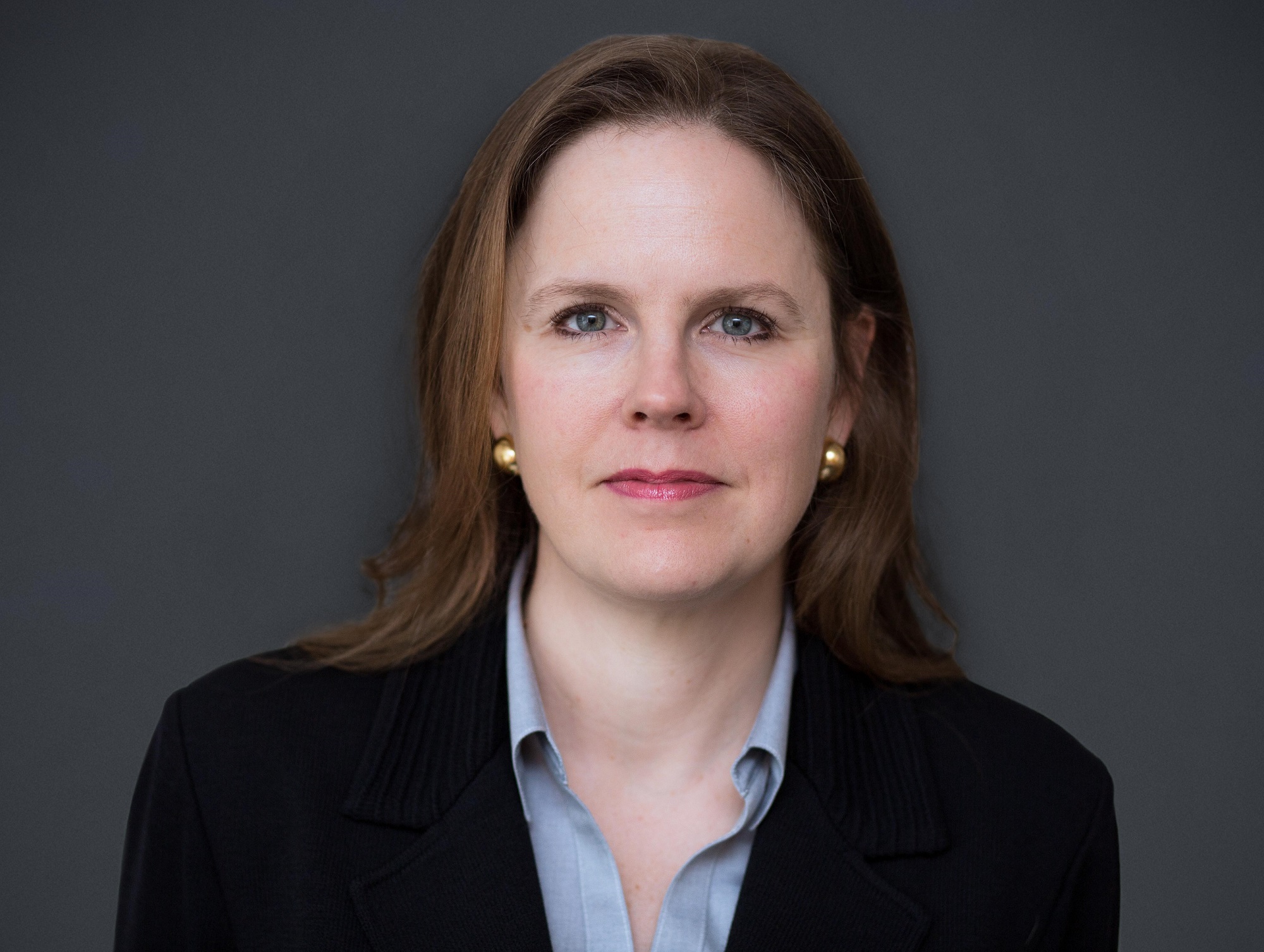
Chantal-Aimée Doerries KC is the Head of Atkin Chambers and was 2016 Chair of the Bar of England and Wales.
Before the internet, August was a time when the Bar went on holiday, or, if not on holiday, had some respite from the normal speed of life.
The courts closed. Time did not run in court proceedings. There was not as much arbitration in those days and certainly not as much international travel. Some juniors stayed around to pick up work which couldn’t wait, such as urgent applications, but generally it was accepted that barristers didn’t work in August.
In 2016, life is very different and not just because of the internet. Many of us will have taken some time off during August, but very few will have taken the whole month off. For those of us who disappeared in August, or indeed at any time during the year, it is increasingly difficult to ignore work. Courts, arbitrations and adjudications do not respect August as they once did. E-mails permit us to be accessible almost everywhere. A few remote outposts remain, but they are dwindling. Clients, like the rest of us, expect answers to e-mails, sooner rather than later. This makes it harder to truly escape.
Do not misunderstand. I recognise that technology brings many benefits, both for us as lawyers, and for the public. But there was a benefit to August being in effect an enforced break from work.
The Bar is a demanding and hard job. As I was paddle-boarding in a lake in New England last month, I got to thinking how similar it was, or can be, to some aspects of life at the Bar. Paddle-boarding is often a solitary sport. It requires determination (and balance) to stay upright and on course. In the early days, one falls off quite a bit, and even when more experienced, if the conditions are windy, or the water choppy. You have to climb back onto the board and keep going. But once mastered, and when everything is working in your favour, you have a real sense of achievement. It is also, I should confess, one of the few places on my holiday where I simply could not look at my BlackBerry or iPhone.
One of the many advantages of technology is that, assuming you are not actually physically needed for court, you can work from pretty much anywhere these days, allowing much greater flexibility. The challenge may be, at
least for those less disciplined with technology, to ensure that enough time is built in for R&R. It is vital for our wellbeing that we recognise the pressures which come with the job and that we make time to regenerate our batteries, both physically and mentally and to retain, or regain, perspective.
At the Bar Council we are building a suite of wellbeing support for barristers and for chambers which we will be launching in a few weeks. Our focus will be on providing barristers with the information and skills they need to stay well, to support the profession as they deal with issues that arise in so far as they affect a barrister’s professional life, and to provide assistance for those with responsibility for, or taking on a supporting role for, those in difficulty or crisis. Please look out for this.
Contributor Chantal-Aimée Doerries QC, Chairman of the Bar
WORKING ON YOUR BEHALF:
A glimpse of some of the Bar Council’s work in July 2016
Technological advances give barristers greater flexibility, but less chance to unwind: the Bar Council’s forthcoming suite of wellbeing support can help


Chair of the Bar finds common ground on legal services between our two jurisdictions, plus an update on jury trials
A £500 donation from AlphaBiolabs has been made to the leading UK charity tackling international parental child abduction and the movement of children across international borders
Marie Law, Director of Toxicology at AlphaBiolabs, outlines the drug and alcohol testing options available for family law professionals, and how a new, free guide can help identify the most appropriate testing method for each specific case
By Louise Crush of Westgate Wealth Management
Marie Law, Director of Toxicology at AlphaBiolabs, examines the latest ONS data on drug misuse and its implications for toxicology testing in family law cases
An interview with Rob Wagg, CEO of New Park Court Chambers
With at least 31 reports of AI hallucinations in UK legal cases – over 800 worldwide – and judges using AI to assist in judicial decision-making, the risks and benefits are impossible to ignore. Matthew Lee examines how different jurisdictions are responding
What has changed, and why? Paul Secher unpacks the new standards aligning the recruiting, training and appraising of judges – the first major change to the system for ten years
The deprivation of liberty is the most significant power the state can exercise. Drawing on frontline experience, Chris Henley KC explains why replacing trial by jury with judge-only trials risks undermining justice
Ever wondered what a pupillage is like at the CPS? This Q and A provides an insight into the training, experience and next steps
The appointments of 96 new King’s Counsel (also known as silk) are announced today