*/

I remember as a student being given an essay title by an over-sincere teacher. The title was: ‘Why?’ Watching my fellow pupils scribbling away, I eventually wrote ‘Why not?’ and left it at that. My essay was marked Alpha ++/ Delta --. I could not see the point of the title.
Things did not improve when I arrived at Sheffield University. Heavily under-inspired, I spent much of my time playing the piano at the Red House pub. When asked to write an essay: ‘What is the role of the executive in our society?’, I wrote an essay about the role of the administrative, the Civil Service. Come to think of it, it might be said that I was not far wrong in confusing the two. I was told by my constitutional law lecturer that I was the only person to whom he had ever given 0/20. He asked me whether I had thought of switching courses.
I was brought up in the Midlands. One of the strongest influences of my early life has been the death, in tragic and complex circumstances, of my mother and my own involvement in the immediate aftermath of her death. I was then brought up under the strong influence of four people – my father, my stepmother and my paternal grandparents. My paternal grandfather manned a machine-gun in the First World War; he was shot three times and very nearly killed. His experiences left him driven by the need to identify principle – what is right and what is wrong. And to stick to principle, even if it might cost him his life. My father served in the Second World War and had the same dogmatic adherence to principle; trained by the Royal Marines and aged 19, by the end of the war, he was a captain in the army before going to Oxford and then into accountancy. And my stepmother? Born, as she put it, in the back streets of Huyton, she was the most loyal, principled and devoted person that I have ever met. You identify what is right and then you stick to it. Like me, they would each despair if they could see some of the things that have gone on in recent years.
That brings me on to books and music. The first book I want to mention is Narcissus and Goldmund. Written by Herman Hesse, it tells the tale of an aesthetic monk (Narcissus) and his relationship with Goldmund, who explores life to its fullest. I understand only too well the combination of the polar opposites that the story tells – the quest for quiet understanding and the desire to see, and experience, life.
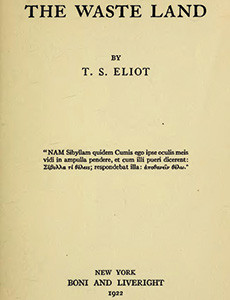
And poetry? As a student, I learnt several of the poems of TS Elliot by heart, including The Waste Land which I still carry around with me in my head and recite sometimes when driving (until the windscreen tells me to shut up). I think that, if you read it, really own it, it reveals itself as a great love poem for someone who has died, as well everything else. Try reading it from that perspective. However, the poem also speaks to me about purpose and the finding of peace, ending as it does with the Sanskrit “Datta. Dayadhvam. Damyata. Shantih, shantih, shantih.’
And music? I love La Traviata, the third scene especially. It combines the inner remorse of the story with the power of brilliant musicality. If there is anything that is God given it is art. The story shows the decline of Violetta’s health from being a glittering socialite to the point where she dies, and Alfredo cannot accept her death.
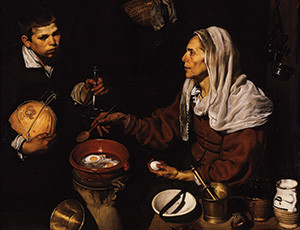
And painting? How about An old woman cooking eggs by Velazquez. Why? Because it is simple, unpretentious and masterful. Like the best of advocacy.
So, it is with that that I came into the law. If asked ‘why?’ I suspect the answer is ‘why not?’ And, hopefully, the quest for principle, purpose and structure. I have been extremely fortunate and supported in my career. Thanks.
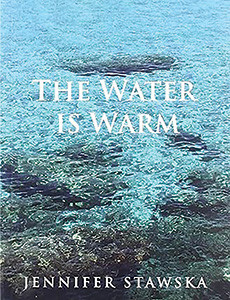
Which brings me on to the novel that I wrote. It is written in the first person singular and involves a barrister crashing out of the Bar, moving to Sri Lanka and living in a relationship with Josh. Josh dies and the whole book is dedicated to him. It is not factually autobiographical. I happen to be married with six children. It took me 10 years and 20 rewrites to complete. It includes ‘the true purpose of life is compassion, for that is both universal and it is also where the peace of God lies, in life and in death.’ There is no such thing as them. Only us. That is what I believe. The rest is God’s business.
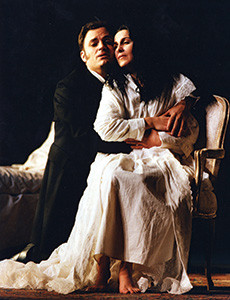
La Traviata – ‘Inner remorse combined with brilliant musicality.’

HH Stephen Wildblood KC is a family law barrister at 3pb. The Designated Family Judge for Bristol and the surrounding counties 2013-2023, Stephen is now a Private FDR Judge, an early neutral evaluator and is currently qualifying to sit as an Arbitrator to hear Private Law Children matters.
I remember as a student being given an essay title by an over-sincere teacher. The title was: ‘Why?’ Watching my fellow pupils scribbling away, I eventually wrote ‘Why not?’ and left it at that. My essay was marked Alpha ++/ Delta --. I could not see the point of the title.
Things did not improve when I arrived at Sheffield University. Heavily under-inspired, I spent much of my time playing the piano at the Red House pub. When asked to write an essay: ‘What is the role of the executive in our society?’, I wrote an essay about the role of the administrative, the Civil Service. Come to think of it, it might be said that I was not far wrong in confusing the two. I was told by my constitutional law lecturer that I was the only person to whom he had ever given 0/20. He asked me whether I had thought of switching courses.
I was brought up in the Midlands. One of the strongest influences of my early life has been the death, in tragic and complex circumstances, of my mother and my own involvement in the immediate aftermath of her death. I was then brought up under the strong influence of four people – my father, my stepmother and my paternal grandparents. My paternal grandfather manned a machine-gun in the First World War; he was shot three times and very nearly killed. His experiences left him driven by the need to identify principle – what is right and what is wrong. And to stick to principle, even if it might cost him his life. My father served in the Second World War and had the same dogmatic adherence to principle; trained by the Royal Marines and aged 19, by the end of the war, he was a captain in the army before going to Oxford and then into accountancy. And my stepmother? Born, as she put it, in the back streets of Huyton, she was the most loyal, principled and devoted person that I have ever met. You identify what is right and then you stick to it. Like me, they would each despair if they could see some of the things that have gone on in recent years.
That brings me on to books and music. The first book I want to mention is Narcissus and Goldmund. Written by Herman Hesse, it tells the tale of an aesthetic monk (Narcissus) and his relationship with Goldmund, who explores life to its fullest. I understand only too well the combination of the polar opposites that the story tells – the quest for quiet understanding and the desire to see, and experience, life.
And poetry? As a student, I learnt several of the poems of TS Elliot by heart, including The Waste Land which I still carry around with me in my head and recite sometimes when driving (until the windscreen tells me to shut up). I think that, if you read it, really own it, it reveals itself as a great love poem for someone who has died, as well everything else. Try reading it from that perspective. However, the poem also speaks to me about purpose and the finding of peace, ending as it does with the Sanskrit “Datta. Dayadhvam. Damyata. Shantih, shantih, shantih.’
And music? I love La Traviata, the third scene especially. It combines the inner remorse of the story with the power of brilliant musicality. If there is anything that is God given it is art. The story shows the decline of Violetta’s health from being a glittering socialite to the point where she dies, and Alfredo cannot accept her death.
And painting? How about An old woman cooking eggs by Velazquez. Why? Because it is simple, unpretentious and masterful. Like the best of advocacy.
So, it is with that that I came into the law. If asked ‘why?’ I suspect the answer is ‘why not?’ And, hopefully, the quest for principle, purpose and structure. I have been extremely fortunate and supported in my career. Thanks.
Which brings me on to the novel that I wrote. It is written in the first person singular and involves a barrister crashing out of the Bar, moving to Sri Lanka and living in a relationship with Josh. Josh dies and the whole book is dedicated to him. It is not factually autobiographical. I happen to be married with six children. It took me 10 years and 20 rewrites to complete. It includes ‘the true purpose of life is compassion, for that is both universal and it is also where the peace of God lies, in life and in death.’ There is no such thing as them. Only us. That is what I believe. The rest is God’s business.
La Traviata – ‘Inner remorse combined with brilliant musicality.’


Chair of the Bar finds common ground on legal services between our two jurisdictions, plus an update on jury trials
A £500 donation from AlphaBiolabs has been made to the leading UK charity tackling international parental child abduction and the movement of children across international borders
Marie Law, Director of Toxicology at AlphaBiolabs, outlines the drug and alcohol testing options available for family law professionals, and how a new, free guide can help identify the most appropriate testing method for each specific case
By Louise Crush of Westgate Wealth Management
Marie Law, Director of Toxicology at AlphaBiolabs, examines the latest ONS data on drug misuse and its implications for toxicology testing in family law cases
An interview with Rob Wagg, CEO of New Park Court Chambers
With at least 31 reports of AI hallucinations in UK legal cases – over 800 worldwide – and judges using AI to assist in judicial decision-making, the risks and benefits are impossible to ignore. Matthew Lee examines how different jurisdictions are responding
What has changed, and why? Paul Secher unpacks the new standards aligning the recruiting, training and appraising of judges – the first major change to the system for ten years
The deprivation of liberty is the most significant power the state can exercise. Drawing on frontline experience, Chris Henley KC explains why replacing trial by jury with judge-only trials risks undermining justice
Ever wondered what a pupillage is like at the CPS? This Q and A provides an insight into the training, experience and next steps
The appointments of 96 new King’s Counsel (also known as silk) are announced today