*/
Following the Queen’s Speech, the Bar Council’s legislative priorities will include the Bill of Rights, Victims Bill and other draft legislation focused on justice, economic crimes, retained EU law and trade.
Our consultation response to the Human Rights Act reform suggested one litmus test of a remodelled Bill of Rights is whether it will provide coherent, readily applicable remedies.
A ‘Brexit Freedoms Bill’ could involve the unpicking of decades of legislation and any steps taken must be considered very carefully to avoid unintended consequences (and uncertainty and costs) that could damage the interests of the UK.
As ever, we continue to engage constructively with parliamentarians and other stakeholders, while we are guided by the expertise and knowledge of the practising barristers that the Bar Council represents.
The Bar Council continues to challenge the myths and stereotypes that are too often linked to our profession, often by politicians. Following the Prime Minister’s claim that ‘liberal lawyers’ will try to scupper the government’s asylum and deportation plans, we pointed out that such attacks are both irresponsible and undermine the rule of law.
Lawyers who provide legal advice in such cases will simply be fulfilling their professional duties. At the same time we need to recognise that any lawyers that associate themselves and their personal views with clients or campaigns may increase the likelihood of such attacks.
The Bar Council has announced the deadline and dates for this year’s Employed Bar Awards which provide a timely opportunity to recognise and celebrate the outstanding contributions made by employed barristers across a range of practice areas and expertise.
The Bar Council is currently inviting entries for five award categories including employed barrister of the year in the public sector; employed barrister of the year in a law firm; employed barrister of the year in commerce, finance, or industry; employed barrister of the year in the Armed Forces; and last but not least is the award for the legal team of the year. The deadline for entries is Wednesday 15 June and I would like to encourage you to submit nominations.
The recently published Chief Inspectors of Police, Criminal Prosecution Service, Probation and Prisons joint report paints a bleak picture about the state of the criminal courts and underlines the urgent need for short and long-term investment (Impact of the COVID-19 pandemic on the criminal justice system – a progress report). Similar problems exist in other jurisdictions. Perhaps one day government will take meaningful action so that such reports can become a distant memory.
On the international front, I have recently returned from a Bar Council delegation to Brussels. I was delighted to be able to meet with members of the Bar of England and Wales based in Brussels. We also met with Brussels representatives of some of the national Bars and Law Societies in Europe, and representatives of the UK’s Mission to the EU, members of the EU-UK Parliamentary Partnership and the Council of the Europe.
It remains crucial that the Bar Council continues to promote the barristers we represent and our work on international issues at a European level by providing useful, independent expertise and input.
The people we met were particularly interested in the UK government’s language around the Northern Ireland protocol, plans for reforming the Human Rights Act, the various developments within the EU, UK and Council of Europe on SLAPPs, and the Council of Europe’s work on a Convention for the Protection of Lawyers.
After Brussels I travelled to Vilnius then Warsaw, meeting Ukrainian and Belarusian lawyers and discussing the extraordinary challenges they face in both countries. In Poland I had the honour of addressing the annual conference of the Warsaw Bar (that makes up about half of all Polish lawyers) and saluting the hospitality of the Polish people who have provided such an extraordinary welcome to millions of refugees. Not many of you may realise the extent to which the independence of the Polish Judiciary and Bar have been undermined and attacked by a populist government in recent years. There have been appointments of inexperienced political figures to the Constitutional Court, seeking to influence decisions and destroy judicial independence. Periodic threats are made to the very existence of the independent Bar. Colleagues in the EU are equally worried, and it is interesting that the ECJ recently rejected attempts by Poland (and Hungary) to alter budget proposals around COVID recovery funds that had been made conditional on the preservation of the rule of law.
In such troubled times, it is heartening and humbling to be reminded of the admiration that exists in different parts of the world for the traditions embodied by our courts and justice system. But we know that our system is far from ideal and much needs to be improved. Unless we remain vigilant and argue for the investment and renewal that we need, we will not deliver the timely justice that the public so urgently deserves.
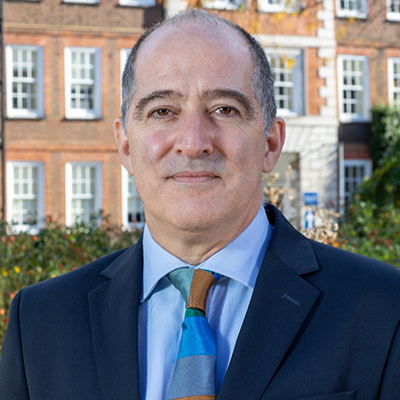
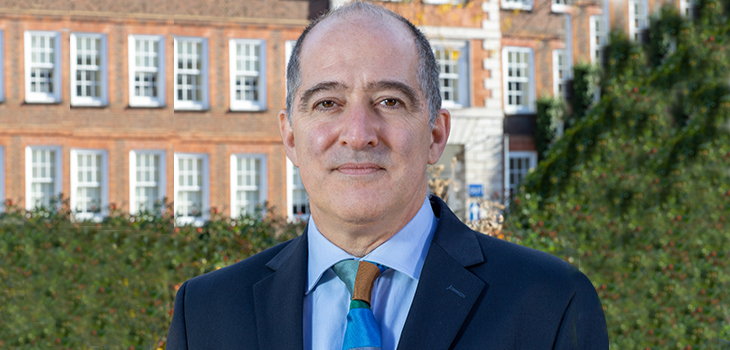
Mark Fenhalls KC is Chair of the Bar for 2022. He is a silk at 23ES.
Following the Queen’s Speech, the Bar Council’s legislative priorities will include the Bill of Rights, Victims Bill and other draft legislation focused on justice, economic crimes, retained EU law and trade.
Our consultation response to the Human Rights Act reform suggested one litmus test of a remodelled Bill of Rights is whether it will provide coherent, readily applicable remedies.
A ‘Brexit Freedoms Bill’ could involve the unpicking of decades of legislation and any steps taken must be considered very carefully to avoid unintended consequences (and uncertainty and costs) that could damage the interests of the UK.
As ever, we continue to engage constructively with parliamentarians and other stakeholders, while we are guided by the expertise and knowledge of the practising barristers that the Bar Council represents.
The Bar Council continues to challenge the myths and stereotypes that are too often linked to our profession, often by politicians. Following the Prime Minister’s claim that ‘liberal lawyers’ will try to scupper the government’s asylum and deportation plans, we pointed out that such attacks are both irresponsible and undermine the rule of law.
Lawyers who provide legal advice in such cases will simply be fulfilling their professional duties. At the same time we need to recognise that any lawyers that associate themselves and their personal views with clients or campaigns may increase the likelihood of such attacks.
The Bar Council has announced the deadline and dates for this year’s Employed Bar Awards which provide a timely opportunity to recognise and celebrate the outstanding contributions made by employed barristers across a range of practice areas and expertise.
The Bar Council is currently inviting entries for five award categories including employed barrister of the year in the public sector; employed barrister of the year in a law firm; employed barrister of the year in commerce, finance, or industry; employed barrister of the year in the Armed Forces; and last but not least is the award for the legal team of the year. The deadline for entries is Wednesday 15 June and I would like to encourage you to submit nominations.
The recently published Chief Inspectors of Police, Criminal Prosecution Service, Probation and Prisons joint report paints a bleak picture about the state of the criminal courts and underlines the urgent need for short and long-term investment (Impact of the COVID-19 pandemic on the criminal justice system – a progress report). Similar problems exist in other jurisdictions. Perhaps one day government will take meaningful action so that such reports can become a distant memory.
On the international front, I have recently returned from a Bar Council delegation to Brussels. I was delighted to be able to meet with members of the Bar of England and Wales based in Brussels. We also met with Brussels representatives of some of the national Bars and Law Societies in Europe, and representatives of the UK’s Mission to the EU, members of the EU-UK Parliamentary Partnership and the Council of the Europe.
It remains crucial that the Bar Council continues to promote the barristers we represent and our work on international issues at a European level by providing useful, independent expertise and input.
The people we met were particularly interested in the UK government’s language around the Northern Ireland protocol, plans for reforming the Human Rights Act, the various developments within the EU, UK and Council of Europe on SLAPPs, and the Council of Europe’s work on a Convention for the Protection of Lawyers.
After Brussels I travelled to Vilnius then Warsaw, meeting Ukrainian and Belarusian lawyers and discussing the extraordinary challenges they face in both countries. In Poland I had the honour of addressing the annual conference of the Warsaw Bar (that makes up about half of all Polish lawyers) and saluting the hospitality of the Polish people who have provided such an extraordinary welcome to millions of refugees. Not many of you may realise the extent to which the independence of the Polish Judiciary and Bar have been undermined and attacked by a populist government in recent years. There have been appointments of inexperienced political figures to the Constitutional Court, seeking to influence decisions and destroy judicial independence. Periodic threats are made to the very existence of the independent Bar. Colleagues in the EU are equally worried, and it is interesting that the ECJ recently rejected attempts by Poland (and Hungary) to alter budget proposals around COVID recovery funds that had been made conditional on the preservation of the rule of law.
In such troubled times, it is heartening and humbling to be reminded of the admiration that exists in different parts of the world for the traditions embodied by our courts and justice system. But we know that our system is far from ideal and much needs to be improved. Unless we remain vigilant and argue for the investment and renewal that we need, we will not deliver the timely justice that the public so urgently deserves.


Chair of the Bar finds common ground on legal services between our two jurisdictions, plus an update on jury trials
A £500 donation from AlphaBiolabs has been made to the leading UK charity tackling international parental child abduction and the movement of children across international borders
Marie Law, Director of Toxicology at AlphaBiolabs, outlines the drug and alcohol testing options available for family law professionals, and how a new, free guide can help identify the most appropriate testing method for each specific case
By Louise Crush of Westgate Wealth Management
Marie Law, Director of Toxicology at AlphaBiolabs, examines the latest ONS data on drug misuse and its implications for toxicology testing in family law cases
An interview with Rob Wagg, CEO of New Park Court Chambers
With at least 31 reports of AI hallucinations in UK legal cases – over 800 worldwide – and judges using AI to assist in judicial decision-making, the risks and benefits are impossible to ignore. Matthew Lee examines how different jurisdictions are responding
What has changed, and why? Paul Secher unpacks the new standards aligning the recruiting, training and appraising of judges – the first major change to the system for ten years
The deprivation of liberty is the most significant power the state can exercise. Drawing on frontline experience, Chris Henley KC explains why replacing trial by jury with judge-only trials risks undermining justice
Ever wondered what a pupillage is like at the CPS? This Q and A provides an insight into the training, experience and next steps
The appointments of 96 new King’s Counsel (also known as silk) are announced today