*/
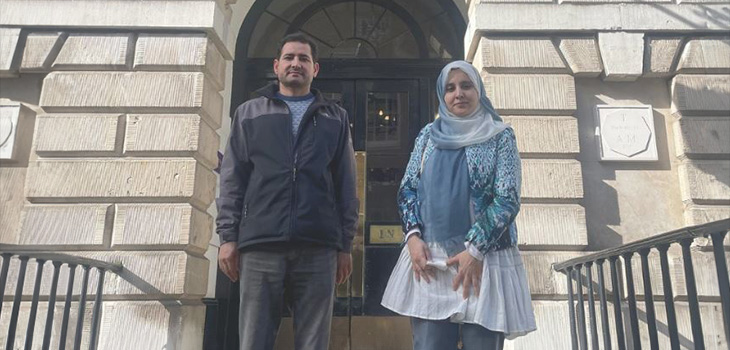
‘We as barristers can show our solidarity and help our colleagues’: Rhiannon Du Cann asks Laurie Scher and Edward Meuli how they found hosting two refugee Afghan colleagues and Mohammad Alef Orfani, former defence attorney and prosecutor in Afghanistan, shares what he thought of the experience
After the Taliban seized power in August 2021, the Afghan justice system collapsed. Thousands of prisoners, including members of ISIS and Al-Qaeda, were released and went on the hunt for revenge, pursuing the legal professionals who had played a part in landing them behind bars.
Many legal professionals and their families received death threats and have fled but for some, the threats have tragically materialised. At least 28 prosecutors and their families have been killed, according to the Guardian, and as of August 2023, almost 4,000 prosecutors and legal staff members remain under threat.
The Taliban have dismissed all appointed prosecutors and judges and abolished the Afghanistan Independent Bar Association and the Attorney General’s Office. Now, only Taliban approved male lawyers are permitted to appear in court. Women judges throughout the country lost their jobs and remain in danger with the International Association of Women Judges publishing an open letter to international community, pleading for help in evacuating and resettling the women still trapped in Afghanistan.
In the wake of the Taliban takeover, London based barristers Laurie Scher and Edward Meuli, both of Maitland Chambers, piloted the Bar Council of England and Wales’s Afghan Refugee Lawyers Insight Programme. Queen Mary University of London helped to establish the initiative.
Scher, who is Co-Chair of the Bar Council’s Pro Bono and Social Responsibility Committee, was touched by Dr Waheed Arian’s autobiography, In The Wars. In the 2021 book, Arian recounts how he fled war torn Afghanistan with his family and came to the UK where he became an NHS doctor. He then founded a global charity that connects doctors in war zones and low resourced countries with their counterparts around the world.
Inspired by Arian’s initiative, Scher and Meuli hosted defence attorney and prosecutor, Mohammad Alef Orfani, and Allia Popal, a female judge of the Kabul Primary Court, at their chambers. Over the course of a week, both had a deep dive in the English and Welsh legal system, visiting courts and meeting with legal professionals, including the Chancery Masters. Scher and Meuli also organised internal advocacy exercises where they explored the differences between the English and Afghan judicial systems.
Meuli said: ‘We tried to make the week as informative and enjoyable as possible. We gave them an introduction into chambers and life in Lincoln's Inn with tours of the library, the Royal Courts of Justice and so on. We took them to watch a civil fraud case that other members of chambers were involved in, which we thought would be an interesting example of the kind of work we do.’
Scher explained that they hoped to show their Afghan colleagues – who have the ‘most glorious, distinguished’ legal CVs – that ‘there’s an entire profession that holds them in great esteem and treats them with the great respect they deserve.’ He added: ‘We aimed to create a network of barristers here who could be informal mentors, and sources of advice and potential opportunities in the future.’
Orfani, who is now working towards securing funding for the Solicitors Qualifying Examination and an internship at a law firm, said he found the programme ‘exceptionally educational’, particularly exploring hypothetical cases and gaining ‘invaluable insights’ from the lawyers he met.
Orfani continued: ‘The segment focusing on building connections taught us the art of networking with our peers through virtual platforms, leveraging their expertise and experiences to enhance our own knowledge. Engaging in dialogues and posing questions to Maitland’s legal experts was a delightful experience, it broadened my understanding of new concerns, institutions, and legal methodologies.’
Scher and Meuli said they equally relished the opportunity to discuss and understand how to decide disputes in other jurisdictions and how this compares with England and Wales. Plus, Meuli got to put his Dari to use – prior to coming to the bar, he trained as a Persian linguist and worked for GCHQ.
He said: ‘There are always things you can learn about what you’re doing from looking at somebody else. The English and Afghan legal systems are very different; we have a common law system that’s completely different to their civil code-based law. It was fascinating to learn about the different kind of judges, how and when litigants prove things, give evidence under oath, and are cross-examined. There were similarities but lots of differences as well. I found it very interesting to talk to these people, who had experienced very difficult situations but come out with a cheeriness and determination to keep going. I was amazed by their positivity.’
Orfani and Popal are at the beginning of another long journey if they wish to requalify. Before they can practise as lawyers in England and Wales, they will need to retrain and have proficient English to read contracts, evidence, and documents. But it is hoped that the scheme has helped Orfani and Popal to make a start building their respective contact books which will ‘pay dividends’ in the future.
Scher continued: ‘They’ve already travelled both metaphorically and literally down a very long road, and they've shown so much drive and resilience to get here. There is obviously a lot still to do, but I don't doubt they will be able to do it.
‘One problem our refugee colleagues have is how to rebuild their lives in a way that maximises their potential, so that they can contribute to society in the best way they can. That problem is not going to solve itself. We as barristers can show our solidarity and help our colleagues.’
Rhiannon Du Cann is a Communications Officer at the Bar Council where she helps develop media and communication strategies, communicating to and on behalf of barristers. She previously worked as a reporter.
Mohammad Alef Orfani formerly practised as a defence attorney and prosecutor in Afghanistan and participated in the Bar Council’s Afghan Refugee Lawyers Insight Programme.
After the Taliban seized power in August 2021, the Afghan justice system collapsed. Thousands of prisoners, including members of ISIS and Al-Qaeda, were released and went on the hunt for revenge, pursuing the legal professionals who had played a part in landing them behind bars.
Many legal professionals and their families received death threats and have fled but for some, the threats have tragically materialised. At least 28 prosecutors and their families have been killed, according to the Guardian, and as of August 2023, almost 4,000 prosecutors and legal staff members remain under threat.
The Taliban have dismissed all appointed prosecutors and judges and abolished the Afghanistan Independent Bar Association and the Attorney General’s Office. Now, only Taliban approved male lawyers are permitted to appear in court. Women judges throughout the country lost their jobs and remain in danger with the International Association of Women Judges publishing an open letter to international community, pleading for help in evacuating and resettling the women still trapped in Afghanistan.
In the wake of the Taliban takeover, London based barristers Laurie Scher and Edward Meuli, both of Maitland Chambers, piloted the Bar Council of England and Wales’s Afghan Refugee Lawyers Insight Programme. Queen Mary University of London helped to establish the initiative.
Scher, who is Co-Chair of the Bar Council’s Pro Bono and Social Responsibility Committee, was touched by Dr Waheed Arian’s autobiography, In The Wars. In the 2021 book, Arian recounts how he fled war torn Afghanistan with his family and came to the UK where he became an NHS doctor. He then founded a global charity that connects doctors in war zones and low resourced countries with their counterparts around the world.
Inspired by Arian’s initiative, Scher and Meuli hosted defence attorney and prosecutor, Mohammad Alef Orfani, and Allia Popal, a female judge of the Kabul Primary Court, at their chambers. Over the course of a week, both had a deep dive in the English and Welsh legal system, visiting courts and meeting with legal professionals, including the Chancery Masters. Scher and Meuli also organised internal advocacy exercises where they explored the differences between the English and Afghan judicial systems.
Meuli said: ‘We tried to make the week as informative and enjoyable as possible. We gave them an introduction into chambers and life in Lincoln's Inn with tours of the library, the Royal Courts of Justice and so on. We took them to watch a civil fraud case that other members of chambers were involved in, which we thought would be an interesting example of the kind of work we do.’
Scher explained that they hoped to show their Afghan colleagues – who have the ‘most glorious, distinguished’ legal CVs – that ‘there’s an entire profession that holds them in great esteem and treats them with the great respect they deserve.’ He added: ‘We aimed to create a network of barristers here who could be informal mentors, and sources of advice and potential opportunities in the future.’
Orfani, who is now working towards securing funding for the Solicitors Qualifying Examination and an internship at a law firm, said he found the programme ‘exceptionally educational’, particularly exploring hypothetical cases and gaining ‘invaluable insights’ from the lawyers he met.
Orfani continued: ‘The segment focusing on building connections taught us the art of networking with our peers through virtual platforms, leveraging their expertise and experiences to enhance our own knowledge. Engaging in dialogues and posing questions to Maitland’s legal experts was a delightful experience, it broadened my understanding of new concerns, institutions, and legal methodologies.’
Scher and Meuli said they equally relished the opportunity to discuss and understand how to decide disputes in other jurisdictions and how this compares with England and Wales. Plus, Meuli got to put his Dari to use – prior to coming to the bar, he trained as a Persian linguist and worked for GCHQ.
He said: ‘There are always things you can learn about what you’re doing from looking at somebody else. The English and Afghan legal systems are very different; we have a common law system that’s completely different to their civil code-based law. It was fascinating to learn about the different kind of judges, how and when litigants prove things, give evidence under oath, and are cross-examined. There were similarities but lots of differences as well. I found it very interesting to talk to these people, who had experienced very difficult situations but come out with a cheeriness and determination to keep going. I was amazed by their positivity.’
Orfani and Popal are at the beginning of another long journey if they wish to requalify. Before they can practise as lawyers in England and Wales, they will need to retrain and have proficient English to read contracts, evidence, and documents. But it is hoped that the scheme has helped Orfani and Popal to make a start building their respective contact books which will ‘pay dividends’ in the future.
Scher continued: ‘They’ve already travelled both metaphorically and literally down a very long road, and they've shown so much drive and resilience to get here. There is obviously a lot still to do, but I don't doubt they will be able to do it.
‘One problem our refugee colleagues have is how to rebuild their lives in a way that maximises their potential, so that they can contribute to society in the best way they can. That problem is not going to solve itself. We as barristers can show our solidarity and help our colleagues.’
‘We as barristers can show our solidarity and help our colleagues’: Rhiannon Du Cann asks Laurie Scher and Edward Meuli how they found hosting two refugee Afghan colleagues and Mohammad Alef Orfani, former defence attorney and prosecutor in Afghanistan, shares what he thought of the experience

Chair of the Bar finds common ground on legal services between our two jurisdictions, plus an update on jury trials
A £500 donation from AlphaBiolabs has been made to the leading UK charity tackling international parental child abduction and the movement of children across international borders
Marie Law, Director of Toxicology at AlphaBiolabs, outlines the drug and alcohol testing options available for family law professionals, and how a new, free guide can help identify the most appropriate testing method for each specific case
By Louise Crush of Westgate Wealth Management
Marie Law, Director of Toxicology at AlphaBiolabs, examines the latest ONS data on drug misuse and its implications for toxicology testing in family law cases
An interview with Rob Wagg, CEO of New Park Court Chambers
With at least 31 reports of AI hallucinations in UK legal cases – over 800 worldwide – and judges using AI to assist in judicial decision-making, the risks and benefits are impossible to ignore. Matthew Lee examines how different jurisdictions are responding
What has changed, and why? Paul Secher unpacks the new standards aligning the recruiting, training and appraising of judges – the first major change to the system for ten years
The deprivation of liberty is the most significant power the state can exercise. Drawing on frontline experience, Chris Henley KC explains why replacing trial by jury with judge-only trials risks undermining justice
Ever wondered what a pupillage is like at the CPS? This Q and A provides an insight into the training, experience and next steps
The appointments of 96 new King’s Counsel (also known as silk) are announced today