*/
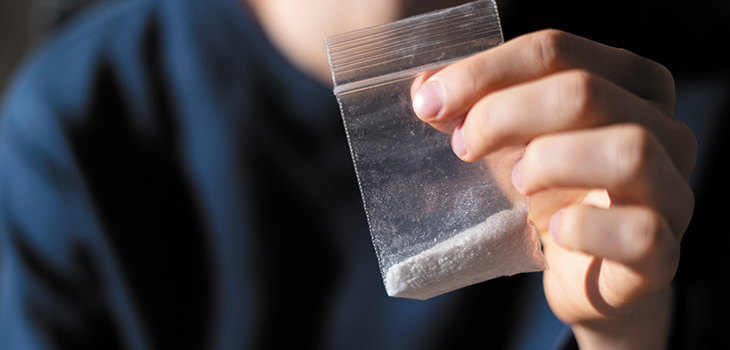
Marie Law, Director of Toxicology at AlphaBiolabs, explains why drugs may appear in test results, despite the donor denying use of them
As a leading provider of legally instructed drug testing, we are frequently asked to explain how a sample donor could test positive for a substance they claim never to have used.
These queries are increasingly common, particularly in family law cases where drug testing is used to assess parenting capacity, monitor abstinence, or confirm compliance with court orders.
Legal professionals may receive a toxicology report showing one or more drugs not disclosed by the donor and not anticipated at instruction. While the accuracy of the analysis is not in question, such results can raise serious concerns—especially where the donor’s denial appears credible.
The illicit drug market is increasingly characterised by contamination and deliberate mixing of substances. Users are often unaware that what they are taking has been cut with, substituted for, or combined with other drugs, some of which are significantly more potent or harmful.
This means that, in some cases, a toxicology report may show the presence of drugs the donor did not knowingly consume.
‘Poly drug use’ refers to the use of two or more substances within a given timeframe. This may be deliberate – to enhance or moderate effects – or unintentional, where a drug has been contaminated or mis-sold.
Some combinations have street names. ‘Calvin Klein’ (or CK), for example, refers to the concurrent use of cocaine and ketamine.
With no regulation or quality control in illicit drug manufacturing, substances are routinely cut or laced with others to increase profit margins or intensify effects.
At AlphaBiolabs, we have seen a rise in samples testing positive for multiple drug groups. For counsel, this highlights the importance of instructing comprehensive toxicology testing, including screening beyond standard panels, particularly where behaviours or symptoms cannot be explained by a single substance.
Illicit drugs are often adulterated with other drugs, masking agents or bulking agents such as sugars. Of growing concern is the rise of synthetic opioids, particularly nitazenes, in the UK drug supply.
In 2022, the Advisory Council on the Misuse of Drugs (ACMD) reported that over 25% of cocaine samples and more than 50% of heroin/diamorphine samples seized in the UK contained isotonitazene, a powerful nitazene analogue. Separately, Public Health Scotland has linked another nitazene, ‘Pyro’ (N-pyrrolidino etonitazene), to a sharp rise in drug-related deaths across Scotland (August 2025).
In such cases, a positive test result may reflect contamination rather than deliberate use – a distinction with significant legal implications.
One such example at AlphaBiolabs involved a donor (Mr X) whose hair sample tested positive for five substances: THC, cocaine, norcocaine, benzoylecgonine, and ketamine.
While Mr X accepted the presence of the other substances, he strongly denied taking ketamine, saying: ‘I haven’t even seen ketamine. I don’t know anyone who uses it, or even how to use it. I would not be able to get it if I tried – I don’t have a horse, and I’m not a vet!’
AlphaBiolabs is an award-winning, UKAS 17025 and Lab 51-accredited laboratory with 20+ years’ experience supporting family law professionals, barristers, social workers and local authorities.
We provide legally admissible drug and alcohol testing using a range of sample types, including hair, nails, blood, oral fluid, urine, and breath, with bespoke repeat testing schedules available.
We also test for the widest range of substances including the most-abused drugs as well as ‘non-standard’ drugs eg steroids, prescription medications, hallucinogens, nitazenes, and other emerging synthetic opioids. Custom testing panels can be created to suit your case.
And with our Price Promise, where we will beat any like-for-like quote by a further 10%, you know that you are guaranteed to get the best value for money.
For more information, contact our New Enquiry team on 0333 600 1300 / testing@alphabiolabs.com or complete our online quote form at www.alphabiolabs.co.uk/legal-test-forms.
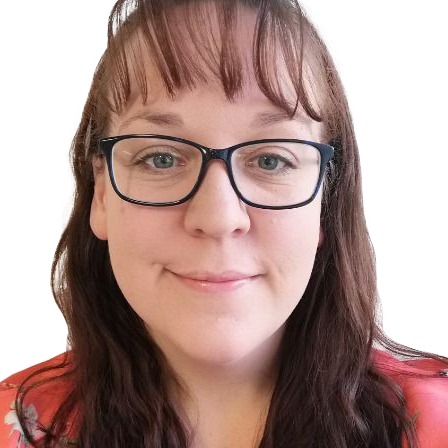
Marie Law is Director of Toxicology at AlphaBiolabs. A highly-skilled and respected scientist with over 15 years’ experience in the field of forensics, Marie joined AlphaBiolabs in 2022 and oversees the company’s growing toxicology team. As Director of Toxicology, Marie’s day-to-day responsibilities include maintaining the highest quality testing standards for toxicology and further enhancing AlphaBiolabs’ drug and alcohol testing services for the legal sector, members of the public, and the workplace sector.
As a leading provider of legally instructed drug testing, we are frequently asked to explain how a sample donor could test positive for a substance they claim never to have used.
These queries are increasingly common, particularly in family law cases where drug testing is used to assess parenting capacity, monitor abstinence, or confirm compliance with court orders.
Legal professionals may receive a toxicology report showing one or more drugs not disclosed by the donor and not anticipated at instruction. While the accuracy of the analysis is not in question, such results can raise serious concerns—especially where the donor’s denial appears credible.
The illicit drug market is increasingly characterised by contamination and deliberate mixing of substances. Users are often unaware that what they are taking has been cut with, substituted for, or combined with other drugs, some of which are significantly more potent or harmful.
This means that, in some cases, a toxicology report may show the presence of drugs the donor did not knowingly consume.
‘Poly drug use’ refers to the use of two or more substances within a given timeframe. This may be deliberate – to enhance or moderate effects – or unintentional, where a drug has been contaminated or mis-sold.
Some combinations have street names. ‘Calvin Klein’ (or CK), for example, refers to the concurrent use of cocaine and ketamine.
With no regulation or quality control in illicit drug manufacturing, substances are routinely cut or laced with others to increase profit margins or intensify effects.
At AlphaBiolabs, we have seen a rise in samples testing positive for multiple drug groups. For counsel, this highlights the importance of instructing comprehensive toxicology testing, including screening beyond standard panels, particularly where behaviours or symptoms cannot be explained by a single substance.
Illicit drugs are often adulterated with other drugs, masking agents or bulking agents such as sugars. Of growing concern is the rise of synthetic opioids, particularly nitazenes, in the UK drug supply.
In 2022, the Advisory Council on the Misuse of Drugs (ACMD) reported that over 25% of cocaine samples and more than 50% of heroin/diamorphine samples seized in the UK contained isotonitazene, a powerful nitazene analogue. Separately, Public Health Scotland has linked another nitazene, ‘Pyro’ (N-pyrrolidino etonitazene), to a sharp rise in drug-related deaths across Scotland (August 2025).
In such cases, a positive test result may reflect contamination rather than deliberate use – a distinction with significant legal implications.
One such example at AlphaBiolabs involved a donor (Mr X) whose hair sample tested positive for five substances: THC, cocaine, norcocaine, benzoylecgonine, and ketamine.
While Mr X accepted the presence of the other substances, he strongly denied taking ketamine, saying: ‘I haven’t even seen ketamine. I don’t know anyone who uses it, or even how to use it. I would not be able to get it if I tried – I don’t have a horse, and I’m not a vet!’
AlphaBiolabs is an award-winning, UKAS 17025 and Lab 51-accredited laboratory with 20+ years’ experience supporting family law professionals, barristers, social workers and local authorities.
We provide legally admissible drug and alcohol testing using a range of sample types, including hair, nails, blood, oral fluid, urine, and breath, with bespoke repeat testing schedules available.
We also test for the widest range of substances including the most-abused drugs as well as ‘non-standard’ drugs eg steroids, prescription medications, hallucinogens, nitazenes, and other emerging synthetic opioids. Custom testing panels can be created to suit your case.
And with our Price Promise, where we will beat any like-for-like quote by a further 10%, you know that you are guaranteed to get the best value for money.
For more information, contact our New Enquiry team on 0333 600 1300 / testing@alphabiolabs.com or complete our online quote form at www.alphabiolabs.co.uk/legal-test-forms.
Marie Law, Director of Toxicology at AlphaBiolabs, explains why drugs may appear in test results, despite the donor denying use of them

The Bar Council is ready to support a turn to the efficiencies that will make a difference
A £500 donation from AlphaBiolabs has been made to the leading UK charity tackling international parental child abduction and the movement of children across international borders
By Louise Crush of Westgate Wealth Management
Marie Law, Director of Toxicology at AlphaBiolabs, examines the latest ONS data on drug misuse and its implications for toxicology testing in family law cases
An interview with Rob Wagg, CEO of New Park Court Chambers
What meaningful steps can you take in 2026 to advance your legal career? asks Thomas Cowan of St Pauls Chambers
With at least 31 reports of AI hallucinations in UK legal cases – over 800 worldwide – and judges using AI to assist in judicial decision-making, the risks and benefits are impossible to ignore. Matthew Lee examines how different jurisdictions are responding
Ever wondered what a pupillage is like at the CPS? This Q and A provides an insight into the training, experience and next steps
The appointments of 96 new King’s Counsel (also known as silk) are announced today
Resolution of the criminal justice crisis does not lie in reheating old ideas that have been roundly rejected before, say Ed Vickers KC, Faras Baloch and Katie Bacon
With pupillage application season under way, Laura Wright reflects on her route to ‘tech barrister’ and offers advice for those aiming at a career at the Bar