*/
SIR Duncan Nichol CBE’s review of the Queen’s Counsel Appointment System was jointly commissioned by the Bar Council and the Law Society in September 2008. The terms of reference of the review included considering whether it would be appropriate to red-affirm the purpose of the award; the forms of excellence that it is intended to recognise; and the range of criteria against which applicants for the award are assessed.
Following the move away from the previously used “soundings” process three years ago, Sir Duncan considered the operation of the new selection process; the business model supporting the selection process and the personnel who will comprise the selection panel in the future. The new process – which is an open and independent competition, undertaken by a selection panel – is sponsored by the Law Society and the Bar Council with the approval of the Lord Chancellor. On 18 December 2008 the Law Society and the Bar Council
received Sir Duncan’s review. The review will now be considered in detail by the General Management Committee of the Bar Council and the [Legal Affairs and Policy Board] of the Law Society.
Commenting on the review Des Hudson, the Chief Executive of the Law Society, said today:
"The Society would like to thank Sir Duncan Nichol for his thorough review of the Queen's Counsel appointments system. The Society will be giving consideration to his report and recommendations. Any system could benefit from improvements to its operation and considering the potential for improvements was a key factor in Sir Duncan's terms of reference. The essential point remains that the current system is infinitely preferable to the former "soundings" behind the scenes which caused concerns over the fairness of the award of Silk in the past. Once we have considered the report we will be discussing it with the Bar and our members before confirming our decisions."
Commenting on the review, the Chief Executive of the Bar Council, David Hobart, said today:
“The review of the Queen’s Counsel appointment system is of great interest to both branches of the legal profession, its clients and the judiciary. The current system enjoys the confidence of a wide range of interested parties and ensures that ‘QC’ remains a symbol of excellence recognised the world over. The Bar Council is keen to ensure that the QC marque is not diluted, and has made suggestions to this effect to Sir Duncan in the preparation of his report. Once the Bar Council and the Law Society have had the chance to consider the report, we expect to comment further.”
Commenting on the review Des Hudson, the Chief Executive of the Law Society, said today:
"The Society would like to thank Sir Duncan Nichol for his thorough review of the Queen's Counsel appointments system. The Society will be giving consideration to his report and recommendations. Any system could benefit from improvements to its operation and considering the potential for improvements was a key factor in Sir Duncan's terms of reference. The essential point remains that the current system is infinitely preferable to the former "soundings" behind the scenes which caused concerns over the fairness of the award of Silk in the past. Once we have considered the report we will be discussing it with the Bar and our members before confirming our decisions."
Commenting on the review, the Chief Executive of the Bar Council, David Hobart, said today:
“The review of the Queen’s Counsel appointment system is of great interest to both branches of the legal profession, its clients and the judiciary. The current system enjoys the confidence of a wide range of interested parties and ensures that ‘QC’ remains a symbol of excellence recognised the world over. The Bar Council is keen to ensure that the QC marque is not diluted, and has made suggestions to this effect to Sir Duncan in the preparation of his report. Once the Bar Council and the Law Society have had the chance to consider the report, we expect to comment further.”
SIR Duncan Nichol CBE’s review of the Queen’s Counsel Appointment System was jointly commissioned by the Bar Council and the Law Society in September 2008. The terms of reference of the review included considering whether it would be appropriate to red-affirm the purpose of the award; the forms of excellence that it is intended to recognise; and the range of criteria against which applicants for the award are assessed.
Following the move away from the previously used “soundings” process three years ago, Sir Duncan considered the operation of the new selection process; the business model supporting the selection process and the personnel who will comprise the selection panel in the future. The new process – which is an open and independent competition, undertaken by a selection panel – is sponsored by the Law Society and the Bar Council with the approval of the Lord Chancellor. On 18 December 2008 the Law Society and the Bar Council
received Sir Duncan’s review. The review will now be considered in detail by the General Management Committee of the Bar Council and the [Legal Affairs and Policy Board] of the Law Society.
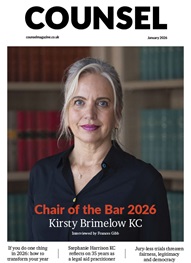

Kirsty Brimelow KC, Chair of the Bar, sets our course for 2026
What meaningful steps can you take in 2026 to advance your legal career? asks Thomas Cowan of St Pauls Chambers
Marie Law, Director of Toxicology at AlphaBiolabs, explains why drugs may appear in test results, despite the donor denying use of them
Asks Louise Crush of Westgate Wealth Management
AlphaBiolabs has donated £500 to The Christie Charity through its Giving Back initiative, helping to support cancer care, treatment and research across Greater Manchester, Cheshire and further afield
Q and A with criminal barrister Nick Murphy, who moved to New Park Court Chambers on the North Eastern Circuit in search of a better work-life balance
The appointments of 96 new King’s Counsel (also known as silk) are announced today
With pupillage application season under way, Laura Wright reflects on her route to ‘tech barrister’ and offers advice for those aiming at a career at the Bar
Jury-less trial proposals threaten fairness, legitimacy and democracy without ending the backlog, writes Professor Cheryl Thomas KC (Hon), the UK’s leading expert on juries, judges and courts
Are you ready for the new way to do tax returns? David Southern KC explains the biggest change since HMRC launched self-assessment more than 30 years ago... and its impact on the Bar
Marking one year since a Bar disciplinary tribunal dismissed all charges against her, Dr Charlotte Proudman discusses the experience, her formative years and next steps. Interview by Anthony Inglese CB