*/
Women scored their highest ever success rate in this year’s silk rounds—55% compared with 40% for men. Some 16 of the 104 successful applicants celebrating their new QC status this year are women.
A total of 29 women applied, and there were 247 applicants overall. However, the number of women applying was down by nearly a third on last year, when 51 female barristers applied, of whom 20 were successful.
Ingrid Simler QC, Chair of the Bar Council Diversity and Equality Committee, said: “Success rates are high—the question is why aren’t more women applying? The answer may be the issue of retention.”
At 7 Bedford Row—whose two new QCs, Maureen Baker and Rachel Langdale, bring the number of female silks in the set to five—head of chambers Kate Thirlwall QC commented: “There is still a long way to go before the Bar is truly diverse but it is encouraging that, year by year, the face of the Bar is changing.
“As a set of chambers we have long had in place and advocated positive and robust maternity leave policies with guaranteed rent free periods to make it easier for women to return to the Bar after having children.”
1 Crown Office Row now has six female QCs following the appointment of Christina Lambert and Wendy Outhwaite this year. Head of chambers, Philip Havers QC said: “More and more female barristers will be taking silk in future, reflecting how gender diversity is improving at the Bar.”
Two employed barristers were successful—the first ever employed barristers to be appointed, and the only two from the employed Bar who applied this year. They are Graham Reeds, of the CPS, and Ian Morley, currently prosecuting the 1994 Rwanda genocide at the UN International Criminal Tribunal for Rwanda in Tanzania.
Melissa Coutino, Joint Chair of the Employed Barristers Committee, said: “It is heartening that two employed barristers have been awarded the title of QC and our congratulations go to them.
“Last year, six employed barristers applied for QC and none were successful so progress has certainly been made. However, while both of the above candidates can demonstrate excellence in oral advocacy in the higher courts, the EBC looks forward to a time when a broader definition of advocacy is part of the standard criteria for selection.”
Three solicitor-advocates achieved QC status, out of four who applied. Four of 15 non-white applicants, and five applicants aged 55 or over at the closing date for entries, were successful.
The success rate among applicants is up on last year—42% compared with 29% last year. However, fewer lawyers applied for the prestigious kitemark this year—247 compared with 333 last year and 443 in the previous round. See Bar News p ii.
A total of 29 women applied, and there were 247 applicants overall. However, the number of women applying was down by nearly a third on last year, when 51 female barristers applied, of whom 20 were successful.
Ingrid Simler QC, Chair of the Bar Council Diversity and Equality Committee, said: “Success rates are high—the question is why aren’t more women applying? The answer may be the issue of retention.”
At 7 Bedford Row—whose two new QCs, Maureen Baker and Rachel Langdale, bring the number of female silks in the set to five—head of chambers Kate Thirlwall QC commented: “There is still a long way to go before the Bar is truly diverse but it is encouraging that, year by year, the face of the Bar is changing.
“As a set of chambers we have long had in place and advocated positive and robust maternity leave policies with guaranteed rent free periods to make it easier for women to return to the Bar after having children.”
1 Crown Office Row now has six female QCs following the appointment of Christina Lambert and Wendy Outhwaite this year. Head of chambers, Philip Havers QC said: “More and more female barristers will be taking silk in future, reflecting how gender diversity is improving at the Bar.”
Two employed barristers were successful—the first ever employed barristers to be appointed, and the only two from the employed Bar who applied this year. They are Graham Reeds, of the CPS, and Ian Morley, currently prosecuting the 1994 Rwanda genocide at the UN International Criminal Tribunal for Rwanda in Tanzania.
Melissa Coutino, Joint Chair of the Employed Barristers Committee, said: “It is heartening that two employed barristers have been awarded the title of QC and our congratulations go to them.
“Last year, six employed barristers applied for QC and none were successful so progress has certainly been made. However, while both of the above candidates can demonstrate excellence in oral advocacy in the higher courts, the EBC looks forward to a time when a broader definition of advocacy is part of the standard criteria for selection.”
Three solicitor-advocates achieved QC status, out of four who applied. Four of 15 non-white applicants, and five applicants aged 55 or over at the closing date for entries, were successful.
The success rate among applicants is up on last year—42% compared with 29% last year. However, fewer lawyers applied for the prestigious kitemark this year—247 compared with 333 last year and 443 in the previous round. See Bar News p ii.
Women scored their highest ever success rate in this year’s silk rounds—55% compared with 40% for men. Some 16 of the 104 successful applicants celebrating their new QC status this year are women.
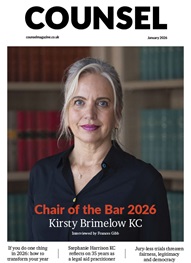

Kirsty Brimelow KC, Chair of the Bar, sets our course for 2026
What meaningful steps can you take in 2026 to advance your legal career? asks Thomas Cowan of St Pauls Chambers
Marie Law, Director of Toxicology at AlphaBiolabs, explains why drugs may appear in test results, despite the donor denying use of them
Asks Louise Crush of Westgate Wealth Management
AlphaBiolabs has donated £500 to The Christie Charity through its Giving Back initiative, helping to support cancer care, treatment and research across Greater Manchester, Cheshire and further afield
Q and A with criminal barrister Nick Murphy, who moved to New Park Court Chambers on the North Eastern Circuit in search of a better work-life balance
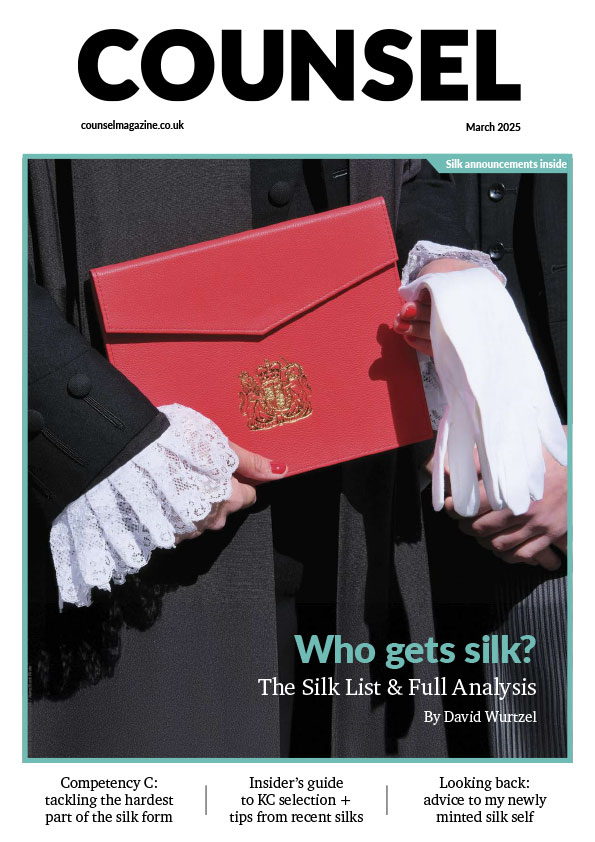
The appointments of 96 new King’s Counsel (also known as silk) are announced today
With pupillage application season under way, Laura Wright reflects on her route to ‘tech barrister’ and offers advice for those aiming at a career at the Bar
Jury-less trial proposals threaten fairness, legitimacy and democracy without ending the backlog, writes Professor Cheryl Thomas KC (Hon), the UK’s leading expert on juries, judges and courts
Are you ready for the new way to do tax returns? David Southern KC explains the biggest change since HMRC launched self-assessment more than 30 years ago... and its impact on the Bar
Marking one year since a Bar disciplinary tribunal dismissed all charges against her, Dr Charlotte Proudman discusses the experience, her formative years and next steps. Interview by Anthony Inglese CB