*/
A major exhibition of the surrealist photographer Lee Miller, reviewed by Stephen Cragg KC
Tate Britain’s massive exhibition following the life and work of Lee Miller reveals one of the most remarkable women of the 20th century.
It is hard to believe that one life could encompass so much. Miller started as a photographic model in New York, before essentially blagging a job as Man Ray’s assistant in France in the 1930s. She hung out with and photographed the surrealists and spent so much time with Picasso that he was her most photographed subject. She married an Egyptian man and her pictures of the middle-eastern barren landscapes in the late 1930s show a sensitivity to light, form and culture.
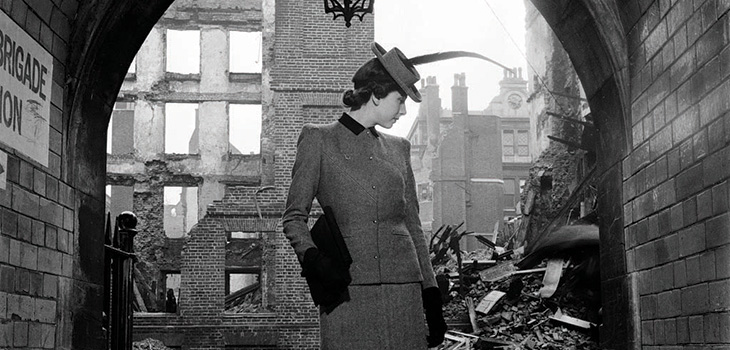
She then became a fashion photographer for Vogue magazine, morphed into a photographer of the Blitz in London (with both a surrealist and a fashionista eye) and then, incredibly, became a war photographer and correspondent as the Allies made their way across Europe in 1945. All these parts of her life are painstakingly documented in the exhibition, but the culmination of the show is Miller’s haunting images from the liberation of Europe. She was one of the first journalists into the concentration camps at Auschwitz and Dachau, and photographs from these sites confront viewers with the horror of Nazi atrocities. There is nothing sanitised about these works; we see the deprivation and the suffering that Miller saw.
She was then photographed in Hitler’s bath in his Munich apartment, her still muddy Dachau boots visible and a portrait of the Führer on the bath edge – a deliberate violation of the Führer’s privacy, displayed with grim defiance and dark humour.
No wonder this exhibition was packed on a Sunday afternoon, leading to one of the downsides to the show: many of the 250 photographs on show are small, black and white prints and were difficult to get close to – go on a Monday morning if you can!
It has been said that those who recorded the horrors of the concentration camps were not able to take on board the weight of what they saw, and this may have been the case for Miller – she spent the later years of her life after the war avoiding commissions and becoming almost a recluse, perhaps giving an insight to her own observation that her success was based on ‘getting out on a damn limb and sawing it off behind you’.
Miller achieved what might well be impossible to do in the 21st century of specialisms, reinventing herself every few years as something new in photography, journalism, art and lifestyle, with the camera as the constant to interrogate and challenge the world.
At Tate Britain until 15 February 2026

Tate Britain’s massive exhibition following the life and work of Lee Miller reveals one of the most remarkable women of the 20th century.
It is hard to believe that one life could encompass so much. Miller started as a photographic model in New York, before essentially blagging a job as Man Ray’s assistant in France in the 1930s. She hung out with and photographed the surrealists and spent so much time with Picasso that he was her most photographed subject. She married an Egyptian man and her pictures of the middle-eastern barren landscapes in the late 1930s show a sensitivity to light, form and culture.
She then became a fashion photographer for Vogue magazine, morphed into a photographer of the Blitz in London (with both a surrealist and a fashionista eye) and then, incredibly, became a war photographer and correspondent as the Allies made their way across Europe in 1945. All these parts of her life are painstakingly documented in the exhibition, but the culmination of the show is Miller’s haunting images from the liberation of Europe. She was one of the first journalists into the concentration camps at Auschwitz and Dachau, and photographs from these sites confront viewers with the horror of Nazi atrocities. There is nothing sanitised about these works; we see the deprivation and the suffering that Miller saw.
She was then photographed in Hitler’s bath in his Munich apartment, her still muddy Dachau boots visible and a portrait of the Führer on the bath edge – a deliberate violation of the Führer’s privacy, displayed with grim defiance and dark humour.
No wonder this exhibition was packed on a Sunday afternoon, leading to one of the downsides to the show: many of the 250 photographs on show are small, black and white prints and were difficult to get close to – go on a Monday morning if you can!
It has been said that those who recorded the horrors of the concentration camps were not able to take on board the weight of what they saw, and this may have been the case for Miller – she spent the later years of her life after the war avoiding commissions and becoming almost a recluse, perhaps giving an insight to her own observation that her success was based on ‘getting out on a damn limb and sawing it off behind you’.
Miller achieved what might well be impossible to do in the 21st century of specialisms, reinventing herself every few years as something new in photography, journalism, art and lifestyle, with the camera as the constant to interrogate and challenge the world.
At Tate Britain until 15 February 2026
A major exhibition of the surrealist photographer Lee Miller, reviewed by Stephen Cragg KC

The Bar Council is ready to support a turn to the efficiencies that will make a difference
A £500 donation from AlphaBiolabs has been made to the leading UK charity tackling international parental child abduction and the movement of children across international borders
By Louise Crush of Westgate Wealth Management
Marie Law, Director of Toxicology at AlphaBiolabs, examines the latest ONS data on drug misuse and its implications for toxicology testing in family law cases
An interview with Rob Wagg, CEO of New Park Court Chambers
What meaningful steps can you take in 2026 to advance your legal career? asks Thomas Cowan of St Pauls Chambers
With at least 31 reports of AI hallucinations in UK legal cases – over 800 worldwide – and judges using AI to assist in judicial decision-making, the risks and benefits are impossible to ignore. Matthew Lee examines how different jurisdictions are responding
Ever wondered what a pupillage is like at the CPS? This Q and A provides an insight into the training, experience and next steps
The appointments of 96 new King’s Counsel (also known as silk) are announced today
Resolution of the criminal justice crisis does not lie in reheating old ideas that have been roundly rejected before, say Ed Vickers KC, Faras Baloch and Katie Bacon
With pupillage application season under way, Laura Wright reflects on her route to ‘tech barrister’ and offers advice for those aiming at a career at the Bar