*/
Orlagh Kelly outlines her journey from family law barrister to global technology entrepreneur
As a young student I dreamt of being in a courtroom, fighting for justice for my clients.
However, the reality of practice was that I spent 40% of my time running a small business. Administration, marketing, training, even credit control – all things I had to deal with as well as being the fee earner.
Instead of spending my time on the important legal drafting, it was taken up with the repetitive correspondence to solicitors about each and every case as well as recording completed work for fee notes, answering endless emails, keeping on top of expenses and CPD points. The list seemed endless and I was convinced there had to be an easier way. In May 2011, whilst sitting at my desk in the Bar Library, an idea started to form. There had to be a way I could manage my business more effectively which would allow me to do what I loved, practise law.
I wanted to use my down time during the working day better, such as waiting outside court or on the train, instead of having to work at night and at weekends. I wanted to deliver such a high quality service to solicitors and clients that I would be assured of new briefs. I wanted to feel in control of my practice, my accounts and paperwork so I could switch off at a reasonable hour, knowing everything was done. I wanted to spend less time working, but have a more profitable practice. I wanted a better work life balance. I needed a system.
At the outset, there seemed to be no obvious solution; however I knew it would involve technology. After much research, it became apparent that nothing existed to suit the unique way barristers work. So undeterred, I decided there was only one solution – I was going to develop this myself. With considerable uncertainty, I threw myself into the world of technology and software. Soon enough I found myself in my first meeting with software developers and at the start of the most exciting, challenging, anxiety-inducing rollercoaster ride I’ve experienced since my first six months at the Bar.
With the steepest learning curve imaginable, I now had to become an expert on technology, online security, data protection, as well as learning the language of business and how best to articulate my “value proposition”. In tendering the technical work, I interviewed 12 software houses before finally selecting the best.
I entered the wider business community in order to establish myself, my company and my brand – leaving the relative safety of the legal world. I had to approach government bodies and statutory agencies to persuade them of the potential market and convince them to invest in further research and development.
My priority was to design a platform that would suit all barristers, both publicly and privately funded, across all specialisms, whether in chambers with clerks or as sole practitioners – it wasn’t just for me anymore.
The challenges have all been worth it and there have been many during the months of design, build and testing of the product but I can now say that Briefed is used by all types of barristers throughout the Europe, Australia and South Africa. As milestones go, I would say when Apple approved the Briefed App for download from the iTunes store was a huge one for me – and when Briefed went on sale online we had our first customer within two hours. The most rewarding for me personally is when a barrister simply drops me an email with thanks for inventing the software – because it has changed their lives – that’s a pretty good feeling.
There is no doubt that the skills I have as a barrister have enabled me to take on these new challenges – learning difficult content in a short space of time to gain a high level of expertise. Asking questions and finding creative ways of solving problems, interacting with and managing all different types of personalities with an end goal in mind as a leader, presenting an argument to a room full of people who are disbelievers, and persuading them to see merit in the argument.
The traits and skills I have as a barrister have propelled me to be a successful tech CEO. However, I would hazard a guess that a tech CEO could never be a barrister...
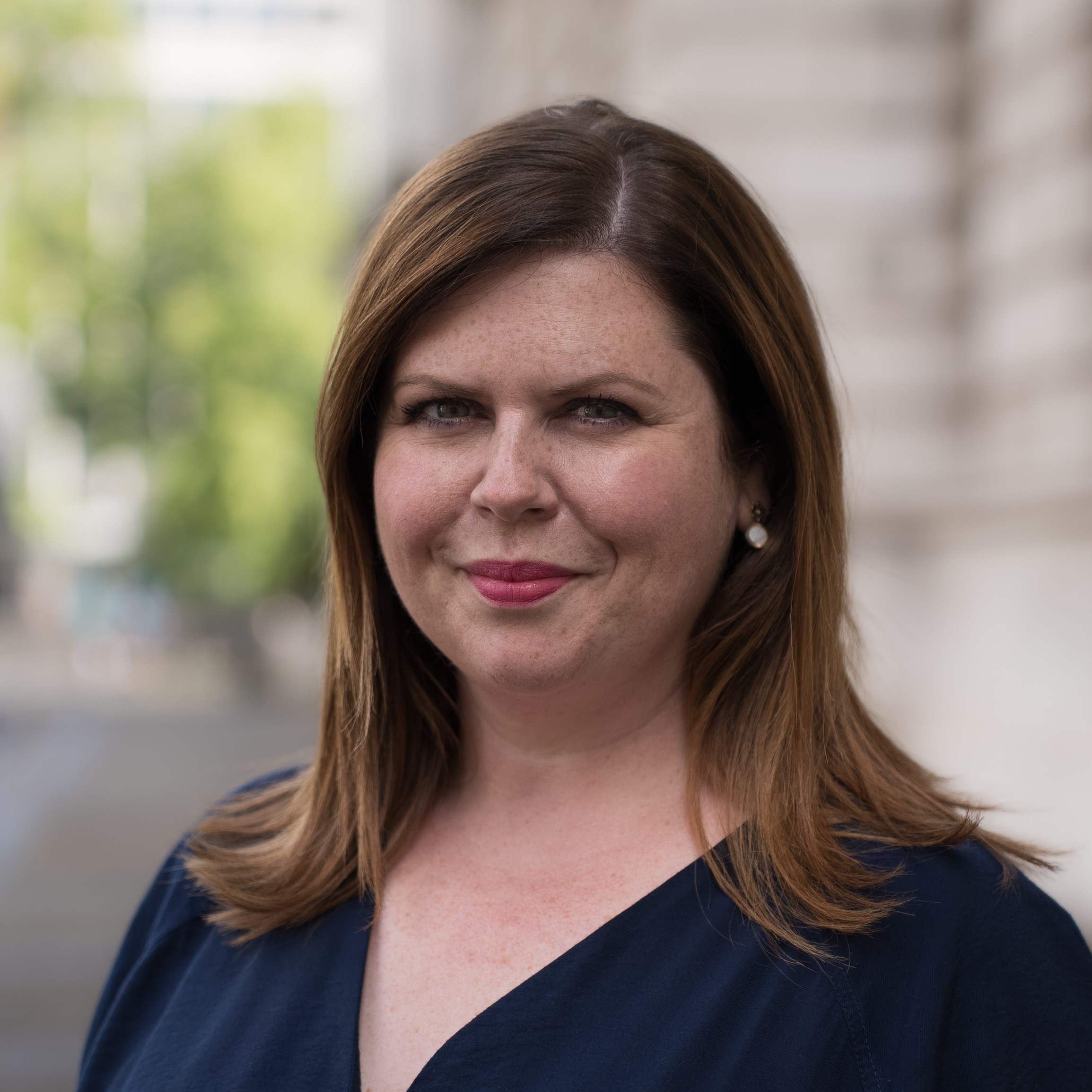
Orlagh Kelly, Barrister & CEO of Briefed, is a highly experienced barrister, accomplished legal technologist and internationally renowned authority on data protection. It is that unique blend of legal expertise and entrepreneurial spirit which inspired her to found Briefed in 2012.
As a young student I dreamt of being in a courtroom, fighting for justice for my clients.
However, the reality of practice was that I spent 40% of my time running a small business. Administration, marketing, training, even credit control – all things I had to deal with as well as being the fee earner.
Instead of spending my time on the important legal drafting, it was taken up with the repetitive correspondence to solicitors about each and every case as well as recording completed work for fee notes, answering endless emails, keeping on top of expenses and CPD points. The list seemed endless and I was convinced there had to be an easier way. In May 2011, whilst sitting at my desk in the Bar Library, an idea started to form. There had to be a way I could manage my business more effectively which would allow me to do what I loved, practise law.
I wanted to use my down time during the working day better, such as waiting outside court or on the train, instead of having to work at night and at weekends. I wanted to deliver such a high quality service to solicitors and clients that I would be assured of new briefs. I wanted to feel in control of my practice, my accounts and paperwork so I could switch off at a reasonable hour, knowing everything was done. I wanted to spend less time working, but have a more profitable practice. I wanted a better work life balance. I needed a system.
At the outset, there seemed to be no obvious solution; however I knew it would involve technology. After much research, it became apparent that nothing existed to suit the unique way barristers work. So undeterred, I decided there was only one solution – I was going to develop this myself. With considerable uncertainty, I threw myself into the world of technology and software. Soon enough I found myself in my first meeting with software developers and at the start of the most exciting, challenging, anxiety-inducing rollercoaster ride I’ve experienced since my first six months at the Bar.
With the steepest learning curve imaginable, I now had to become an expert on technology, online security, data protection, as well as learning the language of business and how best to articulate my “value proposition”. In tendering the technical work, I interviewed 12 software houses before finally selecting the best.
I entered the wider business community in order to establish myself, my company and my brand – leaving the relative safety of the legal world. I had to approach government bodies and statutory agencies to persuade them of the potential market and convince them to invest in further research and development.
My priority was to design a platform that would suit all barristers, both publicly and privately funded, across all specialisms, whether in chambers with clerks or as sole practitioners – it wasn’t just for me anymore.
The challenges have all been worth it and there have been many during the months of design, build and testing of the product but I can now say that Briefed is used by all types of barristers throughout the Europe, Australia and South Africa. As milestones go, I would say when Apple approved the Briefed App for download from the iTunes store was a huge one for me – and when Briefed went on sale online we had our first customer within two hours. The most rewarding for me personally is when a barrister simply drops me an email with thanks for inventing the software – because it has changed their lives – that’s a pretty good feeling.
There is no doubt that the skills I have as a barrister have enabled me to take on these new challenges – learning difficult content in a short space of time to gain a high level of expertise. Asking questions and finding creative ways of solving problems, interacting with and managing all different types of personalities with an end goal in mind as a leader, presenting an argument to a room full of people who are disbelievers, and persuading them to see merit in the argument.
The traits and skills I have as a barrister have propelled me to be a successful tech CEO. However, I would hazard a guess that a tech CEO could never be a barrister...
Orlagh Kelly outlines her journey from family law barrister to global technology entrepreneur

Chair of the Bar finds common ground on legal services between our two jurisdictions, plus an update on jury trials
A £500 donation from AlphaBiolabs has been made to the leading UK charity tackling international parental child abduction and the movement of children across international borders
Marie Law, Director of Toxicology at AlphaBiolabs, outlines the drug and alcohol testing options available for family law professionals, and how a new, free guide can help identify the most appropriate testing method for each specific case
By Louise Crush of Westgate Wealth Management
Marie Law, Director of Toxicology at AlphaBiolabs, examines the latest ONS data on drug misuse and its implications for toxicology testing in family law cases
An interview with Rob Wagg, CEO of New Park Court Chambers
With at least 31 reports of AI hallucinations in UK legal cases – over 800 worldwide – and judges using AI to assist in judicial decision-making, the risks and benefits are impossible to ignore. Matthew Lee examines how different jurisdictions are responding
What has changed, and why? Paul Secher unpacks the new standards aligning the recruiting, training and appraising of judges – the first major change to the system for ten years
The deprivation of liberty is the most significant power the state can exercise. Drawing on frontline experience, Chris Henley KC explains why replacing trial by jury with judge-only trials risks undermining justice
Ever wondered what a pupillage is like at the CPS? This Q and A provides an insight into the training, experience and next steps
The appointments of 96 new King’s Counsel (also known as silk) are announced today