*/
In 1979, before I started a legal career, I was a tank commander on what was then the inner German border. As we looked into East Germany, it was difficult not to be impressed by the scale of the barbed wire and electric fences, the watchtowers and the minefields. This was not, of course, to keep us out. They were intended to keep the population of the German Democratic Republic in. We were, in one sense, looking at the largest prison camp in the world, run by an authoritarian government which denied its people fundamental rights; a government which could not be challenged in effective and free courts before an independent judiciary, the hallmark of the rule of law.
These experiences were one of the reasons I settled on a career in the law. A decade later, I was in Berlin just before the fall of the wall which divided that city. There was a mood of optimism. But despite all the political, social and economic progress since; respect for the rule of law has stalled. About a month ago, the World Justice Project (WJP), published its most recent Rule of Law Index, the first since the pandemic. The Index scores and ranks rule of law performance in 139 countries on eight factors, which include constraints on government powers and the absence of corruption. For the fourth year in a row, the Index shows the rule of law declining in a majority of countries. It also records a significant increase in the negative trend over the past year. Seventy-four per cent of countries studied saw an erosion in the rule of law since the last report was issued in March 2020. That is true for every region in the world and for both rich and poor countries.
In the battle of ideas and values which the maintenance of the rule of law involves, lawyers remain in the frontline. We have seen that this year, with our own colleagues being subjected to sanctions by a foreign government and, of course, most recently in the chaos of Afghanistan.
One of my roles has been to promote the legal services our jurisdiction offers. Our law, our lawyers, our judges are much admired. Our leadership in relation to the rule of law is a precious asset but it depends upon our reputation for upholding and observing the law and meeting our obligations. It also requires investment to ensure that the quality of our lawyers and judiciary continues to be a source of national pride and that we offer a practical and effective justice system to our fellow citizens.
During the pandemic there have been remarkable efforts to keep the justice system functioning. The challenges faced have been met with resilience, flexibility and a shared recognition of the need to maintain access to justice. Court staff have risen to the challenge despite the aging and poor facilities in many of the buildings in which they work. We have seen close cooperation with the judiciary on all of the Circuits and in the central courts. But we have also found that parts of the justice system are fragile. The areas which have been consistently neglected over many years or deliberately targeted for cuts are where we now risk eroding public confidence in our justice system.
The Comprehensive Spending Review and Budget headlines set out by the Chancellor were a step in the right direction, but as further details emerge, the commitment to reduce the backlog of serious criminal cases from 60,000 to 53,000 in the Crown Court over the next three years appears unambitious.
The recent National Audit Office (NAO) report confirms what the Bar Council and other organisations have been saying. People are having to wait much longer for their cases to be heard, there is no meaningful data to support proper recovery and no assessment has been made to understand the impact these delays and the move to remote hearings has had on access to justice. The NAO identifies that the court backlog is likely to remain a ‘pervasive issue beyond 2024’ that will be ‘severely affecting victims, witnesses and defendants’. It is high time that we had an ambition not expressed in terms of the size or number of cases in the backlog, but the length of time that it is reasonable to expect people to wait.
We must also put our own house in order; we must increase social mobility and diversity. There are not enough people from different backgrounds working as senior barristers. In England and Wales there are only five Black female QCs and only 1% of judges are Black. We should reflect honestly on whether long held, and perhaps defensive, assumptions about the Bar can survive the compelling evidence and data set out in the Bar Council’s recent Race at the Bar report. The Bar must continue to modernise and adapt to reflect the society it serves. I encourage everyone to consider and implement the recommendations in the report.
In my inaugural speech I ended with an observation from George Bernard Shaw. The true joy of life, as he put it, is to be used up in a cause that we recognise to be a mighty one. We are fortunate as lawyers to have such a cause. It is encapsulated in the motto on the Bar Council’s logo; ‘Justice for All’.
My best wishes to you all and to my successor for 2022.
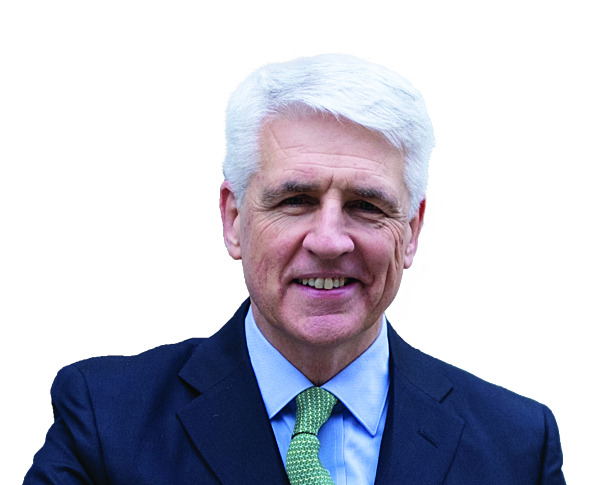
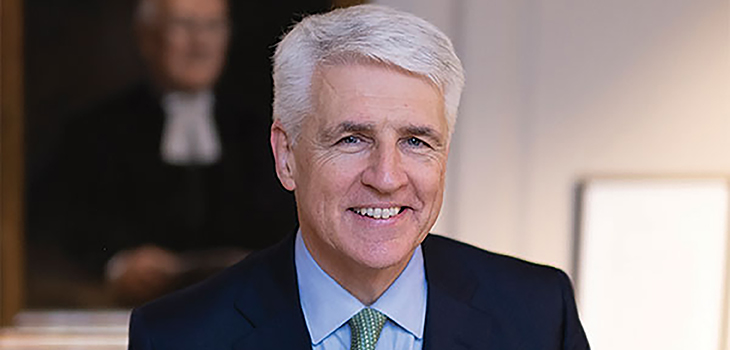
Derek Sweeting KC is Chair of the Bar for 2021. He is a silk at 7BR.
In 1979, before I started a legal career, I was a tank commander on what was then the inner German border. As we looked into East Germany, it was difficult not to be impressed by the scale of the barbed wire and electric fences, the watchtowers and the minefields. This was not, of course, to keep us out. They were intended to keep the population of the German Democratic Republic in. We were, in one sense, looking at the largest prison camp in the world, run by an authoritarian government which denied its people fundamental rights; a government which could not be challenged in effective and free courts before an independent judiciary, the hallmark of the rule of law.
These experiences were one of the reasons I settled on a career in the law. A decade later, I was in Berlin just before the fall of the wall which divided that city. There was a mood of optimism. But despite all the political, social and economic progress since; respect for the rule of law has stalled. About a month ago, the World Justice Project (WJP), published its most recent Rule of Law Index, the first since the pandemic. The Index scores and ranks rule of law performance in 139 countries on eight factors, which include constraints on government powers and the absence of corruption. For the fourth year in a row, the Index shows the rule of law declining in a majority of countries. It also records a significant increase in the negative trend over the past year. Seventy-four per cent of countries studied saw an erosion in the rule of law since the last report was issued in March 2020. That is true for every region in the world and for both rich and poor countries.
In the battle of ideas and values which the maintenance of the rule of law involves, lawyers remain in the frontline. We have seen that this year, with our own colleagues being subjected to sanctions by a foreign government and, of course, most recently in the chaos of Afghanistan.
One of my roles has been to promote the legal services our jurisdiction offers. Our law, our lawyers, our judges are much admired. Our leadership in relation to the rule of law is a precious asset but it depends upon our reputation for upholding and observing the law and meeting our obligations. It also requires investment to ensure that the quality of our lawyers and judiciary continues to be a source of national pride and that we offer a practical and effective justice system to our fellow citizens.
During the pandemic there have been remarkable efforts to keep the justice system functioning. The challenges faced have been met with resilience, flexibility and a shared recognition of the need to maintain access to justice. Court staff have risen to the challenge despite the aging and poor facilities in many of the buildings in which they work. We have seen close cooperation with the judiciary on all of the Circuits and in the central courts. But we have also found that parts of the justice system are fragile. The areas which have been consistently neglected over many years or deliberately targeted for cuts are where we now risk eroding public confidence in our justice system.
The Comprehensive Spending Review and Budget headlines set out by the Chancellor were a step in the right direction, but as further details emerge, the commitment to reduce the backlog of serious criminal cases from 60,000 to 53,000 in the Crown Court over the next three years appears unambitious.
The recent National Audit Office (NAO) report confirms what the Bar Council and other organisations have been saying. People are having to wait much longer for their cases to be heard, there is no meaningful data to support proper recovery and no assessment has been made to understand the impact these delays and the move to remote hearings has had on access to justice. The NAO identifies that the court backlog is likely to remain a ‘pervasive issue beyond 2024’ that will be ‘severely affecting victims, witnesses and defendants’. It is high time that we had an ambition not expressed in terms of the size or number of cases in the backlog, but the length of time that it is reasonable to expect people to wait.
We must also put our own house in order; we must increase social mobility and diversity. There are not enough people from different backgrounds working as senior barristers. In England and Wales there are only five Black female QCs and only 1% of judges are Black. We should reflect honestly on whether long held, and perhaps defensive, assumptions about the Bar can survive the compelling evidence and data set out in the Bar Council’s recent Race at the Bar report. The Bar must continue to modernise and adapt to reflect the society it serves. I encourage everyone to consider and implement the recommendations in the report.
In my inaugural speech I ended with an observation from George Bernard Shaw. The true joy of life, as he put it, is to be used up in a cause that we recognise to be a mighty one. We are fortunate as lawyers to have such a cause. It is encapsulated in the motto on the Bar Council’s logo; ‘Justice for All’.
My best wishes to you all and to my successor for 2022.


Chair of the Bar finds common ground on legal services between our two jurisdictions, plus an update on jury trials
A £500 donation from AlphaBiolabs has been made to the leading UK charity tackling international parental child abduction and the movement of children across international borders
Marie Law, Director of Toxicology at AlphaBiolabs, outlines the drug and alcohol testing options available for family law professionals, and how a new, free guide can help identify the most appropriate testing method for each specific case
By Louise Crush of Westgate Wealth Management
Marie Law, Director of Toxicology at AlphaBiolabs, examines the latest ONS data on drug misuse and its implications for toxicology testing in family law cases
An interview with Rob Wagg, CEO of New Park Court Chambers
With at least 31 reports of AI hallucinations in UK legal cases – over 800 worldwide – and judges using AI to assist in judicial decision-making, the risks and benefits are impossible to ignore. Matthew Lee examines how different jurisdictions are responding
What has changed, and why? Paul Secher unpacks the new standards aligning the recruiting, training and appraising of judges – the first major change to the system for ten years
The deprivation of liberty is the most significant power the state can exercise. Drawing on frontline experience, Chris Henley KC explains why replacing trial by jury with judge-only trials risks undermining justice
Ever wondered what a pupillage is like at the CPS? This Q and A provides an insight into the training, experience and next steps
The appointments of 96 new King’s Counsel (also known as silk) are announced today