*/
Joshua Rozenberg QC reflects on whether we’ve seen the last of the legally qualified Lord Chancellors
In a book I wrote more than 20 years ago, I said it was time for the Lord Chancellor to hang up at least one and preferably two of his three wigs. ‘We would then have an independent Speaker in the House of Lords, an independent judiciary without a government minister presiding over it, and a minister of justice sitting in the House of Commons.’
Be careful of what you wish for. In reality, though, the triple-wigged Lord Chancellor could not have lasted much beyond 2003 – when Tony Blair sacked Lord Irvine of Lairg and precipitated the constitutional reforms that Parliament was to approve in 2005. Once the Lord Chancellor became responsible for what was then a £3bn annual courts and legal aid budget, he needed to be answerable to the House of Commons. And as an MP he could no longer remain the UK’s most senior judge, ultimately responsible for deciding whether his own government had acted lawfully.
But surely the Lord Chancellor could have remained a lawyer? Irvine was followed by three barristers: Lord Falconer of Thoroton, Jack Straw and Kenneth Clarke. And then, in 2012, Chris Grayling became the first non-lawyer to hold the post for – it is said – 440 years. His three successors have also been non-lawyers. Will we ever see a legally-qualified Lord Chancellor again?
By 2005, the Conservatives had come round to the idea that the Lord Chancellor would have to give up his judicial and parliamentary roles. But they still wanted the political rump of the post to be held by ‘a lord and a lawyer’. The Labour government disagreed. So Falconer, who had succeeded Irvine as Lord Chancellor, offered an 11th-hour ‘compromise’. Three days before the Constitutional Reform Act was passed in 2005, he proposed an amendment in the House of Lords saying that ‘a person may not be recommended for appointment as Lord Chancellor unless he appears to the Prime Minister to be qualified by experience’. That provision, which became law, allows the PM to take into account a candidate’s experience as a minister; as an MP or peer; as a practising or academic lawyer; or ‘other experience that the Prime Minister considers relevant’.
‘Well, really,’ expostulated Lord Kingsland, the opposition spokesman, when he saw the amendment. ‘That means that the Prime Minister can choose anybody he wants.’
And that was certainly how it turned out. Falconer still maintains that Parliament intended to send the Prime Minister a signal that the Lord Chancellor needed to be a person of special quality. There was ‘considerable force’ in that view, Lord Thomas of Cwmgiedd said in a lecture earlier this year. The Lord Chief Justice implied that David Cameron had treated the statutory requirement for experience as ‘ineffective’ by appointing Grayling, a minister of state who had not previously held Cabinet office.
Like many of those who have never studied law, Grayling seemed perpetually anxious that his policies could be undermined by smart lawyers conjuring up obscure legal arguments. Bluster proved to be a poor substitute for judgment – though it was his successors who were left to pick up the pieces.
Thus David Lidington announced in July that Grayling’s partial privatisation of the probation service had ‘encountered unforeseen challenges’ while support for ex-prisoners was ‘falling short of our vision for a high-quality service’. A week later, the Supreme Court found that fees for employment tribunals introduced by Grayling were unlawful because they effectively denied applicants access to justice. Again, the policy had to be changed at great expense.
Other Grayling reforms scrapped by his immediate successor Michael Gove included the criminal courts charge, restrictions on books for prisoners, legal aid cuts, training for Saudi Arabian prison officers and a ‘secure college’ for young offenders.
To his credit, Grayling did launch the current programme of courts reform. But many of the problems our prisons are now facing can be traced back to his funding cuts. It was left to the hapless Elizabeth Truss, who succeeded Gove, to try to recruit lost prison officers. And Truss held the post for less than a year before she was sacked in June.
Lidington’s appointment as her successor was greeted with cautious optimism. Unlike his predecessors, he was willing to be interviewed on my Radio 4 programme Law in Action just 16 days after taking office, demonstrating an impressive grasp of his brief. At his swearing-in on 19 June, Lidington pledged to be ‘resolute and unflinching as Lord Chancellor in upholding the rule of law and defending the independence of the judiciary’. And, at the Lord Mayor’s dinner on 6 July, he promised a campaign to promote English law internationally.
Lidington has also made a point of putting himself about – attending high-profile events such as the launch of the business and property courts and more private occasions such as a guest night at Middle Temple and a farewell reception for the Lord Chief Justice at Gray’s Inn.
By contrast, Lidington’s deputy Dominic Raab kept his head down during his first three months as minister of state at the Ministry of Justice. In stark contrast to his predecessor Sir Oliver Heald QC, who was happy to be interviewed about online courts (see Counsel, May 2017), Raab ordered HM Courts and Tribunals Service not to brief me on the latest developments. He left it to the service’s chief executive to announce and defend a highly unpopular pilot plan under which courts and tribunals would work flexible hours, opening early or closing late.
And yet Raab is a non-practising solicitor (he prefers the term ‘international lawyer’) who started his career at Linklaters. Though sacked from the Ministry of Justice along with his boss when Theresa May replaced Gove with Truss, he was brought back when the Prime Minister needed a lawyer to square the circle over the UK’s future relationship with the EU Court of Justice.
Raab is a shrewd politician, perhaps even a future leader of his party. Like Lidington, he has the intellectual skills to master a detailed brief. But Raab has not yet acquired the self-confidence and judgement that comes from ministerial experience. When questioned, he doggedly repeats an empty formula: ‘we need to keep half an eye what the EU does’; ‘we got the balance wrong on employment tribunal fees’. If the Lord Chancellor had to be a lawyer, though, Raab would have been appointed in place of Lidington.
And it’s not as if the Prime Minister was spoilt for choice. Gone are the days when a leading QC could spend all day in the courts and then all evening in the Commons. Being an MP is now a full-time job – as is practice at the Bar. With so few experienced lawyers left in the Commons, confining the Lord Chancellor’s post to barrister or solicitor MPs would mean fishing in too small a pool. In recent years, Prime Ministers looking for suitable lawyers to appoint as law officers have fallen back on junior counsel or specially-created peers. But there can be no return to the days when the Lord Chancellor sat in the Lords.
So I think we have seen the last of the Lord Chancellor lawyers. Of course, someone like Raab might be promoted at some point to the top job at the Ministry of Justice. But that would be because of his political skills rather than his legal qualifications.
It would certainly be an advantage for a Lord Chancellor to have a legal background. When Grayling’s employment tribunal fees were overturned by the Supreme Court, Lord Reed took the opportunity to explain that ‘access to the courts is inherent in the rule of law’. A Lord Chancellor brought up in the law would not have needed to be told.
But you don’t need to be a lawyer to have an understanding of history and respect for our uncodified constitution. Lidington has shown his awareness of these qualities, as did Gove before him. Criticising Truss for not defending the judiciary from unwarranted attacks, the Lord Chief Justice said in March it was ‘absolutely essential that we have a Lord Chancellor who understands her constitutional duty’. Thomas did not say the Lord Chancellor had to be a lawyer.
He was right. It’s hard enough for Prime Ministers to find an MP who will make a good Lord Chancellor. To appoint someone who’s up to the job – and a lawyer as well – is too much to hope for.
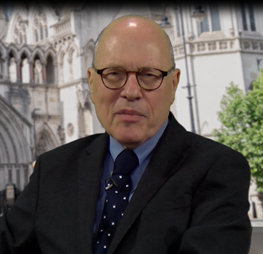
Joshua Rozenberg is Britain’s best-known commentator on the law. He is the only full-time journalist to have been appointed as King’s Counsel honoris causa. He is an honorary Master of the Bench of Gray’s Inn.
In a book I wrote more than 20 years ago, I said it was time for the Lord Chancellor to hang up at least one and preferably two of his three wigs. ‘We would then have an independent Speaker in the House of Lords, an independent judiciary without a government minister presiding over it, and a minister of justice sitting in the House of Commons.’
Be careful of what you wish for. In reality, though, the triple-wigged Lord Chancellor could not have lasted much beyond 2003 – when Tony Blair sacked Lord Irvine of Lairg and precipitated the constitutional reforms that Parliament was to approve in 2005. Once the Lord Chancellor became responsible for what was then a £3bn annual courts and legal aid budget, he needed to be answerable to the House of Commons. And as an MP he could no longer remain the UK’s most senior judge, ultimately responsible for deciding whether his own government had acted lawfully.
But surely the Lord Chancellor could have remained a lawyer? Irvine was followed by three barristers: Lord Falconer of Thoroton, Jack Straw and Kenneth Clarke. And then, in 2012, Chris Grayling became the first non-lawyer to hold the post for – it is said – 440 years. His three successors have also been non-lawyers. Will we ever see a legally-qualified Lord Chancellor again?
By 2005, the Conservatives had come round to the idea that the Lord Chancellor would have to give up his judicial and parliamentary roles. But they still wanted the political rump of the post to be held by ‘a lord and a lawyer’. The Labour government disagreed. So Falconer, who had succeeded Irvine as Lord Chancellor, offered an 11th-hour ‘compromise’. Three days before the Constitutional Reform Act was passed in 2005, he proposed an amendment in the House of Lords saying that ‘a person may not be recommended for appointment as Lord Chancellor unless he appears to the Prime Minister to be qualified by experience’. That provision, which became law, allows the PM to take into account a candidate’s experience as a minister; as an MP or peer; as a practising or academic lawyer; or ‘other experience that the Prime Minister considers relevant’.
‘Well, really,’ expostulated Lord Kingsland, the opposition spokesman, when he saw the amendment. ‘That means that the Prime Minister can choose anybody he wants.’
And that was certainly how it turned out. Falconer still maintains that Parliament intended to send the Prime Minister a signal that the Lord Chancellor needed to be a person of special quality. There was ‘considerable force’ in that view, Lord Thomas of Cwmgiedd said in a lecture earlier this year. The Lord Chief Justice implied that David Cameron had treated the statutory requirement for experience as ‘ineffective’ by appointing Grayling, a minister of state who had not previously held Cabinet office.
Like many of those who have never studied law, Grayling seemed perpetually anxious that his policies could be undermined by smart lawyers conjuring up obscure legal arguments. Bluster proved to be a poor substitute for judgment – though it was his successors who were left to pick up the pieces.
Thus David Lidington announced in July that Grayling’s partial privatisation of the probation service had ‘encountered unforeseen challenges’ while support for ex-prisoners was ‘falling short of our vision for a high-quality service’. A week later, the Supreme Court found that fees for employment tribunals introduced by Grayling were unlawful because they effectively denied applicants access to justice. Again, the policy had to be changed at great expense.
Other Grayling reforms scrapped by his immediate successor Michael Gove included the criminal courts charge, restrictions on books for prisoners, legal aid cuts, training for Saudi Arabian prison officers and a ‘secure college’ for young offenders.
To his credit, Grayling did launch the current programme of courts reform. But many of the problems our prisons are now facing can be traced back to his funding cuts. It was left to the hapless Elizabeth Truss, who succeeded Gove, to try to recruit lost prison officers. And Truss held the post for less than a year before she was sacked in June.
Lidington’s appointment as her successor was greeted with cautious optimism. Unlike his predecessors, he was willing to be interviewed on my Radio 4 programme Law in Action just 16 days after taking office, demonstrating an impressive grasp of his brief. At his swearing-in on 19 June, Lidington pledged to be ‘resolute and unflinching as Lord Chancellor in upholding the rule of law and defending the independence of the judiciary’. And, at the Lord Mayor’s dinner on 6 July, he promised a campaign to promote English law internationally.
Lidington has also made a point of putting himself about – attending high-profile events such as the launch of the business and property courts and more private occasions such as a guest night at Middle Temple and a farewell reception for the Lord Chief Justice at Gray’s Inn.
By contrast, Lidington’s deputy Dominic Raab kept his head down during his first three months as minister of state at the Ministry of Justice. In stark contrast to his predecessor Sir Oliver Heald QC, who was happy to be interviewed about online courts (see Counsel, May 2017), Raab ordered HM Courts and Tribunals Service not to brief me on the latest developments. He left it to the service’s chief executive to announce and defend a highly unpopular pilot plan under which courts and tribunals would work flexible hours, opening early or closing late.
And yet Raab is a non-practising solicitor (he prefers the term ‘international lawyer’) who started his career at Linklaters. Though sacked from the Ministry of Justice along with his boss when Theresa May replaced Gove with Truss, he was brought back when the Prime Minister needed a lawyer to square the circle over the UK’s future relationship with the EU Court of Justice.
Raab is a shrewd politician, perhaps even a future leader of his party. Like Lidington, he has the intellectual skills to master a detailed brief. But Raab has not yet acquired the self-confidence and judgement that comes from ministerial experience. When questioned, he doggedly repeats an empty formula: ‘we need to keep half an eye what the EU does’; ‘we got the balance wrong on employment tribunal fees’. If the Lord Chancellor had to be a lawyer, though, Raab would have been appointed in place of Lidington.
And it’s not as if the Prime Minister was spoilt for choice. Gone are the days when a leading QC could spend all day in the courts and then all evening in the Commons. Being an MP is now a full-time job – as is practice at the Bar. With so few experienced lawyers left in the Commons, confining the Lord Chancellor’s post to barrister or solicitor MPs would mean fishing in too small a pool. In recent years, Prime Ministers looking for suitable lawyers to appoint as law officers have fallen back on junior counsel or specially-created peers. But there can be no return to the days when the Lord Chancellor sat in the Lords.
So I think we have seen the last of the Lord Chancellor lawyers. Of course, someone like Raab might be promoted at some point to the top job at the Ministry of Justice. But that would be because of his political skills rather than his legal qualifications.
It would certainly be an advantage for a Lord Chancellor to have a legal background. When Grayling’s employment tribunal fees were overturned by the Supreme Court, Lord Reed took the opportunity to explain that ‘access to the courts is inherent in the rule of law’. A Lord Chancellor brought up in the law would not have needed to be told.
But you don’t need to be a lawyer to have an understanding of history and respect for our uncodified constitution. Lidington has shown his awareness of these qualities, as did Gove before him. Criticising Truss for not defending the judiciary from unwarranted attacks, the Lord Chief Justice said in March it was ‘absolutely essential that we have a Lord Chancellor who understands her constitutional duty’. Thomas did not say the Lord Chancellor had to be a lawyer.
He was right. It’s hard enough for Prime Ministers to find an MP who will make a good Lord Chancellor. To appoint someone who’s up to the job – and a lawyer as well – is too much to hope for.
Joshua Rozenberg QC reflects on whether we’ve seen the last of the legally qualified Lord Chancellors

Chair of the Bar finds common ground on legal services between our two jurisdictions, plus an update on jury trials
A £500 donation from AlphaBiolabs has been made to the leading UK charity tackling international parental child abduction and the movement of children across international borders
Marie Law, Director of Toxicology at AlphaBiolabs, outlines the drug and alcohol testing options available for family law professionals, and how a new, free guide can help identify the most appropriate testing method for each specific case
By Louise Crush of Westgate Wealth Management
Marie Law, Director of Toxicology at AlphaBiolabs, examines the latest ONS data on drug misuse and its implications for toxicology testing in family law cases
An interview with Rob Wagg, CEO of New Park Court Chambers
With at least 31 reports of AI hallucinations in UK legal cases – over 800 worldwide – and judges using AI to assist in judicial decision-making, the risks and benefits are impossible to ignore. Matthew Lee examines how different jurisdictions are responding
What has changed, and why? Paul Secher unpacks the new standards aligning the recruiting, training and appraising of judges – the first major change to the system for ten years
The deprivation of liberty is the most significant power the state can exercise. Drawing on frontline experience, Chris Henley KC explains why replacing trial by jury with judge-only trials risks undermining justice
Ever wondered what a pupillage is like at the CPS? This Q and A provides an insight into the training, experience and next steps
The appointments of 96 new King’s Counsel (also known as silk) are announced today