*/

Like many sets of chambers, particularly but not only at the planning Bar, Landmark has historically had more men than women members, especially among its most senior barristers. While that remains the case, real progress has been made in the past decade both in improving levels of female recruitment and retention and in enabling women’s practices to thrive to the fullest extent possible.
In 2018, Chambers recognised that its existing approach to these issues, including policies on fair work allocation and regular monitoring of work distribution, was not having the desired effect. In that year it established the Retention of Women Working Party (RWWP) to develop a comprehensive and proactive programme for change. The RWWP was tasked with reporting back to Chambers’ Management Committee (CMC) with recommendations.
The RWWP comprised the Chair of the Equality, Diversity and Wellbeing Committee (then Camilla Lamont), a cross-section of other members of Chambers and senior staff. It had a mix of male and female silks and juniors, at varying levels of seniority. As part of its work, the RWWP undertook a detailed survey of all female members, arranged meetings with a number of them, undertook exit interviews and analysed both the relative earnings of men and women, and the relative financial contribution (as a proportion of individual earnings) that men and women made to Chambers.
Early on, the RWWP agreed its primary focus should be supporting the progression, promotion and retention of existing female members, with a view to making Chambers a place where women thrive, and that it should do this by first investigating where Chambers was going wrong and what it was doing right.
One of the recommendations was to sign up to the Women in Law Pledge, and as part of that to set numerical targets. The key objective of the pledge, a collaboration between the Law Society, Bar Council, CILEx and other interested parties, is to achieve gender equality at the top of the legal profession. However, it recognises that intermediate targets are likely to be necessary to attain that end.
In order to be credible, these targets had to be both achievable and aspirational. The actions to reach them were deliberately interlinked and affected other targets. The underlying ethos was that the more successful Chambers is at meeting the needs of its female members, the more attractive it will be to new women applicants.
We adopted three targets for 2019-25:
Those targets were all achieved or exceeded:
The key to achieving these targets has been a combination of specific measures and the broader culture created by a chambers‑wide focus on those measures. For example, recognising that women apply on average five years later for silk than their male counterparts, actions included providing a strong mentoring programme, re-training practice managers to support members in making silk applications, as well as sharing information about the application process. Chambers offered free ‘taster’ sessions with consultants to enable members to better understand the process in advance of deciding whether to apply and funded individual sessions focused on female members in the relevant call groups. Progress was monitored not just by success of applications, but also by the number of applications made by female members in any year.
Like many other legal workplaces, we had not succeeded in retaining the entirety of our pool of female talent and historically a number of women barristers have either left Chambers, or the Bar. Reasons for this are numerous and complex, but often can involve the demands of having a family and the inability to work flexibly, and disparity in earnings. In line with best practice, Chambers is transparent about the earnings of its members, and allows members to compare the work they are undertaking with their relative earnings. Other measures included:
It is impossible to identify the precise contribution of each of these measures to the achievement of the targets. Perhaps the most important factor is that the topic remains on the agenda and is actively discussed within Chambers, and that there is no complacency or any sense that the task is completed. Since 2020, the Chair of EDWC has been an ex officio member of the CMC, ensuring that gender and other equalities issues are routinely considered in all aspects of Chambers decision-making. A recent focus has been on the extent to which there is a gender earnings gap, and the engagement of a statistician to enable a better understanding of when and why any disparities arise.
Progress depends on a collective effort and on the creation of a culture in Chambers in which female members feel confident that issues disproportionately affecting them will be identified and addressed as much as possible. That this is a task for everyone is emphasised by the recent passing of the position of Chair of the EDWC from a woman to a man: we are confident that it is the structures put in place, and not the identity of the person with the main coordination role, that has enabled the real progress of the last decade to be made. We also recognise that more work needs to be done, including in order to understand what support Chambers can give to ensure that any disparities in income, which can occur early on in careers, do not begin, or continue, as a result of gender discrimination. The EDWC is in the process of considering new targets under the pledge for the period 2025-30 to build on the progress already made in meeting the needs of its female members.
About the Women in Law Pledge
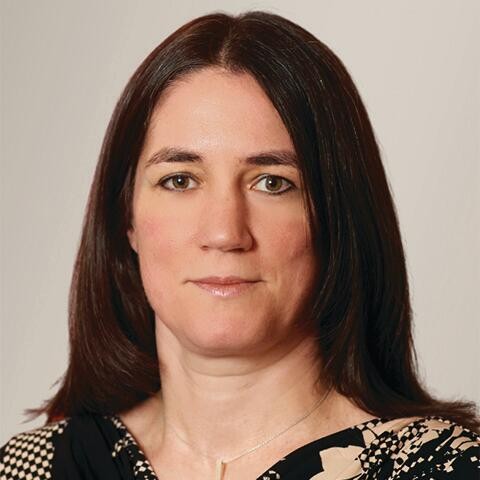

Andrew Byass, a barrister at Landmark Chambers, specialises in public, planning and environmental law. He began his legal career in Australia, where he was admitted as both a barrister and solicitor. Later, he transitioned to practise in England and Wales, initially as a solicitor before qualifying as a barrister. He is the current Chair of Landmark’s Equality, Diversity and Wellbeing Committee.
Like many sets of chambers, particularly but not only at the planning Bar, Landmark has historically had more men than women members, especially among its most senior barristers. While that remains the case, real progress has been made in the past decade both in improving levels of female recruitment and retention and in enabling women’s practices to thrive to the fullest extent possible.
In 2018, Chambers recognised that its existing approach to these issues, including policies on fair work allocation and regular monitoring of work distribution, was not having the desired effect. In that year it established the Retention of Women Working Party (RWWP) to develop a comprehensive and proactive programme for change. The RWWP was tasked with reporting back to Chambers’ Management Committee (CMC) with recommendations.
The RWWP comprised the Chair of the Equality, Diversity and Wellbeing Committee (then Camilla Lamont), a cross-section of other members of Chambers and senior staff. It had a mix of male and female silks and juniors, at varying levels of seniority. As part of its work, the RWWP undertook a detailed survey of all female members, arranged meetings with a number of them, undertook exit interviews and analysed both the relative earnings of men and women, and the relative financial contribution (as a proportion of individual earnings) that men and women made to Chambers.
Early on, the RWWP agreed its primary focus should be supporting the progression, promotion and retention of existing female members, with a view to making Chambers a place where women thrive, and that it should do this by first investigating where Chambers was going wrong and what it was doing right.
One of the recommendations was to sign up to the Women in Law Pledge, and as part of that to set numerical targets. The key objective of the pledge, a collaboration between the Law Society, Bar Council, CILEx and other interested parties, is to achieve gender equality at the top of the legal profession. However, it recognises that intermediate targets are likely to be necessary to attain that end.
In order to be credible, these targets had to be both achievable and aspirational. The actions to reach them were deliberately interlinked and affected other targets. The underlying ethos was that the more successful Chambers is at meeting the needs of its female members, the more attractive it will be to new women applicants.
We adopted three targets for 2019-25:
Those targets were all achieved or exceeded:
The key to achieving these targets has been a combination of specific measures and the broader culture created by a chambers‑wide focus on those measures. For example, recognising that women apply on average five years later for silk than their male counterparts, actions included providing a strong mentoring programme, re-training practice managers to support members in making silk applications, as well as sharing information about the application process. Chambers offered free ‘taster’ sessions with consultants to enable members to better understand the process in advance of deciding whether to apply and funded individual sessions focused on female members in the relevant call groups. Progress was monitored not just by success of applications, but also by the number of applications made by female members in any year.
Like many other legal workplaces, we had not succeeded in retaining the entirety of our pool of female talent and historically a number of women barristers have either left Chambers, or the Bar. Reasons for this are numerous and complex, but often can involve the demands of having a family and the inability to work flexibly, and disparity in earnings. In line with best practice, Chambers is transparent about the earnings of its members, and allows members to compare the work they are undertaking with their relative earnings. Other measures included:
It is impossible to identify the precise contribution of each of these measures to the achievement of the targets. Perhaps the most important factor is that the topic remains on the agenda and is actively discussed within Chambers, and that there is no complacency or any sense that the task is completed. Since 2020, the Chair of EDWC has been an ex officio member of the CMC, ensuring that gender and other equalities issues are routinely considered in all aspects of Chambers decision-making. A recent focus has been on the extent to which there is a gender earnings gap, and the engagement of a statistician to enable a better understanding of when and why any disparities arise.
Progress depends on a collective effort and on the creation of a culture in Chambers in which female members feel confident that issues disproportionately affecting them will be identified and addressed as much as possible. That this is a task for everyone is emphasised by the recent passing of the position of Chair of the EDWC from a woman to a man: we are confident that it is the structures put in place, and not the identity of the person with the main coordination role, that has enabled the real progress of the last decade to be made. We also recognise that more work needs to be done, including in order to understand what support Chambers can give to ensure that any disparities in income, which can occur early on in careers, do not begin, or continue, as a result of gender discrimination. The EDWC is in the process of considering new targets under the pledge for the period 2025-30 to build on the progress already made in meeting the needs of its female members.
About the Women in Law Pledge

Chair of the Bar finds common ground on legal services between our two jurisdictions, plus an update on jury trials
A £500 donation from AlphaBiolabs has been made to the leading UK charity tackling international parental child abduction and the movement of children across international borders
Marie Law, Director of Toxicology at AlphaBiolabs, outlines the drug and alcohol testing options available for family law professionals, and how a new, free guide can help identify the most appropriate testing method for each specific case
By Louise Crush of Westgate Wealth Management
Marie Law, Director of Toxicology at AlphaBiolabs, examines the latest ONS data on drug misuse and its implications for toxicology testing in family law cases
An interview with Rob Wagg, CEO of New Park Court Chambers
With at least 31 reports of AI hallucinations in UK legal cases – over 800 worldwide – and judges using AI to assist in judicial decision-making, the risks and benefits are impossible to ignore. Matthew Lee examines how different jurisdictions are responding
What has changed, and why? Paul Secher unpacks the new standards aligning the recruiting, training and appraising of judges – the first major change to the system for ten years
The deprivation of liberty is the most significant power the state can exercise. Drawing on frontline experience, Chris Henley KC explains why replacing trial by jury with judge-only trials risks undermining justice
Baffled by the government’s proposed s 41 reforms and by the Law Commission’s preferred model, Laura Hoyano looks at what won’t work, and what will
Ever wondered what a pupillage is like at the CPS? This Q and A provides an insight into the training, experience and next steps