*/
The winning essay is ‘Invisible Violence: Restoring the Sight of the Online Safety Act 2023’ by Wasim Iqbal
Brief summary
The Online Safety Act 2023 aims to make the UK ‘the safest place to be online’, yet allows platforms to rely heavily on AI moderation systems to meet their statutory duties. This risks leaving serious harm unrecognised and regulatory enforcement weakened or delayed.
How and why did you pick this topic?
I was struck by the growing reliance on automated systems to assess online harm, without clear visibility over how those decisions are reached.
When the law depends on processes it cannot properly scrutinise, accountability begins to erode. I wanted to examine how this gap arises within the Online Safety Act 2023, and whether greater transparency could be introduced without undermining the Act’s objectives.
The proposal ultimately focused on a simple question with far-reaching consequences: how can the law regulate harm it cannot see?
The full essay is reproduced below.
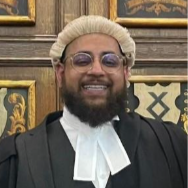
Wasim Iqbal is the winner of the Bar Council's Law Reform Essay Competition 2025.
Brief summary
The Online Safety Act 2023 aims to make the UK ‘the safest place to be online’, yet allows platforms to rely heavily on AI moderation systems to meet their statutory duties. This risks leaving serious harm unrecognised and regulatory enforcement weakened or delayed.
How and why did you pick this topic?
I was struck by the growing reliance on automated systems to assess online harm, without clear visibility over how those decisions are reached.
When the law depends on processes it cannot properly scrutinise, accountability begins to erode. I wanted to examine how this gap arises within the Online Safety Act 2023, and whether greater transparency could be introduced without undermining the Act’s objectives.
The proposal ultimately focused on a simple question with far-reaching consequences: how can the law regulate harm it cannot see?
The full essay is reproduced below.
The winning essay is ‘Invisible Violence: Restoring the Sight of the Online Safety Act 2023’ by Wasim Iqbal

The Bar Council is ready to support a turn to the efficiencies that will make a difference
A £500 donation from AlphaBiolabs has been made to the leading UK charity tackling international parental child abduction and the movement of children across international borders
By Louise Crush of Westgate Wealth Management
Marie Law, Director of Toxicology at AlphaBiolabs, examines the latest ONS data on drug misuse and its implications for toxicology testing in family law cases
An interview with Rob Wagg, CEO of New Park Court Chambers
What meaningful steps can you take in 2026 to advance your legal career? asks Thomas Cowan of St Pauls Chambers
With at least 31 reports of AI hallucinations in UK legal cases – over 800 worldwide – and judges using AI to assist in judicial decision-making, the risks and benefits are impossible to ignore. Matthew Lee examines how different jurisdictions are responding
Ever wondered what a pupillage is like at the CPS? This Q and A provides an insight into the training, experience and next steps
The appointments of 96 new King’s Counsel (also known as silk) are announced today
Resolution of the criminal justice crisis does not lie in reheating old ideas that have been roundly rejected before, say Ed Vickers KC, Faras Baloch and Katie Bacon
With pupillage application season under way, Laura Wright reflects on her route to ‘tech barrister’ and offers advice for those aiming at a career at the Bar