*/
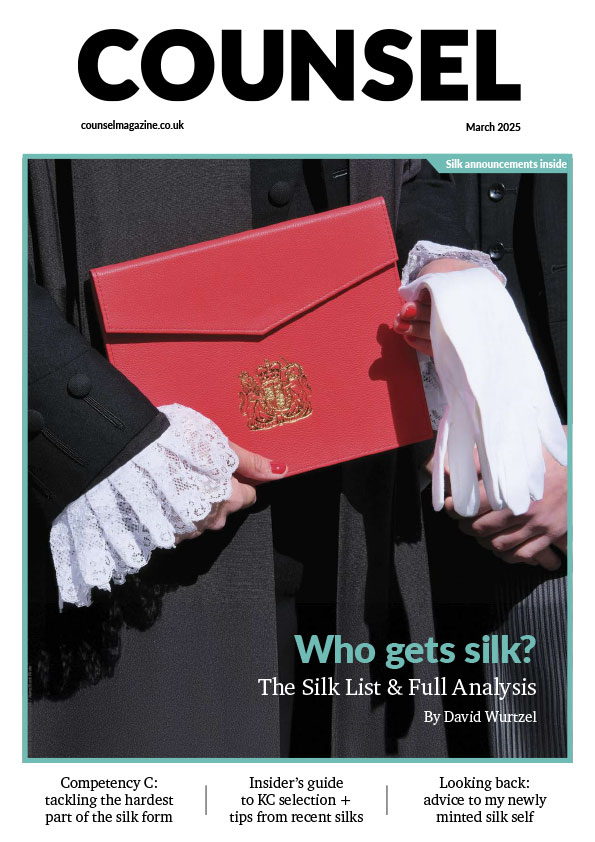
THE fourth round of appointments as Queen’s Counsel was announced on 26 February 2010. These appointments are made following consideration by the independent Selection Panel, which recommends who should receive this highly sought-after award. All those appointed have demonstrated excellence in advocacy in the higher courts. Professor Dame Joan Higgins, Chair of the QC Selection Panel, said today:
‘I have great pleasure at the announcement of these 129 names. I warmly congratulate all those whose appointment has been announced today. It is encouraging to see such a wide variety of advocates among the new appointments.
The Selection Panel believes that the quality of applications this year was higher than ever. Nevertheless, inevitably, some applicants have had to be disappointed. The standard for appointment is very high. Even if an advocate has not been appointed on this occasion it does not mean that he or she is not a valued and effective practitioner. The Selection Panel would also like to express its warm appreciation to
the 1700 assessors who provided evidence on behalf of one or more applicants and without whom the process could not have worked effectively. All the Panel's decisions have been based solely on the evidence provided by these assessors and by the applicants themselves. I am encouraged that the proportion of successful applicants from an ethnic minority background broadly matches that for white applicants.
I am also pleased that the number of successful women applicants remains high. It is disappointing that we have not been able to recommend more solicitors or employed advocates, after the higher number of appointments last year. But all applicants are assessed against a common competency framework and a common standard of excellence. There are no quotas, and we treat all applications in the same way. I hope that there will be further appointments in future years. On a personal basis I should also like to express my thanks and appreciation to Sir Paul Kennedy who is standing down as a Panel member. We are publishing a short report giving further information about this year's competition, with statistical information relating to successful and unsuccessful applicants. It will be available on our website.’ The Lord Chancellor and Secretary of State for Justice, Rt. Hon. Jack Straw MP, announced the names of 129 Queen’s Counsel from 275 applicants.
The 129 (47% of all applicants) appointed this year included: 20 women applicants (43% of the 46 who applied). In the previous competition 16 women (55% of 29) were appointed; 17 applicants who declared an ethnic origin other than white (49% of the 35 who applied, 13% of all applicants), a higher proportion than in the previous competition when 4 applicants (27%) were appointed; 1 solicitor advocate (10% of the 10 who applied). In 2009 4 applications were received of whom 3 (75%) were appointed and 6 applicants aged 55 or over (24% of this age group) as at the closing date for applications(compared to 5 applicants (20%) in 2009)
You will find a full list of names in the main pages of Counsel magazine.
I am also pleased that the number of successful women applicants remains high. It is disappointing that we have not been able to recommend more solicitors or employed advocates, after the higher number of appointments last year. But all applicants are assessed against a common competency framework and a common standard of excellence. There are no quotas, and we treat all applications in the same way. I hope that there will be further appointments in future years. On a personal basis I should also like to express my thanks and appreciation to Sir Paul Kennedy who is standing down as a Panel member. We are publishing a short report giving further information about this year's competition, with statistical information relating to successful and unsuccessful applicants. It will be available on our website.’ The Lord Chancellor and Secretary of State for Justice, Rt. Hon. Jack Straw MP, announced the names of 129 Queen’s Counsel from 275 applicants.
The 129 (47% of all applicants) appointed this year included: 20 women applicants (43% of the 46 who applied). In the previous competition 16 women (55% of 29) were appointed; 17 applicants who declared an ethnic origin other than white (49% of the 35 who applied, 13% of all applicants), a higher proportion than in the previous competition when 4 applicants (27%) were appointed; 1 solicitor advocate (10% of the 10 who applied). In 2009 4 applications were received of whom 3 (75%) were appointed and 6 applicants aged 55 or over (24% of this age group) as at the closing date for applications(compared to 5 applicants (20%) in 2009)
You will find a full list of names in the main pages of Counsel magazine.
THE fourth round of appointments as Queen’s Counsel was announced on 26 February 2010. These appointments are made following consideration by the independent Selection Panel, which recommends who should receive this highly sought-after award. All those appointed have demonstrated excellence in advocacy in the higher courts. Professor Dame Joan Higgins, Chair of the QC Selection Panel, said today:
‘I have great pleasure at the announcement of these 129 names. I warmly congratulate all those whose appointment has been announced today. It is encouraging to see such a wide variety of advocates among the new appointments.
The Selection Panel believes that the quality of applications this year was higher than ever. Nevertheless, inevitably, some applicants have had to be disappointed. The standard for appointment is very high. Even if an advocate has not been appointed on this occasion it does not mean that he or she is not a valued and effective practitioner. The Selection Panel would also like to express its warm appreciation to
the 1700 assessors who provided evidence on behalf of one or more applicants and without whom the process could not have worked effectively. All the Panel's decisions have been based solely on the evidence provided by these assessors and by the applicants themselves. I am encouraged that the proportion of successful applicants from an ethnic minority background broadly matches that for white applicants.
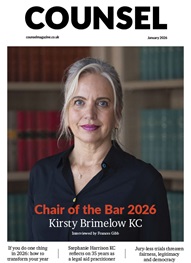

Kirsty Brimelow KC, Chair of the Bar, sets our course for 2026
What meaningful steps can you take in 2026 to advance your legal career? asks Thomas Cowan of St Pauls Chambers
Marie Law, Director of Toxicology at AlphaBiolabs, explains why drugs may appear in test results, despite the donor denying use of them
Asks Louise Crush of Westgate Wealth Management
AlphaBiolabs has donated £500 to The Christie Charity through its Giving Back initiative, helping to support cancer care, treatment and research across Greater Manchester, Cheshire and further afield
Q and A with criminal barrister Nick Murphy, who moved to New Park Court Chambers on the North Eastern Circuit in search of a better work-life balance
The appointments of 96 new King’s Counsel (also known as silk) are announced today
With pupillage application season under way, Laura Wright reflects on her route to ‘tech barrister’ and offers advice for those aiming at a career at the Bar
Jury-less trial proposals threaten fairness, legitimacy and democracy without ending the backlog, writes Professor Cheryl Thomas KC (Hon), the UK’s leading expert on juries, judges and courts
Are you ready for the new way to do tax returns? David Southern KC explains the biggest change since HMRC launched self-assessment more than 30 years ago... and its impact on the Bar
Marking one year since a Bar disciplinary tribunal dismissed all charges against her, Dr Charlotte Proudman discusses the experience, her formative years and next steps. Interview by Anthony Inglese CB