*/
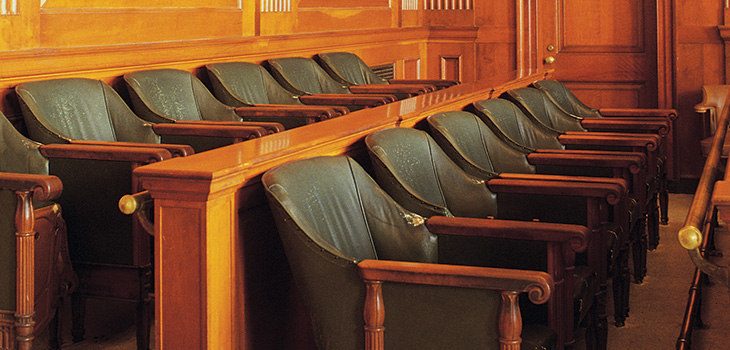
The deprivation of liberty is the most significant power the state can exercise. Drawing on frontline experience, Chris Henley KC explains why replacing trial by jury with judge-only trials risks undermining justice
Just imagine spending the next three years in a small cold room, with a lidless steel toilet, the meagre furniture secured to the floor or wall, an hour of ‘fresh’ air in a shared high-walled yard with no view, communal showers with randomly violent people, many of them suffering from serious mental health problems. If you ever see your family and children, it will be a humiliating experience, under intrusive observation, with limited if any touching, around small plastic tables with constant menace in the air, and every meal tasteless, tepid and insufficient. Every single day for three years. Imagine enduring this even for a week. The deprivation of liberty is the most significant power the State can exercise.
If we are to do this to our fellow citizens does anyone seriously disagree that this should only happen after a fair, open-minded trial process?
Jury trial gives us confidence that there has been a fair process. Judge-only trials will not. The judges who will replace juries are, much more often than not, privately educated, white men, in late middle age, of very narrow social background and experience. I could be describing myself. This proposed set up is as far away from trial by a balanced cross-section of society as it would be possible to contrive. Judges sentence non-white defendants more harshly and deny bail to non-white defendants more often. Whether the bias is conscious or unconscious, the bias is incontrovertible. A recent example of this was the disproportionately harsher sentences handed out by judges across the country to Asian sub postmasters and sub postmistresses compared to their white colleagues. Seema Misra, innocent and pregnant, who was persuaded to plead guilty in an attempt to avoid prison, was not spared by the judge.
The Church Times has pithily identified the problem:
‘No matter how fair and independent a judge might be, the abstract image alone is devastating. Furthermore, it is likely that judges will gain reputations (deservedly or not) for being hard-line and austere, or for being tolerant and genial, or for being bigoted and prejudiced; and so verdicts and sentences will come down with a patina of scepticism already on them.’
All of us who practise in the criminal courts know this to be true. Three recent trials I have been involved in would not have delivered the same fair outcomes had the judge alone been effectively the jury too. I know this because the judges consistently betrayed their views – in the absence of the jury, of course. In one, the judge even commended the pathologist about the guilty verdicts obtained in a previous trial, using language along the lines of ‘did you hear, we got them’.
I’m afraid that as a judge you very quickly become a creature of the establishment. You instinctively assume the best and sympathise, other than in the clearest cases, with the arms of the state which underpin the prosecution. Judges almost never instinctively empathise with the individual on trial. All the pre-trial information, which a jury is not exposed to, points unerringly one way. Some judges are more benign than others, but it affects almost everyone. This is to be expected and is a pattern of behaviour repeated in so many areas of life.
I have biases, conscious and unconscious. Of course I do. I see the world through my very particular eyes as a result of the life I have lived. The world has served me well. I expect that I will be treated fairly, will be believed, listened to not judged, because that is my narrow, privileged experience. While I might sometimes think I do, I have no special insight into why people behave as they do, particularly young people (although I have children), or people of colour, or the economically disadvantaged, what might be in their minds, or their experience of the world, their frustrations, their perceptions of what might happen in certain situations, based on visceral previous experience, or the impact of peer pressure or social deprivation. But I could easily end up sitting in judgment of them, in a judge-only court.
Some judges are better than others at masking their prejudices, but all of us who practise in the criminal courts know that day in day out they hang heavy in the air. Those barristers who both prosecute and defend will routinely contrast judicial behaviour when prosecuting as ‘like having the wind behind you’. Advocates who defend in the Magistrates’ Courts know how strong the wind blows the other way, for similar reasons. David Lammy, now Lord Chancellor, recognised all of this in his careful and compelling Lammy Review in 2017; judges and magistrates racially discriminate in their treatment of defendants at every stage, when they have the key decisions to make. Reports from this year have reaffirmed this finding. The Children’s Commissioner, for example, reported that ‘there are evident ethnic disparities across the justice system… 56% of children remanded were from an Asian, black, mixed or other ethnic group’. All of this is what David Lammy described in his Review.
The Court of Appeal provides precious little protection when things go wrong. It has a very poor record of correctly identifying miscarriages of justice, effectively a judicial fact-finding exercise. Obvious miscarriages have had to return to that court multiple times before they are finally put right. Andrew Malkinson’s case is an example of this; the Court of Appeal dismissed his first appeal describing the evidence against him as ‘compelling’. This reluctance to acknowledge the mistakes our system is bound on occasion to make, is an establishment default setting in favour of the status quo. This instinct runs very deep. Lord Thomas, then Lord Chief Justice, exemplified this approach in his notorious judgment in Johnson and others [2016] EWCA Crim 1613, in which he did all he could to limit the practical effect of the Supreme Court decision in Jogee a few months earlier. The case of R v Ordu [2017] EWCA Crim 4 is another shocking example of the Court of Appeal refusing to quash a conviction. Leave to appeal out of time was refused even though the prosecution had made it clear they would not oppose the appeal. Imagine if it was a member of one of those judges’ families.
The Supreme Court in the Libor appeal, R v Hayes and R v Palumbo [2025] UKSC 29, an appeal rejected three times by the Court of Appeal, opened its judgment with this first line:
‘The history of these two cases raises concerns about the effectiveness of the criminal appeal system in England and Wales in confronting legal error.’
The trial judges had misdirected their respective juries in August 2015 and March 2019. The jury in each trial had done its job, but the trial judges and the appeal court judges had failed, properly, to do theirs.
This is why we all need the protection of a fair trial, which only a jury can consistently provide. Lammy used to be a passionate advocate of trial by jury. In his Review he examined the consistency of the outcomes, as between ethnic groups. His conclusion was that trial by jury was the shining success of our system. He was not so positive about outcomes in Magistrates’ Courts or decisions by judges; both displayed clear bias.
This is not very surprising, but it is fundamental to the confidence the public has in our system of trial by jury. We are all familiar with the concept of the ‘wisdom of crowds’. There is no concept of the ‘wisdom of one’, for obvious reasons. Trial by jury is the ‘wisdom of crowds’ in practical action. Organisations and businesses do the same. They assemble a panel or refer to a committee when making significant decisions, bringing a range of voices and experiences to the table to ensure that everything relevant is considered and tested. The collective decision is understood to be more robust, and wise, than a decision made by a single person. A single person won’t always get it wrong, but a decision produced and supported by a range of people commands more confidence and will be the result of greater challenge and testing. Just like a jury’s verdict.
Replacing trial by jury with trial by judge alone will change outcomes. It will cause harm to some defendants of different ethnic and socio-economic backgrounds, and some younger defendants, whose truthful accounts will be dismissed by a case-hardened judge but would not be by a jury of greater ‘wisdom’. Any judge will be able to explain, with little difficulty, in a written judgment why they came to the conclusion that they did, highlighting whatever aspects of a witness’s testimony they need to accept or reject to justify their verdict. Any such conclusion will always be subjective; it cannot be anything else. That is the root of the problem. But for certain defendants the dice will have been loaded against them from the start.
The government points, in particular, to Canada and New Zealand to justify the abolition of the right of defendants to elect jury trial, a new judge-only court and the significant expansion of the sentencing power of magistrates. What they fail to mention is that in both Canada and New Zealand lay magistrates have been abolished altogether, such was the lack of confidence in the quality of their decision-making, and the right to elect jury trial has not been abolished as will happen here.
We need judges to do their very important job, which they have been trained to do: to be the legal experts, to apply the law properly, to rule correctly on the admissibility of evidence, to manage trials efficiently and to pass the correct sentence after careful expert reflection. We cannot have trials without judges, but we cannot have justice without juries.
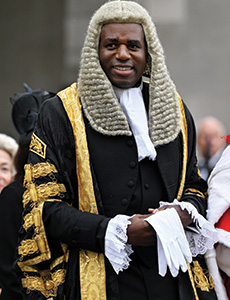
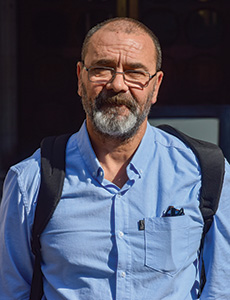
Obvious miscarriages have had to return to the Court of Appeal multiple times before they are finally put right. The case of Andrew Malkinson (pictured above) is an example of this.
‘Jury reforms will not fix the systemic problems’, Nicholas Reed Langen, Church Times, 12 December 2025
Lammy Review – final report, 8 September 2017
“A production line of pointlessness”: Children on custodial remand, Children’s Commissioner Dame Rachel de Souza, November 2025
Judge-only trials will save just 2% of court time, according to data analysis recently published by the Institute for Government. The insight paper concludes that the government’s reforms as a whole will unlock only relatively modest reductions in demand, given the scale of institutional upheaval. The paper goes on to argue that the government should focus instead on reversing productivity declines. See ‘Trial and error?: The impact of restricting jury trials on court demand’, Cassia Rowland, Institute for Government Insight Paper, 21 January 2026.
Write to your MP – and read more about what the Bar Council is doing in response to the Leveson Review
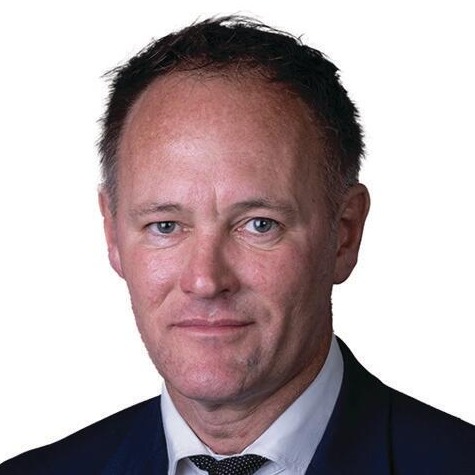
Chris Henley KC is Head of Mountford Chambers (formerly Carmelite). He is highly regarded in all areas of serious crime, particularly murder, fraud and terrorism, and was the 2018/19 Chair of the Criminal Bar Association.
Just imagine spending the next three years in a small cold room, with a lidless steel toilet, the meagre furniture secured to the floor or wall, an hour of ‘fresh’ air in a shared high-walled yard with no view, communal showers with randomly violent people, many of them suffering from serious mental health problems. If you ever see your family and children, it will be a humiliating experience, under intrusive observation, with limited if any touching, around small plastic tables with constant menace in the air, and every meal tasteless, tepid and insufficient. Every single day for three years. Imagine enduring this even for a week. The deprivation of liberty is the most significant power the State can exercise.
If we are to do this to our fellow citizens does anyone seriously disagree that this should only happen after a fair, open-minded trial process?
Jury trial gives us confidence that there has been a fair process. Judge-only trials will not. The judges who will replace juries are, much more often than not, privately educated, white men, in late middle age, of very narrow social background and experience. I could be describing myself. This proposed set up is as far away from trial by a balanced cross-section of society as it would be possible to contrive. Judges sentence non-white defendants more harshly and deny bail to non-white defendants more often. Whether the bias is conscious or unconscious, the bias is incontrovertible. A recent example of this was the disproportionately harsher sentences handed out by judges across the country to Asian sub postmasters and sub postmistresses compared to their white colleagues. Seema Misra, innocent and pregnant, who was persuaded to plead guilty in an attempt to avoid prison, was not spared by the judge.
The Church Times has pithily identified the problem:
‘No matter how fair and independent a judge might be, the abstract image alone is devastating. Furthermore, it is likely that judges will gain reputations (deservedly or not) for being hard-line and austere, or for being tolerant and genial, or for being bigoted and prejudiced; and so verdicts and sentences will come down with a patina of scepticism already on them.’
All of us who practise in the criminal courts know this to be true. Three recent trials I have been involved in would not have delivered the same fair outcomes had the judge alone been effectively the jury too. I know this because the judges consistently betrayed their views – in the absence of the jury, of course. In one, the judge even commended the pathologist about the guilty verdicts obtained in a previous trial, using language along the lines of ‘did you hear, we got them’.
I’m afraid that as a judge you very quickly become a creature of the establishment. You instinctively assume the best and sympathise, other than in the clearest cases, with the arms of the state which underpin the prosecution. Judges almost never instinctively empathise with the individual on trial. All the pre-trial information, which a jury is not exposed to, points unerringly one way. Some judges are more benign than others, but it affects almost everyone. This is to be expected and is a pattern of behaviour repeated in so many areas of life.
I have biases, conscious and unconscious. Of course I do. I see the world through my very particular eyes as a result of the life I have lived. The world has served me well. I expect that I will be treated fairly, will be believed, listened to not judged, because that is my narrow, privileged experience. While I might sometimes think I do, I have no special insight into why people behave as they do, particularly young people (although I have children), or people of colour, or the economically disadvantaged, what might be in their minds, or their experience of the world, their frustrations, their perceptions of what might happen in certain situations, based on visceral previous experience, or the impact of peer pressure or social deprivation. But I could easily end up sitting in judgment of them, in a judge-only court.
Some judges are better than others at masking their prejudices, but all of us who practise in the criminal courts know that day in day out they hang heavy in the air. Those barristers who both prosecute and defend will routinely contrast judicial behaviour when prosecuting as ‘like having the wind behind you’. Advocates who defend in the Magistrates’ Courts know how strong the wind blows the other way, for similar reasons. David Lammy, now Lord Chancellor, recognised all of this in his careful and compelling Lammy Review in 2017; judges and magistrates racially discriminate in their treatment of defendants at every stage, when they have the key decisions to make. Reports from this year have reaffirmed this finding. The Children’s Commissioner, for example, reported that ‘there are evident ethnic disparities across the justice system… 56% of children remanded were from an Asian, black, mixed or other ethnic group’. All of this is what David Lammy described in his Review.
The Court of Appeal provides precious little protection when things go wrong. It has a very poor record of correctly identifying miscarriages of justice, effectively a judicial fact-finding exercise. Obvious miscarriages have had to return to that court multiple times before they are finally put right. Andrew Malkinson’s case is an example of this; the Court of Appeal dismissed his first appeal describing the evidence against him as ‘compelling’. This reluctance to acknowledge the mistakes our system is bound on occasion to make, is an establishment default setting in favour of the status quo. This instinct runs very deep. Lord Thomas, then Lord Chief Justice, exemplified this approach in his notorious judgment in Johnson and others [2016] EWCA Crim 1613, in which he did all he could to limit the practical effect of the Supreme Court decision in Jogee a few months earlier. The case of R v Ordu [2017] EWCA Crim 4 is another shocking example of the Court of Appeal refusing to quash a conviction. Leave to appeal out of time was refused even though the prosecution had made it clear they would not oppose the appeal. Imagine if it was a member of one of those judges’ families.
The Supreme Court in the Libor appeal, R v Hayes and R v Palumbo [2025] UKSC 29, an appeal rejected three times by the Court of Appeal, opened its judgment with this first line:
‘The history of these two cases raises concerns about the effectiveness of the criminal appeal system in England and Wales in confronting legal error.’
The trial judges had misdirected their respective juries in August 2015 and March 2019. The jury in each trial had done its job, but the trial judges and the appeal court judges had failed, properly, to do theirs.
This is why we all need the protection of a fair trial, which only a jury can consistently provide. Lammy used to be a passionate advocate of trial by jury. In his Review he examined the consistency of the outcomes, as between ethnic groups. His conclusion was that trial by jury was the shining success of our system. He was not so positive about outcomes in Magistrates’ Courts or decisions by judges; both displayed clear bias.
This is not very surprising, but it is fundamental to the confidence the public has in our system of trial by jury. We are all familiar with the concept of the ‘wisdom of crowds’. There is no concept of the ‘wisdom of one’, for obvious reasons. Trial by jury is the ‘wisdom of crowds’ in practical action. Organisations and businesses do the same. They assemble a panel or refer to a committee when making significant decisions, bringing a range of voices and experiences to the table to ensure that everything relevant is considered and tested. The collective decision is understood to be more robust, and wise, than a decision made by a single person. A single person won’t always get it wrong, but a decision produced and supported by a range of people commands more confidence and will be the result of greater challenge and testing. Just like a jury’s verdict.
Replacing trial by jury with trial by judge alone will change outcomes. It will cause harm to some defendants of different ethnic and socio-economic backgrounds, and some younger defendants, whose truthful accounts will be dismissed by a case-hardened judge but would not be by a jury of greater ‘wisdom’. Any judge will be able to explain, with little difficulty, in a written judgment why they came to the conclusion that they did, highlighting whatever aspects of a witness’s testimony they need to accept or reject to justify their verdict. Any such conclusion will always be subjective; it cannot be anything else. That is the root of the problem. But for certain defendants the dice will have been loaded against them from the start.
The government points, in particular, to Canada and New Zealand to justify the abolition of the right of defendants to elect jury trial, a new judge-only court and the significant expansion of the sentencing power of magistrates. What they fail to mention is that in both Canada and New Zealand lay magistrates have been abolished altogether, such was the lack of confidence in the quality of their decision-making, and the right to elect jury trial has not been abolished as will happen here.
We need judges to do their very important job, which they have been trained to do: to be the legal experts, to apply the law properly, to rule correctly on the admissibility of evidence, to manage trials efficiently and to pass the correct sentence after careful expert reflection. We cannot have trials without judges, but we cannot have justice without juries.
Obvious miscarriages have had to return to the Court of Appeal multiple times before they are finally put right. The case of Andrew Malkinson (pictured above) is an example of this.
‘Jury reforms will not fix the systemic problems’, Nicholas Reed Langen, Church Times, 12 December 2025
Lammy Review – final report, 8 September 2017
“A production line of pointlessness”: Children on custodial remand, Children’s Commissioner Dame Rachel de Souza, November 2025
Judge-only trials will save just 2% of court time, according to data analysis recently published by the Institute for Government. The insight paper concludes that the government’s reforms as a whole will unlock only relatively modest reductions in demand, given the scale of institutional upheaval. The paper goes on to argue that the government should focus instead on reversing productivity declines. See ‘Trial and error?: The impact of restricting jury trials on court demand’, Cassia Rowland, Institute for Government Insight Paper, 21 January 2026.
Write to your MP – and read more about what the Bar Council is doing in response to the Leveson Review
The deprivation of liberty is the most significant power the state can exercise. Drawing on frontline experience, Chris Henley KC explains why replacing trial by jury with judge-only trials risks undermining justice


Chair of the Bar finds common ground on legal services between our two jurisdictions, plus an update on jury trials
A £500 donation from AlphaBiolabs has been made to the leading UK charity tackling international parental child abduction and the movement of children across international borders
Marie Law, Director of Toxicology at AlphaBiolabs, outlines the drug and alcohol testing options available for family law professionals, and how a new, free guide can help identify the most appropriate testing method for each specific case
By Louise Crush of Westgate Wealth Management
Marie Law, Director of Toxicology at AlphaBiolabs, examines the latest ONS data on drug misuse and its implications for toxicology testing in family law cases
An interview with Rob Wagg, CEO of New Park Court Chambers
With at least 31 reports of AI hallucinations in UK legal cases – over 800 worldwide – and judges using AI to assist in judicial decision-making, the risks and benefits are impossible to ignore. Matthew Lee examines how different jurisdictions are responding
What has changed, and why? Paul Secher unpacks the new standards aligning the recruiting, training and appraising of judges – the first major change to the system for ten years
The deprivation of liberty is the most significant power the state can exercise. Drawing on frontline experience, Chris Henley KC explains why replacing trial by jury with judge-only trials risks undermining justice
Baffled by the government’s proposed s 41 reforms and by the Law Commission’s preferred model, Laura Hoyano looks at what won’t work, and what will
Ever wondered what a pupillage is like at the CPS? This Q and A provides an insight into the training, experience and next steps