*/
New year brings more than resolutions. By William Byfield
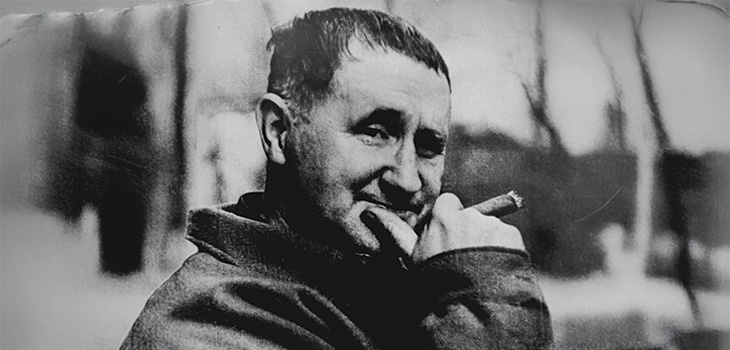
January 26, 2026 – Bertolt Brecht
When I took silk, which seems more distant every passing year, the experience was intense, but I think less exhausting than today. There was no interview and you felt that they already knew a good deal about you before anyone said anything for or against your application. Run by the Lord Chancellor’s Department it was commonly said that much of the data was already in the state’s possession. It was believed that a file was opened on each barrister to which judges could send their comments. When I applied to be an Assistant Recorder you faced a panel including a civil servant in the Department. The two judicial panellists had copies of your application but the civil servant alone held a large file of papers with sticky coloured bookmarks at various pages. I have an Albanian friend who can read writing that is upside down. He would have come in useful. This bundle must have been the dreaded file. The one question I was asked by the civil servant – ‘would you be able to resist making jokes as a judge?’ – was clearly not a random thought.
The one good thing about the old system was, however, that you knew exactly when you would receive the good or bad news: the Tuesday of Holy Week, two days before Maundy Thursday. There was a time before my application when you knew the answer from the colour of the envelope sent to you. Brown represented failure. You could also tell from the weight. Thin was not good. No need for all the detailed instructions.
This year, the turkey had hardly been digested and the Christmas tree disposed of before this year’s successful candidates were revealed. A very talented member of Chambers, Joy Paul, was successful which was not a surprise, at least to me, but extremely well deserved. I knew she would go far when she gave me an intensive grilling the first time that I led her. Having given me a long look about certain of my tactical proposals, once we had talked it over and I had given a fuller explanation, no-one could have been more loyal, determined or enterprising in putting it into action, successfully.
New Year also involved my going to a funeral in an icy cathedral. This winter has been a hard one. Nasty lurgies and bitterly cold. The deceased had been Head of our Chambers for a short period when I was a junior. He was a lovely man, if a touch eccentric. Years later, I was in front of him defending, of all people, a magistrate for an alleged passport fraud. During the trial, his clerk asked me to come to his room one lunchtime – a rather grotty apartment for a High Court judge – in a strange Crown Court that was attached to some council offices in an historic city. I was a little concerned that my opponent was out getting a sandwich, as generally, of course, both counsel have to be present, but he didn’t want to see me about the case at all.
‘Hello William,’ he said, ‘do sit down. I was wondering if you had put in for silk this year?’ I said that I had. ‘When are you expecting to hear?’ he asked. ‘Next Tuesday,’ I said, ‘just before Maundy Thursday.’ ‘Ah,’ he said, ‘you haven’t got it.’ I was puzzled and replied: ‘I don’t know. It comes out next week.’ ‘No,’ he said, ‘you haven’t got it.’ I looked at him and pointed out that he had just asked me if I was putting in for silk. ‘Yes, I know,’ he said, ‘I thought that was the most tactful way to approach it.’ He then explained the grading system from A (definitely silk) to C (probably not worth putting in again). I asked hesitantly if he was able to tell me what I had been given. ‘P,’ he said. ‘It means premature. In some ways it’s the worst grade to get, because it means that (a) you have failed to be appointed and (b) you lack judgement. I thought it would help you to know in advance.’ Possibly…
I know that the modern system is expensive and somewhat irritating and I also know that the interview we were spared can be daunting. But the independent validation sets new silks off with a transparent seal of approval to a day they will always remember on an extraordinary road which marks a huge change for which you wish every good thing for them, as you know someone once did for you.

William Byfield is the pseudonym of a senior member of the Bar. Gutteridge Chambers, and the events that happen there, are entirely fictitious.
January 26, 2026 – Bertolt Brecht
When I took silk, which seems more distant every passing year, the experience was intense, but I think less exhausting than today. There was no interview and you felt that they already knew a good deal about you before anyone said anything for or against your application. Run by the Lord Chancellor’s Department it was commonly said that much of the data was already in the state’s possession. It was believed that a file was opened on each barrister to which judges could send their comments. When I applied to be an Assistant Recorder you faced a panel including a civil servant in the Department. The two judicial panellists had copies of your application but the civil servant alone held a large file of papers with sticky coloured bookmarks at various pages. I have an Albanian friend who can read writing that is upside down. He would have come in useful. This bundle must have been the dreaded file. The one question I was asked by the civil servant – ‘would you be able to resist making jokes as a judge?’ – was clearly not a random thought.
The one good thing about the old system was, however, that you knew exactly when you would receive the good or bad news: the Tuesday of Holy Week, two days before Maundy Thursday. There was a time before my application when you knew the answer from the colour of the envelope sent to you. Brown represented failure. You could also tell from the weight. Thin was not good. No need for all the detailed instructions.
This year, the turkey had hardly been digested and the Christmas tree disposed of before this year’s successful candidates were revealed. A very talented member of Chambers, Joy Paul, was successful which was not a surprise, at least to me, but extremely well deserved. I knew she would go far when she gave me an intensive grilling the first time that I led her. Having given me a long look about certain of my tactical proposals, once we had talked it over and I had given a fuller explanation, no-one could have been more loyal, determined or enterprising in putting it into action, successfully.
New Year also involved my going to a funeral in an icy cathedral. This winter has been a hard one. Nasty lurgies and bitterly cold. The deceased had been Head of our Chambers for a short period when I was a junior. He was a lovely man, if a touch eccentric. Years later, I was in front of him defending, of all people, a magistrate for an alleged passport fraud. During the trial, his clerk asked me to come to his room one lunchtime – a rather grotty apartment for a High Court judge – in a strange Crown Court that was attached to some council offices in an historic city. I was a little concerned that my opponent was out getting a sandwich, as generally, of course, both counsel have to be present, but he didn’t want to see me about the case at all.
‘Hello William,’ he said, ‘do sit down. I was wondering if you had put in for silk this year?’ I said that I had. ‘When are you expecting to hear?’ he asked. ‘Next Tuesday,’ I said, ‘just before Maundy Thursday.’ ‘Ah,’ he said, ‘you haven’t got it.’ I was puzzled and replied: ‘I don’t know. It comes out next week.’ ‘No,’ he said, ‘you haven’t got it.’ I looked at him and pointed out that he had just asked me if I was putting in for silk. ‘Yes, I know,’ he said, ‘I thought that was the most tactful way to approach it.’ He then explained the grading system from A (definitely silk) to C (probably not worth putting in again). I asked hesitantly if he was able to tell me what I had been given. ‘P,’ he said. ‘It means premature. In some ways it’s the worst grade to get, because it means that (a) you have failed to be appointed and (b) you lack judgement. I thought it would help you to know in advance.’ Possibly…
I know that the modern system is expensive and somewhat irritating and I also know that the interview we were spared can be daunting. But the independent validation sets new silks off with a transparent seal of approval to a day they will always remember on an extraordinary road which marks a huge change for which you wish every good thing for them, as you know someone once did for you.
New year brings more than resolutions. By William Byfield


Chair of the Bar finds common ground on legal services between our two jurisdictions, plus an update on jury trials
A £500 donation from AlphaBiolabs has been made to the leading UK charity tackling international parental child abduction and the movement of children across international borders
Marie Law, Director of Toxicology at AlphaBiolabs, outlines the drug and alcohol testing options available for family law professionals, and how a new, free guide can help identify the most appropriate testing method for each specific case
By Louise Crush of Westgate Wealth Management
Marie Law, Director of Toxicology at AlphaBiolabs, examines the latest ONS data on drug misuse and its implications for toxicology testing in family law cases
An interview with Rob Wagg, CEO of New Park Court Chambers
With at least 31 reports of AI hallucinations in UK legal cases – over 800 worldwide – and judges using AI to assist in judicial decision-making, the risks and benefits are impossible to ignore. Matthew Lee examines how different jurisdictions are responding
What has changed, and why? Paul Secher unpacks the new standards aligning the recruiting, training and appraising of judges – the first major change to the system for ten years
The deprivation of liberty is the most significant power the state can exercise. Drawing on frontline experience, Chris Henley KC explains why replacing trial by jury with judge-only trials risks undermining justice
Baffled by the government’s proposed s 41 reforms and by the Law Commission’s preferred model, Laura Hoyano looks at what won’t work, and what will
Ever wondered what a pupillage is like at the CPS? This Q and A provides an insight into the training, experience and next steps