*/
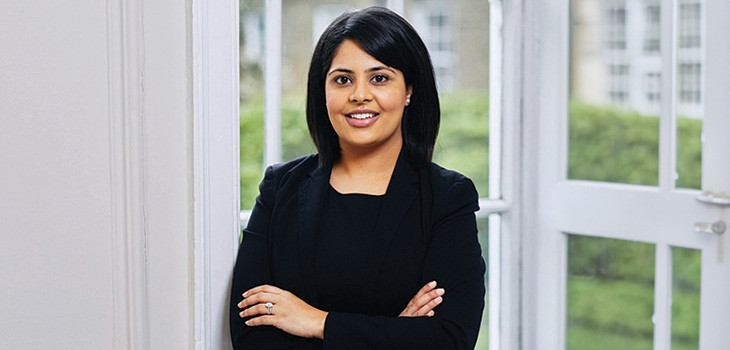
Amrit Kaur Dhanoa, Chair of the Young Barristers’ Committee for 2024, sets out her priorities for the year ahead
The Young Barristers’ Committee (YBC) was established in 1954. How exactly it came to be – how many barristers made up its first committee; where it first met; and what it first talked about – is lost to time. However, it is almost certain that the idea would have emerged out of a pressing need to address the issues that the junior profession was facing, in a forum that they could call their own. This remains the primary reason for the YBC, and the one which convinced me to run for the office of Chair.
I am delighted to have been elected Chair of the YBC for 2024 and proud to take on the role in its 70th year. I am very excited to work with Lachlan Stewart, my Vice Chair, to tackle the issues facing the young Bar and work towards solutions. As the committee enters 2024, the Young Bar is increasingly diverse, remains highly ambitious, and understands (in my opinion) that the challenges we face will no doubt be a mixture of the age-old and the brand new.
I would like to thank my immediate predecessor Michael Harwood for his steadfast leadership and all his efforts in promoting the interests of the Young Bar over the past year both at home and internationally. I also want to thank his predecessors Michael Polak (2022), Joanne Kane (2021) and Katherine Duncan (2020). Katherine and Joanne led the Young Bar through the COVID-19 pandemic, something which could only have been achieved with their strength and determination.
Being a barrister during the pandemic was gruelling. And yet, being a barrister after the pandemic may be harder still for some. The question of what working culture at the Bar looks like post-COVID, and what that means for professional development at the junior level, is an area I will be looking at closely during my tenure.
Being Chair of the YBC means addressing continued challenges but also those that are much newer. My priorities for this year therefore are a mix of both.
I hope that, with the collective force of the Committee working on these priorities, we can help young barristers make the first seven years count.
As ever, it is something I cannot do in isolation. To quote a former Chair of the YBC, the young Bar is only as strong as its members. Please write to me about any issues and queries via email: YBC@BarCouncil.org.uk.
I look forward to going on this journey with you.

Amrit Kaur Dhanoa is Chair of the Bar Council’s Young Barristers’ Committee for 2024. She is also a member of the Bar Council’s Alternative Dispute Resolution Panel and the Bar European Group. Amrit practises from 4-5 Gray’s Inn Square and has a particular focus on commercial litigation and mediation, international arbitration, public and regulatory law.
The Young Barristers’ Committee (YBC) was established in 1954. How exactly it came to be – how many barristers made up its first committee; where it first met; and what it first talked about – is lost to time. However, it is almost certain that the idea would have emerged out of a pressing need to address the issues that the junior profession was facing, in a forum that they could call their own. This remains the primary reason for the YBC, and the one which convinced me to run for the office of Chair.
I am delighted to have been elected Chair of the YBC for 2024 and proud to take on the role in its 70th year. I am very excited to work with Lachlan Stewart, my Vice Chair, to tackle the issues facing the young Bar and work towards solutions. As the committee enters 2024, the Young Bar is increasingly diverse, remains highly ambitious, and understands (in my opinion) that the challenges we face will no doubt be a mixture of the age-old and the brand new.
I would like to thank my immediate predecessor Michael Harwood for his steadfast leadership and all his efforts in promoting the interests of the Young Bar over the past year both at home and internationally. I also want to thank his predecessors Michael Polak (2022), Joanne Kane (2021) and Katherine Duncan (2020). Katherine and Joanne led the Young Bar through the COVID-19 pandemic, something which could only have been achieved with their strength and determination.
Being a barrister during the pandemic was gruelling. And yet, being a barrister after the pandemic may be harder still for some. The question of what working culture at the Bar looks like post-COVID, and what that means for professional development at the junior level, is an area I will be looking at closely during my tenure.
Being Chair of the YBC means addressing continued challenges but also those that are much newer. My priorities for this year therefore are a mix of both.
I hope that, with the collective force of the Committee working on these priorities, we can help young barristers make the first seven years count.
As ever, it is something I cannot do in isolation. To quote a former Chair of the YBC, the young Bar is only as strong as its members. Please write to me about any issues and queries via email: YBC@BarCouncil.org.uk.
I look forward to going on this journey with you.
Amrit Kaur Dhanoa, Chair of the Young Barristers’ Committee for 2024, sets out her priorities for the year ahead

Chair of the Bar finds common ground on legal services between our two jurisdictions, plus an update on jury trials
A £500 donation from AlphaBiolabs has been made to the leading UK charity tackling international parental child abduction and the movement of children across international borders
Marie Law, Director of Toxicology at AlphaBiolabs, outlines the drug and alcohol testing options available for family law professionals, and how a new, free guide can help identify the most appropriate testing method for each specific case
By Louise Crush of Westgate Wealth Management
Marie Law, Director of Toxicology at AlphaBiolabs, examines the latest ONS data on drug misuse and its implications for toxicology testing in family law cases
An interview with Rob Wagg, CEO of New Park Court Chambers
With at least 31 reports of AI hallucinations in UK legal cases – over 800 worldwide – and judges using AI to assist in judicial decision-making, the risks and benefits are impossible to ignore. Matthew Lee examines how different jurisdictions are responding
What has changed, and why? Paul Secher unpacks the new standards aligning the recruiting, training and appraising of judges – the first major change to the system for ten years
The deprivation of liberty is the most significant power the state can exercise. Drawing on frontline experience, Chris Henley KC explains why replacing trial by jury with judge-only trials risks undermining justice
Ever wondered what a pupillage is like at the CPS? This Q and A provides an insight into the training, experience and next steps
The appointments of 96 new King’s Counsel (also known as silk) are announced today