*/

Louise Crush explores the value you can measure in monetary terms alongside the many non-tangible benefits to working with a financial adviser
Over the past decade or so, responsibility for planning your financial future has shifted significantly towards the individual. To support this, expert and regular financial advice is crucial. As well as value you can measure in pounds and pence, there are many non-tangible benefits to receiving financial advice. Below we consider some specific ways advice can deliver these benefits:
By working with an adviser and gaining access to the benefits this provides, some of which we just explored, how does this then translate into monetary gain and increased financial security for our clients? Below, we identify just two examples:
So what’s holding you back? Contact us today, for further information, or to book a no obligation chat:
References: (1) The International Longevity Centre UK calculated that if a person received professional financial advice between 2001 and 2006 it resulted, on average, in them being £47,706 better off in terms of pensions and financial assets once fees and charges had been taken into account in 2014/15 (What it’s worth – revisiting the value of financial advice, ILC, November 2019). (2) According to independent analysis by Numis Securities (September 2020) based on comparing annual returns for St. James’s Place clients against those who managed their own investments. The research, which covered all clients’ SJP pension investments, found that between June 2010 and June 2020 the average growth achieved was 7.7% pa. This means £100,000 invested at the start of the period would be worth £210,000 by the end. By comparison, the same exercise for pension clients of a large firm where investors usually make their own investment decisions achieved an average of 5.5% pa over the same period. So on average £100,000 invested by a non-advised client grew to £171,000 over the ten years. This analysis didn’t include any tax benefits from advice and so Numis’s researchers concluded that the main difference between the two was the ‘greater long-term discipline and lower emotion an adviser provides’.
Westgate Wealth Management Ltd is an Appointed Representative of and represents only St. James’s Place Wealth Management plc (which is authorised and regulated by the Financial Conduct Authority) for the purpose of advising solely on the group’s wealth management products and services, more details of which are set out on the group’s website www.sjp.co.uk/products. The St. James’s Place Partnership and the titles ‘Partner’ and ‘Partner Practice’ are marketing terms used to describe St. James’s Place representatives.
SJP Approved 25/04/2024

Louise Crush is a Chartered Financial Adviser at Westgate Wealth Management, Senior Partner Practice of St. James’s Place. Called to the Bar in 2015, Louise has built a specialist practice advising members of the Bar nationally and provides financial education services for chambers.
Westgate Wealth Management Limited is an Appointed Representative of and represents only St. James’s Place Wealth Management plc (which is authorised and regulated by the Financial Conduct Authority) for the purpose of advising solely on the group’s wealth management products and services, more details of which are set out on the group’s website www.sjp.co.uk/products. The St. James’s Place Partnership and the titles ‘Partner’ and ‘Partner Practice’ are marketing terms used to describe St. James’s Place representatives.
Over the past decade or so, responsibility for planning your financial future has shifted significantly towards the individual. To support this, expert and regular financial advice is crucial. As well as value you can measure in pounds and pence, there are many non-tangible benefits to receiving financial advice. Below we consider some specific ways advice can deliver these benefits:
By working with an adviser and gaining access to the benefits this provides, some of which we just explored, how does this then translate into monetary gain and increased financial security for our clients? Below, we identify just two examples:
So what’s holding you back? Contact us today, for further information, or to book a no obligation chat:
References: (1) The International Longevity Centre UK calculated that if a person received professional financial advice between 2001 and 2006 it resulted, on average, in them being £47,706 better off in terms of pensions and financial assets once fees and charges had been taken into account in 2014/15 (What it’s worth – revisiting the value of financial advice, ILC, November 2019). (2) According to independent analysis by Numis Securities (September 2020) based on comparing annual returns for St. James’s Place clients against those who managed their own investments. The research, which covered all clients’ SJP pension investments, found that between June 2010 and June 2020 the average growth achieved was 7.7% pa. This means £100,000 invested at the start of the period would be worth £210,000 by the end. By comparison, the same exercise for pension clients of a large firm where investors usually make their own investment decisions achieved an average of 5.5% pa over the same period. So on average £100,000 invested by a non-advised client grew to £171,000 over the ten years. This analysis didn’t include any tax benefits from advice and so Numis’s researchers concluded that the main difference between the two was the ‘greater long-term discipline and lower emotion an adviser provides’.
Westgate Wealth Management Ltd is an Appointed Representative of and represents only St. James’s Place Wealth Management plc (which is authorised and regulated by the Financial Conduct Authority) for the purpose of advising solely on the group’s wealth management products and services, more details of which are set out on the group’s website www.sjp.co.uk/products. The St. James’s Place Partnership and the titles ‘Partner’ and ‘Partner Practice’ are marketing terms used to describe St. James’s Place representatives.
SJP Approved 25/04/2024
Louise Crush explores the value you can measure in monetary terms alongside the many non-tangible benefits to working with a financial adviser


Chair of the Bar finds common ground on legal services between our two jurisdictions, plus an update on jury trials
A £500 donation from AlphaBiolabs has been made to the leading UK charity tackling international parental child abduction and the movement of children across international borders
Marie Law, Director of Toxicology at AlphaBiolabs, outlines the drug and alcohol testing options available for family law professionals, and how a new, free guide can help identify the most appropriate testing method for each specific case
By Louise Crush of Westgate Wealth Management
Marie Law, Director of Toxicology at AlphaBiolabs, examines the latest ONS data on drug misuse and its implications for toxicology testing in family law cases
An interview with Rob Wagg, CEO of New Park Court Chambers
With at least 31 reports of AI hallucinations in UK legal cases – over 800 worldwide – and judges using AI to assist in judicial decision-making, the risks and benefits are impossible to ignore. Matthew Lee examines how different jurisdictions are responding
What has changed, and why? Paul Secher unpacks the new standards aligning the recruiting, training and appraising of judges – the first major change to the system for ten years
The deprivation of liberty is the most significant power the state can exercise. Drawing on frontline experience, Chris Henley KC explains why replacing trial by jury with judge-only trials risks undermining justice
Ever wondered what a pupillage is like at the CPS? This Q and A provides an insight into the training, experience and next steps
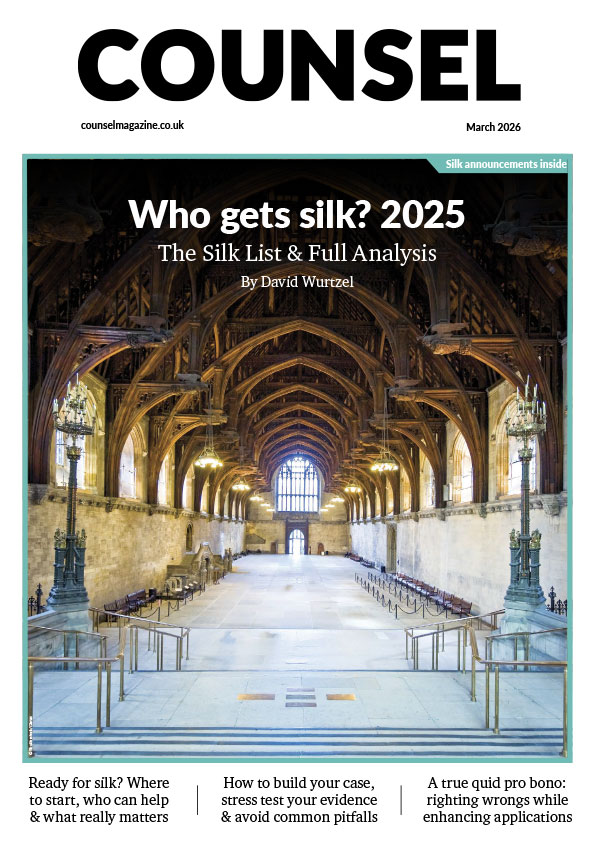
The appointments of 96 new King’s Counsel (also known as silk) are announced today