*/
By David Keene
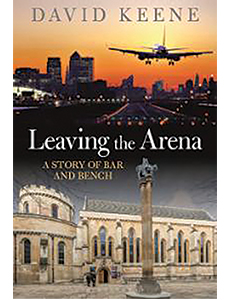
Judicial memoirs range from the deliciously (but perhaps recklessly) indiscreet (Lord Hope) to the hilarious (Lord Brown) to the earnest (Lord Dyson). Lord Justice Keene’s is in the latter category. He says it was written expressly for his grandchildren.
One interesting feature of the book is his description of his move from Chairmanship of the Oxford University Conservative Association to becoming a Labour Party candidate. I suppose this helps impartiality. There is a consideration of many important cases in which he was involved at the Bar or on the Bench, including many airport inquiries. Sir David held a range of positions including Chair of the Judicial Studies Board and the QC Selection Panel. One achievement was the introduction of a gym in the basement of the Royal Courts of Justice.
A chapter is devoted to ‘France and the Blairs’, recording the fact that Tony and Cherie stayed at their magnificent house in the Pyrenees at Saint-Martin-d’Oydes each summer. Sir David records the ‘painful’ fact that some parts of the media made up a story that his ascent to the Court of Appeal was as a result of his friendship with the Blairs, but this was assuaged by a note from Lord Bingham saying that the appointment was ‘the result of a unanimous recommendation by the senior judiciary’. It was, however, felt right by the Keenes that the Blairs should not visit again which they apparently took well.
Sir David retired early but carried on sitting in the Court of Appeal. He tells us that those judges who sit after retirement are known as ‘retreads’ or ‘returned empties’.
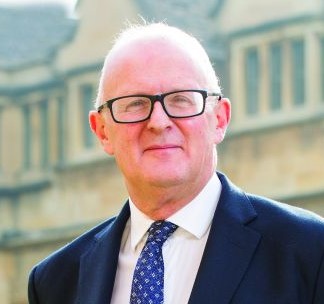
John Bowers KC is Principal of Brasenose College, Oxford. He is an employment barrister and associate tenant at Littleton Chambers, and sits as a Deputy High Court Judge and a Recorder. With Jeremy Lewis, Martin Fodder and Jack Mitchell, John is a co-author of Whistleblowing: Law and Practice (OUP: 3rd edition 2022).
Judicial memoirs range from the deliciously (but perhaps recklessly) indiscreet (Lord Hope) to the hilarious (Lord Brown) to the earnest (Lord Dyson). Lord Justice Keene’s is in the latter category. He says it was written expressly for his grandchildren.
One interesting feature of the book is his description of his move from Chairmanship of the Oxford University Conservative Association to becoming a Labour Party candidate. I suppose this helps impartiality. There is a consideration of many important cases in which he was involved at the Bar or on the Bench, including many airport inquiries. Sir David held a range of positions including Chair of the Judicial Studies Board and the QC Selection Panel. One achievement was the introduction of a gym in the basement of the Royal Courts of Justice.
A chapter is devoted to ‘France and the Blairs’, recording the fact that Tony and Cherie stayed at their magnificent house in the Pyrenees at Saint-Martin-d’Oydes each summer. Sir David records the ‘painful’ fact that some parts of the media made up a story that his ascent to the Court of Appeal was as a result of his friendship with the Blairs, but this was assuaged by a note from Lord Bingham saying that the appointment was ‘the result of a unanimous recommendation by the senior judiciary’. It was, however, felt right by the Keenes that the Blairs should not visit again which they apparently took well.
Sir David retired early but carried on sitting in the Court of Appeal. He tells us that those judges who sit after retirement are known as ‘retreads’ or ‘returned empties’.
By David Keene


Chair of the Bar finds common ground on legal services between our two jurisdictions, plus an update on jury trials
A £500 donation from AlphaBiolabs has been made to the leading UK charity tackling international parental child abduction and the movement of children across international borders
Marie Law, Director of Toxicology at AlphaBiolabs, outlines the drug and alcohol testing options available for family law professionals, and how a new, free guide can help identify the most appropriate testing method for each specific case
By Louise Crush of Westgate Wealth Management
Marie Law, Director of Toxicology at AlphaBiolabs, examines the latest ONS data on drug misuse and its implications for toxicology testing in family law cases
An interview with Rob Wagg, CEO of New Park Court Chambers
With at least 31 reports of AI hallucinations in UK legal cases – over 800 worldwide – and judges using AI to assist in judicial decision-making, the risks and benefits are impossible to ignore. Matthew Lee examines how different jurisdictions are responding
What has changed, and why? Paul Secher unpacks the new standards aligning the recruiting, training and appraising of judges – the first major change to the system for ten years
The deprivation of liberty is the most significant power the state can exercise. Drawing on frontline experience, Chris Henley KC explains why replacing trial by jury with judge-only trials risks undermining justice
Ever wondered what a pupillage is like at the CPS? This Q and A provides an insight into the training, experience and next steps
The appointments of 96 new King’s Counsel (also known as silk) are announced today