*/
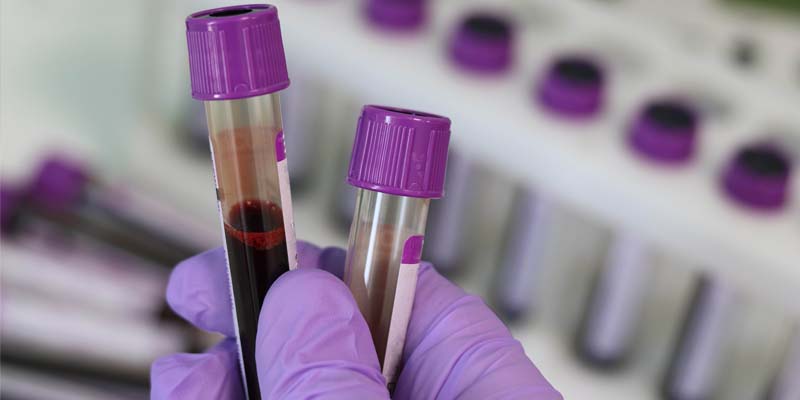
In courts across the UK blood alcohol testing is an essential part of the evidential picture, providing an insight into an individual’s alcohol consumption. In cases where the safeguarding of children and vulnerable people is paramount, such tests provide a rich source of information, enabling counsel to act on urgent welfare needs. But when it comes to blood alcohol tests, not all are created equal, with Phosphatidylethanol (PEth) testing providing the most conclusive insight into drinking patterns.
There are four main types of blood alcohol testing, all of which can provide us with a four-week historic overview of alcohol use:
Unlike CDT, LFT and MCV – all of which are indirect biomarkers of alcohol and whose presence can be affected by pre-existing medical conditions and medications, among other factors – PEth is a direct biomarker of alcohol. This means that it is only present in the body when alcohol has been consumed. An abnormal phospholipid, it requires ethanol for its production.
PEth production begins as soon as ethanol is consumed and accumulates in the blood with frequent alcohol consumption, giving it a high specificity (48-89%) and sensitivity (88-100%). Experiments show that PEth can be detected in blood after one to two hours, and for up to 12 days after a single drinking episode. In addition, daily alcohol consumption of more than 60g of ethanol (7.5 units) can clearly be distinguished from lower alcohol consumption. As such, PEth testing can detect chronic and single-drinking episodes.
The wealth of information provided by a PEth test, alongside its conclusiveness, is what makes it the most essential of all blood alcohol tests, enabling us to monitor abstinence, drinking behaviour, or identify relapse. PEth analysis is also the only blood alcohol test that can be undertaken during pregnancy or within two months of the birth.
In fact, recognition of the value of PEth testing is on the rise, with sales of such tests having more than doubled year-on-year among the legal profession (AlphaBiolabs sales data, 2020-21).
PEth is second only to the detection of ethyl glucuronide (EtG) and ethyl palmitate (EtPa): a fatty acid ethyl ester (FAEE) in the hair. Both EtG and EtPa are direct biomarkers of alcohol and give us a highly accurate insight into patterns of drinking, with a three- or six-month overview of usage. Each is absorbed into the hair via different routes, and their levels can assist in assessing excessive alcohol consumption.
EtG is water soluble, produced in the liver and can be impacted by various hair treatments including excessive washing. EtPa is formed in the sebaceous glands from ethanol diffusing from the blood circulation and then deposited into hair primarily from sebum (from the oil glands on the scalp). EtPa (FAEEs) are lipophilic so while not water soluble, its presence can be affected using alcohol-containing hair products such as sprays, gels, and wax.
Because of their respective strengths and weaknesses, both EtG and EtPA tests should be performed, and their findings used to support each other, as shown in LB Richmond v B & W & B & CB [2010] EWHC 2903 (Fam), where Mr Justice Moylan gave guidance on the evidential worth of hair strand testing. Within his guidance, it was also stressed that hair strand tests should not be used in isolation to reach evidential conclusions.
By performing these tests in conjunction with PEth and other blood tests, a more holistic conclusion can be drawn as to a person’s alcohol use.
Blood alcohol testing combined with hair testing provides us with the fullest picture from which to draw conclusions. This is especially important in family cases, where safeguarding children and vulnerable people is the highest priority. Using highly accurate scientific analysis and examining the way in which the body absorbs alcohol, a case can be made to protect those in need – and reunite families where abstinence has been achieved.

In courts across the UK blood alcohol testing is an essential part of the evidential picture, providing an insight into an individual’s alcohol consumption. In cases where the safeguarding of children and vulnerable people is paramount, such tests provide a rich source of information, enabling counsel to act on urgent welfare needs. But when it comes to blood alcohol tests, not all are created equal, with Phosphatidylethanol (PEth) testing providing the most conclusive insight into drinking patterns.
There are four main types of blood alcohol testing, all of which can provide us with a four-week historic overview of alcohol use:
Unlike CDT, LFT and MCV – all of which are indirect biomarkers of alcohol and whose presence can be affected by pre-existing medical conditions and medications, among other factors – PEth is a direct biomarker of alcohol. This means that it is only present in the body when alcohol has been consumed. An abnormal phospholipid, it requires ethanol for its production.
PEth production begins as soon as ethanol is consumed and accumulates in the blood with frequent alcohol consumption, giving it a high specificity (48-89%) and sensitivity (88-100%). Experiments show that PEth can be detected in blood after one to two hours, and for up to 12 days after a single drinking episode. In addition, daily alcohol consumption of more than 60g of ethanol (7.5 units) can clearly be distinguished from lower alcohol consumption. As such, PEth testing can detect chronic and single-drinking episodes.
The wealth of information provided by a PEth test, alongside its conclusiveness, is what makes it the most essential of all blood alcohol tests, enabling us to monitor abstinence, drinking behaviour, or identify relapse. PEth analysis is also the only blood alcohol test that can be undertaken during pregnancy or within two months of the birth.
In fact, recognition of the value of PEth testing is on the rise, with sales of such tests having more than doubled year-on-year among the legal profession (AlphaBiolabs sales data, 2020-21).
PEth is second only to the detection of ethyl glucuronide (EtG) and ethyl palmitate (EtPa): a fatty acid ethyl ester (FAEE) in the hair. Both EtG and EtPa are direct biomarkers of alcohol and give us a highly accurate insight into patterns of drinking, with a three- or six-month overview of usage. Each is absorbed into the hair via different routes, and their levels can assist in assessing excessive alcohol consumption.
EtG is water soluble, produced in the liver and can be impacted by various hair treatments including excessive washing. EtPa is formed in the sebaceous glands from ethanol diffusing from the blood circulation and then deposited into hair primarily from sebum (from the oil glands on the scalp). EtPa (FAEEs) are lipophilic so while not water soluble, its presence can be affected using alcohol-containing hair products such as sprays, gels, and wax.
Because of their respective strengths and weaknesses, both EtG and EtPA tests should be performed, and their findings used to support each other, as shown in LB Richmond v B & W & B & CB [2010] EWHC 2903 (Fam), where Mr Justice Moylan gave guidance on the evidential worth of hair strand testing. Within his guidance, it was also stressed that hair strand tests should not be used in isolation to reach evidential conclusions.
By performing these tests in conjunction with PEth and other blood tests, a more holistic conclusion can be drawn as to a person’s alcohol use.
Blood alcohol testing combined with hair testing provides us with the fullest picture from which to draw conclusions. This is especially important in family cases, where safeguarding children and vulnerable people is the highest priority. Using highly accurate scientific analysis and examining the way in which the body absorbs alcohol, a case can be made to protect those in need – and reunite families where abstinence has been achieved.


The Bar Council is ready to support a turn to the efficiencies that will make a difference
By Louise Crush of Westgate Wealth Management
Marie Law, Director of Toxicology at AlphaBiolabs, examines the latest ONS data on drug misuse and its implications for toxicology testing in family law cases
An interview with Rob Wagg, CEO of New Park Court Chambers
What meaningful steps can you take in 2026 to advance your legal career? asks Thomas Cowan of St Pauls Chambers
Marie Law, Director of Toxicology at AlphaBiolabs, explains why drugs may appear in test results, despite the donor denying use of them
Ever wondered what a pupillage is like at the CPS? This Q and A provides an insight into the training, experience and next steps
The appointments of 96 new King’s Counsel (also known as silk) are announced today
Ready for the new way to do tax returns? David Southern KC continues his series explaining the impact on barristers. In part 2, a worked example shows the specific practicalities of adapting to the new system
Resolution of the criminal justice crisis does not lie in reheating old ideas that have been roundly rejected before, say Ed Vickers KC, Faras Baloch and Katie Bacon
With pupillage application season under way, Laura Wright reflects on her route to ‘tech barrister’ and offers advice for those aiming at a career at the Bar