*/
SPEAKING in Vienna, where he is attending the European Bar Presidents Conference, the Chairman of the Bar, Desmond Browne QC, warned of the dangers of the ever increasing quantity of advocacy work being handled in-house by the Crown Prosecution Service. In drawing a distinction between the English adversarial and the continental inquisitorial systems of justice, he pointed out that in England there was nothing which corresponded to the District Attorney or the juge d’instruction.
Desmond Browne QC said:
“Until recently, it was rare in England to find the conduct of a prosecution in the hands of barristers dedicated to that type of work. Until now barristers have prosecuted one week, and defended the next. This dual role has ensured the admired independence of the English Bar with its dedication to the cabrank rule.
We need to start a public debate as to whether we wish to see a monolithic state prosecutor, and how in future young selfemployed barristers will learn their trade if they do not receive instructions to prosecute.”
We need to start a public debate as to whether we wish to see a monolithic state prosecutor, and how in future young selfemployed barristers will learn their trade if they do not receive instructions to prosecute.”
SPEAKING in Vienna, where he is attending the European Bar Presidents Conference, the Chairman of the Bar, Desmond Browne QC, warned of the dangers of the ever increasing quantity of advocacy work being handled in-house by the Crown Prosecution Service. In drawing a distinction between the English adversarial and the continental inquisitorial systems of justice, he pointed out that in England there was nothing which corresponded to the District Attorney or the juge d’instruction.
Desmond Browne QC said:
“Until recently, it was rare in England to find the conduct of a prosecution in the hands of barristers dedicated to that type of work. Until now barristers have prosecuted one week, and defended the next. This dual role has ensured the admired independence of the English Bar with its dedication to the cabrank rule.
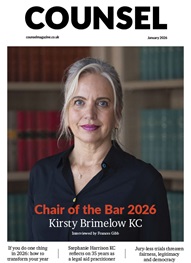

Kirsty Brimelow KC, Chair of the Bar, sets our course for 2026
What meaningful steps can you take in 2026 to advance your legal career? asks Thomas Cowan of St Pauls Chambers
Marie Law, Director of Toxicology at AlphaBiolabs, explains why drugs may appear in test results, despite the donor denying use of them
Asks Louise Crush of Westgate Wealth Management
AlphaBiolabs has donated £500 to The Christie Charity through its Giving Back initiative, helping to support cancer care, treatment and research across Greater Manchester, Cheshire and further afield
Q and A with criminal barrister Nick Murphy, who moved to New Park Court Chambers on the North Eastern Circuit in search of a better work-life balance
The appointments of 96 new King’s Counsel (also known as silk) are announced today
With pupillage application season under way, Laura Wright reflects on her route to ‘tech barrister’ and offers advice for those aiming at a career at the Bar
Jury-less trial proposals threaten fairness, legitimacy and democracy without ending the backlog, writes Professor Cheryl Thomas KC (Hon), the UK’s leading expert on juries, judges and courts
Are you ready for the new way to do tax returns? David Southern KC explains the biggest change since HMRC launched self-assessment more than 30 years ago... and its impact on the Bar
Marking one year since a Bar disciplinary tribunal dismissed all charges against her, Dr Charlotte Proudman discusses the experience, her formative years and next steps. Interview by Anthony Inglese CB