*/
The Ministry of Justice is refusing Bar Council requests to extend the deadline for “inadequate and unfair” consultations on Very High Cost Cases (“VHCCs”) and advocates’ graduated fees despite threats of judicial review.
Solicitors acting for the Bar Council have now written, in accordance with the Pre-Action Protocol for Judicial Review Claims, to the Legal Aid Minister, Lord Bach, and to the Chairman of the Legal Services Commission (“LSC”), Sir Bill Callaghan, in order to advance proceedings for judicial review.
The Bar Council and Criminal Bar Association say they have not been given enough information to respond to the LSC consultation on VHCCs. They asked the government to combine the deadlines for responses to these two consultations and to join them to the timetable for the response to the proposed consultation on a single graduated fee for Crown Court cases.
Nick Green QC, Chairman of the Bar, said: “The Bar Council asked the Ministry of Justice and the LSC to adopt a co-ordinated and fair approach to their decision-making on the very important matters which are the subject of these consultations.
“The government has rejected our request to co-ordinate the consultation timetables and refused to supply us with the information for which we asked to enable the Bar to respond to the two current consultations. These are inextricably linked to an, as yet, unpublished third consultation. “The principal basis of our claim will be that the consultation exercise is unfair and, in our view, unlawful.”
A joint statement from the MoJ and LSC said: “[We] received a letter from the Bar Council and Criminal Bar Association on 21 January requesting the deadlines for our current consultations on advocates graduated fees and VHCCs be extended.
“We consider that the current deadlines give adequate time for stakeholders to respond properly and fully to both consultations. We hope the Bar Council and Criminal Bar Association will reconsider their position. “The proposals to pilot a single graduated fee will be consulted on in due course.”
The Bar Council and Criminal Bar Association say they have not been given enough information to respond to the LSC consultation on VHCCs. They asked the government to combine the deadlines for responses to these two consultations and to join them to the timetable for the response to the proposed consultation on a single graduated fee for Crown Court cases.
Nick Green QC, Chairman of the Bar, said: “The Bar Council asked the Ministry of Justice and the LSC to adopt a co-ordinated and fair approach to their decision-making on the very important matters which are the subject of these consultations.
“The government has rejected our request to co-ordinate the consultation timetables and refused to supply us with the information for which we asked to enable the Bar to respond to the two current consultations. These are inextricably linked to an, as yet, unpublished third consultation. “The principal basis of our claim will be that the consultation exercise is unfair and, in our view, unlawful.”
A joint statement from the MoJ and LSC said: “[We] received a letter from the Bar Council and Criminal Bar Association on 21 January requesting the deadlines for our current consultations on advocates graduated fees and VHCCs be extended.
“We consider that the current deadlines give adequate time for stakeholders to respond properly and fully to both consultations. We hope the Bar Council and Criminal Bar Association will reconsider their position. “The proposals to pilot a single graduated fee will be consulted on in due course.”
The Ministry of Justice is refusing Bar Council requests to extend the deadline for “inadequate and unfair” consultations on Very High Cost Cases (“VHCCs”) and advocates’ graduated fees despite threats of judicial review.
Solicitors acting for the Bar Council have now written, in accordance with the Pre-Action Protocol for Judicial Review Claims, to the Legal Aid Minister, Lord Bach, and to the Chairman of the Legal Services Commission (“LSC”), Sir Bill Callaghan, in order to advance proceedings for judicial review.
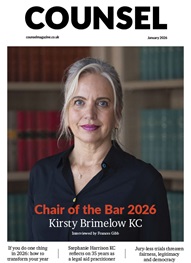

Kirsty Brimelow KC, Chair of the Bar, sets our course for 2026
What meaningful steps can you take in 2026 to advance your legal career? asks Thomas Cowan of St Pauls Chambers
Marie Law, Director of Toxicology at AlphaBiolabs, explains why drugs may appear in test results, despite the donor denying use of them
Asks Louise Crush of Westgate Wealth Management
AlphaBiolabs has donated £500 to The Christie Charity through its Giving Back initiative, helping to support cancer care, treatment and research across Greater Manchester, Cheshire and further afield
Q and A with criminal barrister Nick Murphy, who moved to New Park Court Chambers on the North Eastern Circuit in search of a better work-life balance
The appointments of 96 new King’s Counsel (also known as silk) are announced today
With pupillage application season under way, Laura Wright reflects on her route to ‘tech barrister’ and offers advice for those aiming at a career at the Bar
Jury-less trial proposals threaten fairness, legitimacy and democracy without ending the backlog, writes Professor Cheryl Thomas KC (Hon), the UK’s leading expert on juries, judges and courts
Are you ready for the new way to do tax returns? David Southern KC explains the biggest change since HMRC launched self-assessment more than 30 years ago... and its impact on the Bar
Marking one year since a Bar disciplinary tribunal dismissed all charges against her, Dr Charlotte Proudman discusses the experience, her formative years and next steps. Interview by Anthony Inglese CB